United States, China and Russia: Who Is Truly the World’s Leading Power?
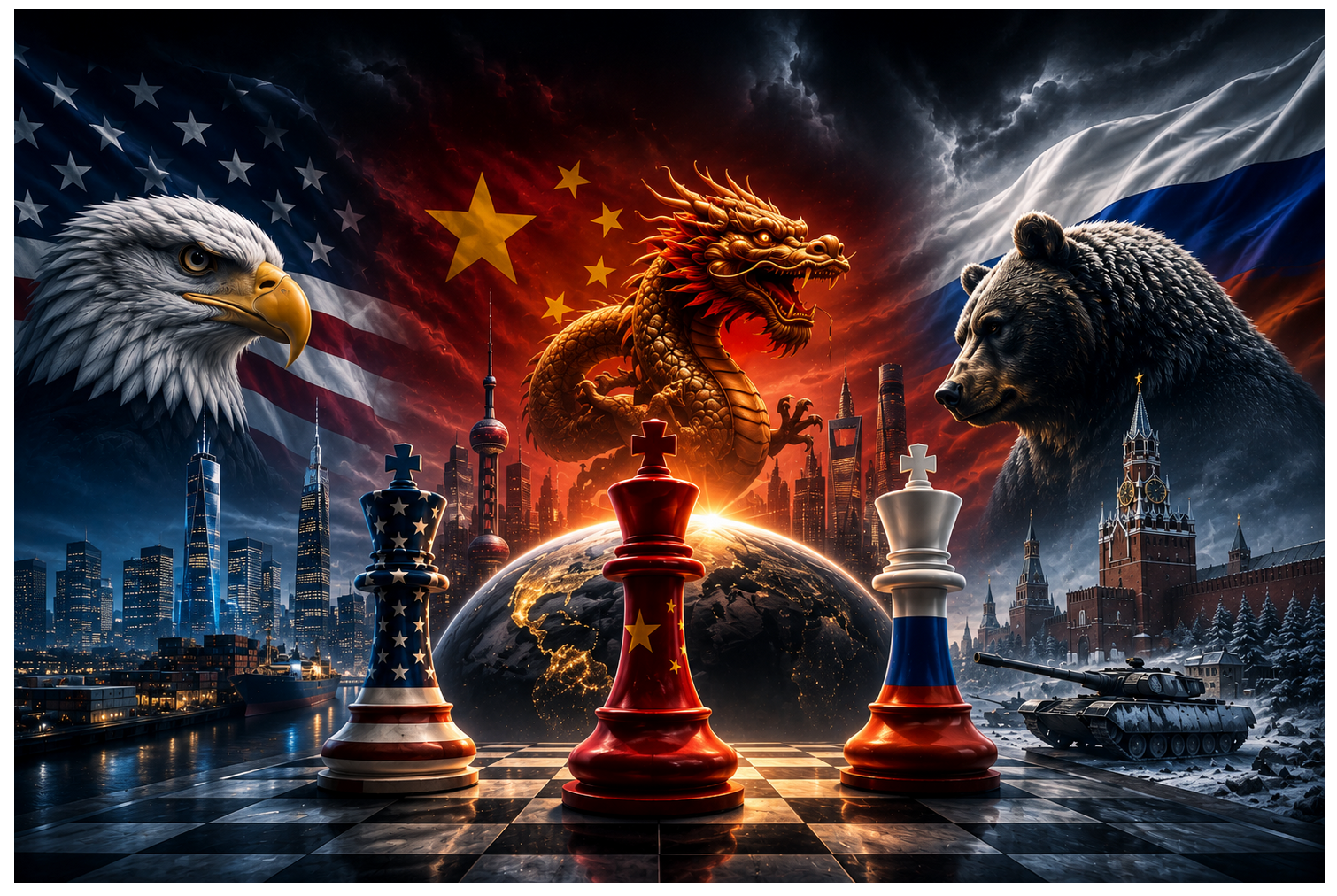
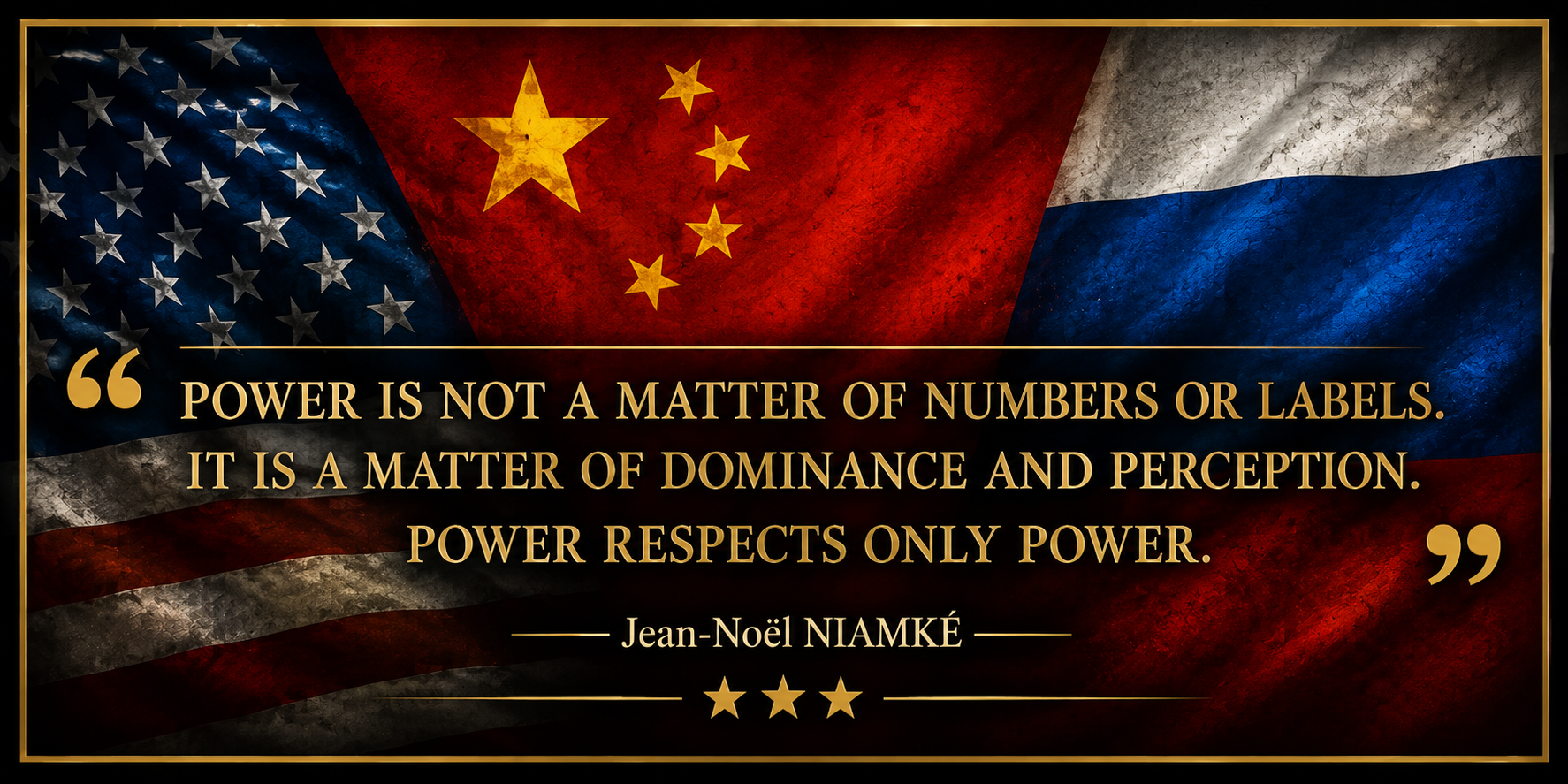
Before being a subject of geopolitics, power is a matter of perception.
Power has always been on display. But it has always been imposed as well.
From the empires of Antiquity to the superpowers of the 21st century, one rule has never changed: those who dominate do not ask permission. They create the conditions in which others have no choice. Since our analyses of the United States, China, and Big Tech, one question has remained unanswered. The real one. The one diplomats avoid and heads of state never utter in public.
Who is truly number one?
From the Pharaohs to the Present Day — Dominance Through the Ages
Power has never permanently belonged to any single nation.
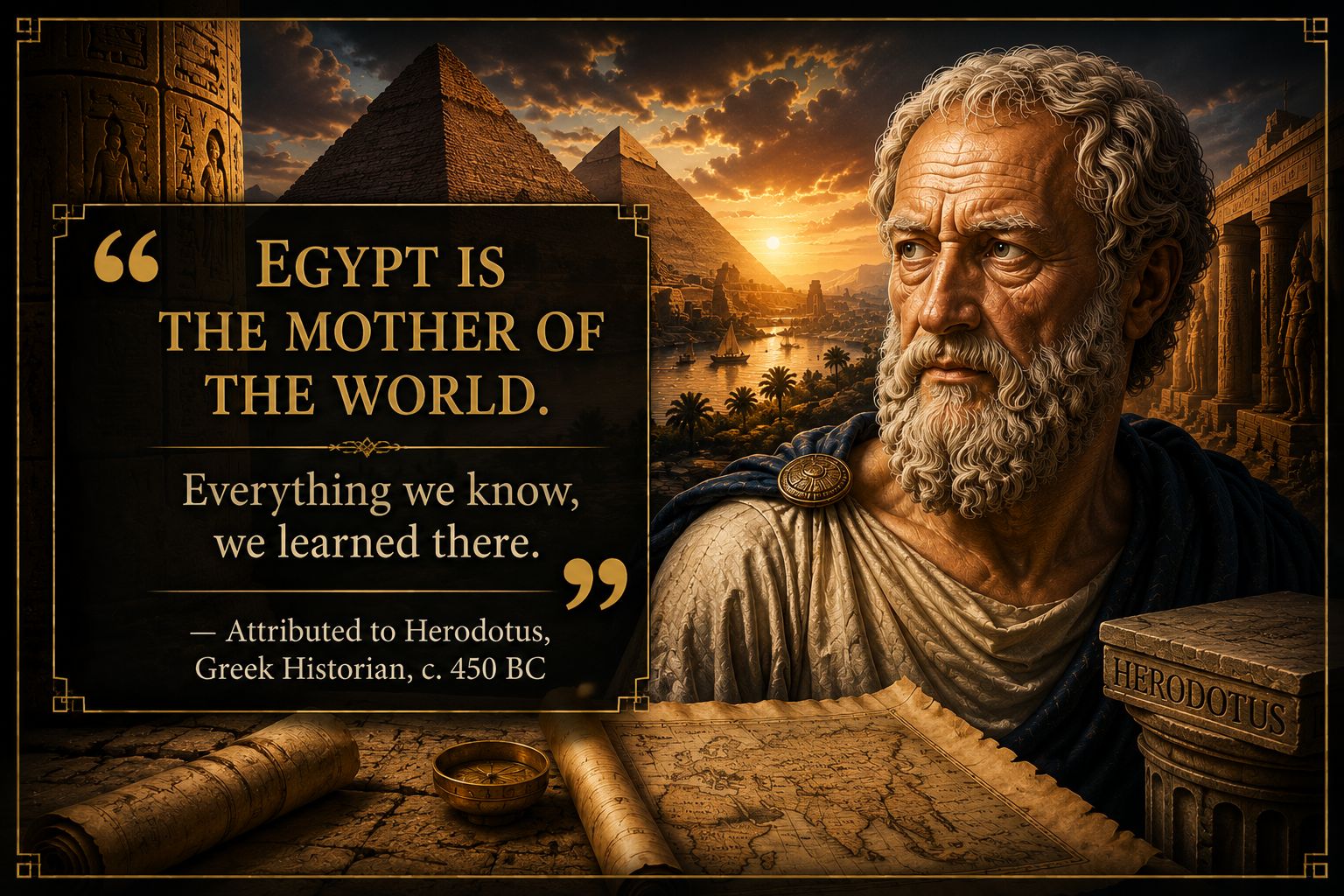
That is, perhaps, the most important lesson in the history of humanity. It all begins in Egypt. Long before Rome was Rome, long before Greece was Greece, Pharaonic Egypt was the temple of knowledge of the ancient world. It was to Thebes and Memphis that the greatest minds of Antiquity came to study. Pythagoras, Thales, Plato — names the West has claimed as the founding fathers of philosophy and mathematics — had all spent time in Egypt to learn. The Pythagorean theorem, the foundations of geometry, the rudiments of cosmology: all of this existed in Egyptian temples centuries before any Greek name was attached to it. Egypt was not merely a military power. It was the library of the world.
The Achaemenid Persian Empire then took the mantle: around 500 BC, it ruled over 44% of the world’s population — a proportion never since equalled. Cyrus the Great understood something few leaders still grasp today: one does not govern durably through terror. One governs through dependency.
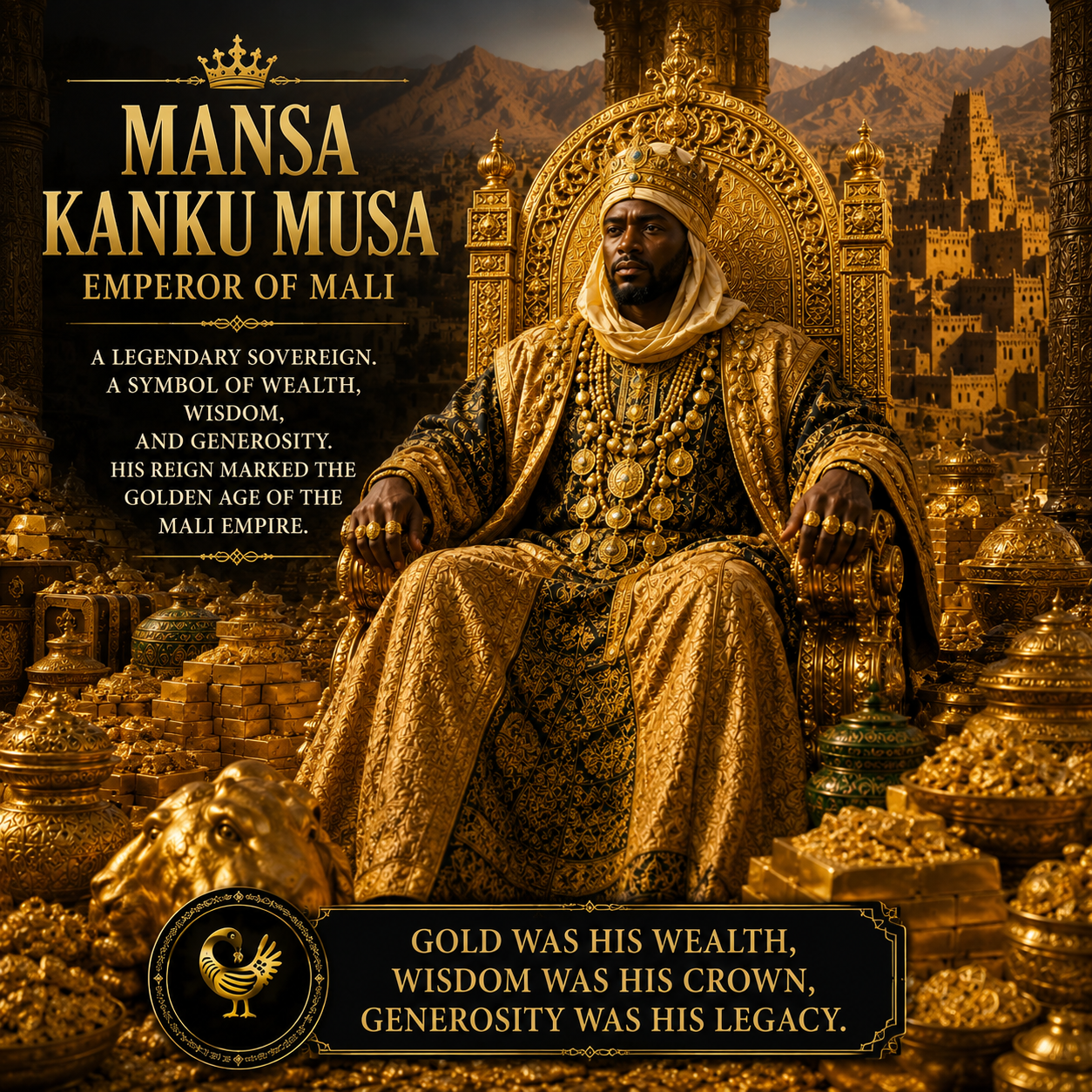
What followed is a reality seldom conveyed in the West: sub-Saharan Africa produced empires of remarkable and legendary sophistication. Under Mansa Musa in the 13th century, the Mali Empire controlled two-thirds of the world’s gold and salt production. His personal fortune is estimated at more than $400 billion in today’s terms — the greatest ever accumulated by a single human being. Timbuktu shone as a global centre of learning. The Songhai Empire followed in the 15th century, the leading sub-Saharan power of its era.
Then came England. The Industrial Revolution (1760–1850) enabled the British Empire to cover 24% of the world’s land area and govern a quarter of humanity — before collapsing under the weight of two world wars and a rival that had read the future more clearly.
That rival was America.
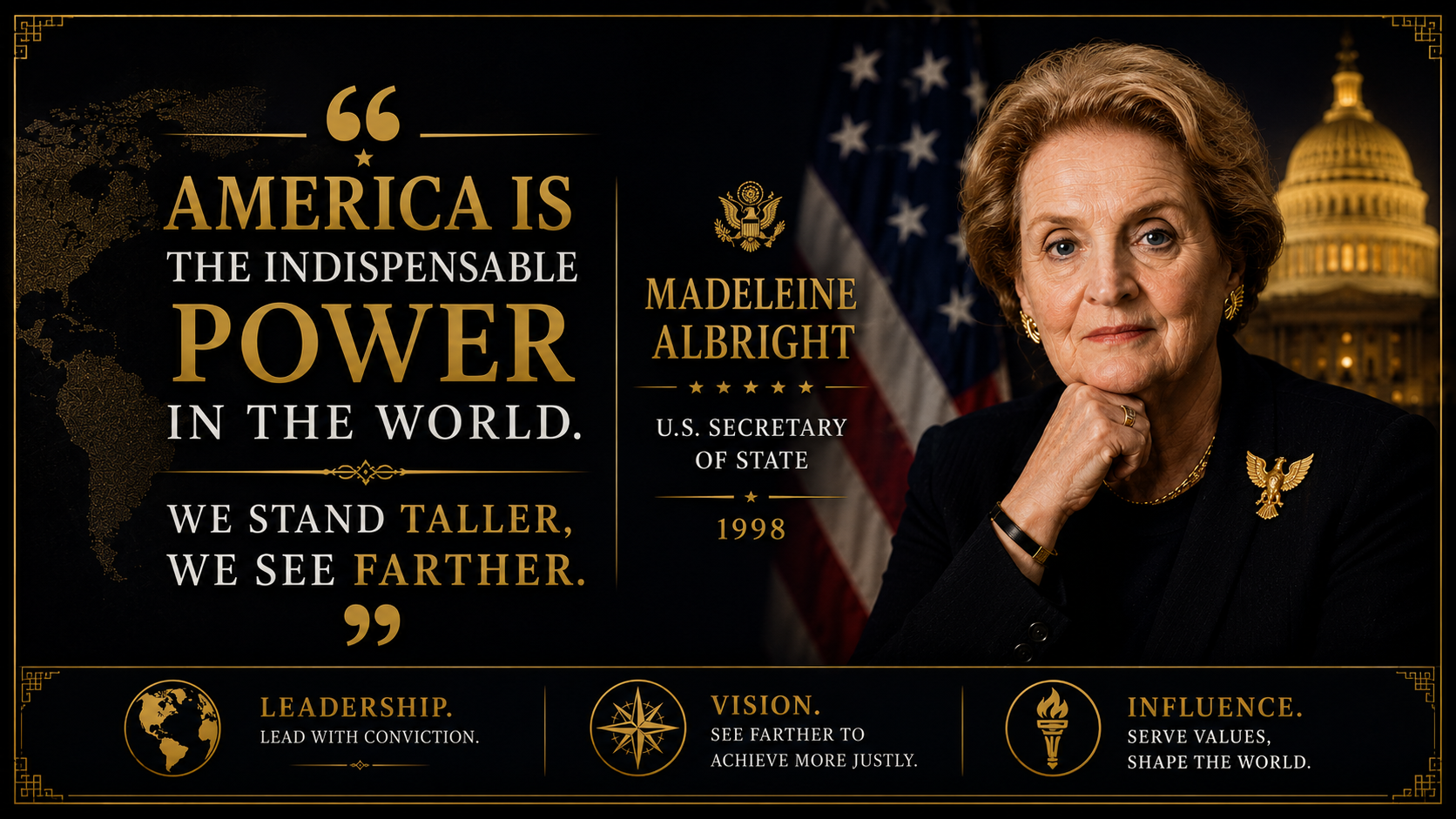
In 1945, the United States accounted for 50% of world GDP. Bretton Woods consecrated the dollar as the global reserve currency — an exorbitant privilege still exploited today. The Cold War established a USA/USSR bipolarity that seemed indestructible. In 1991, the USSR collapsed. And the world believed the question had been settled forever.
It was wrong.
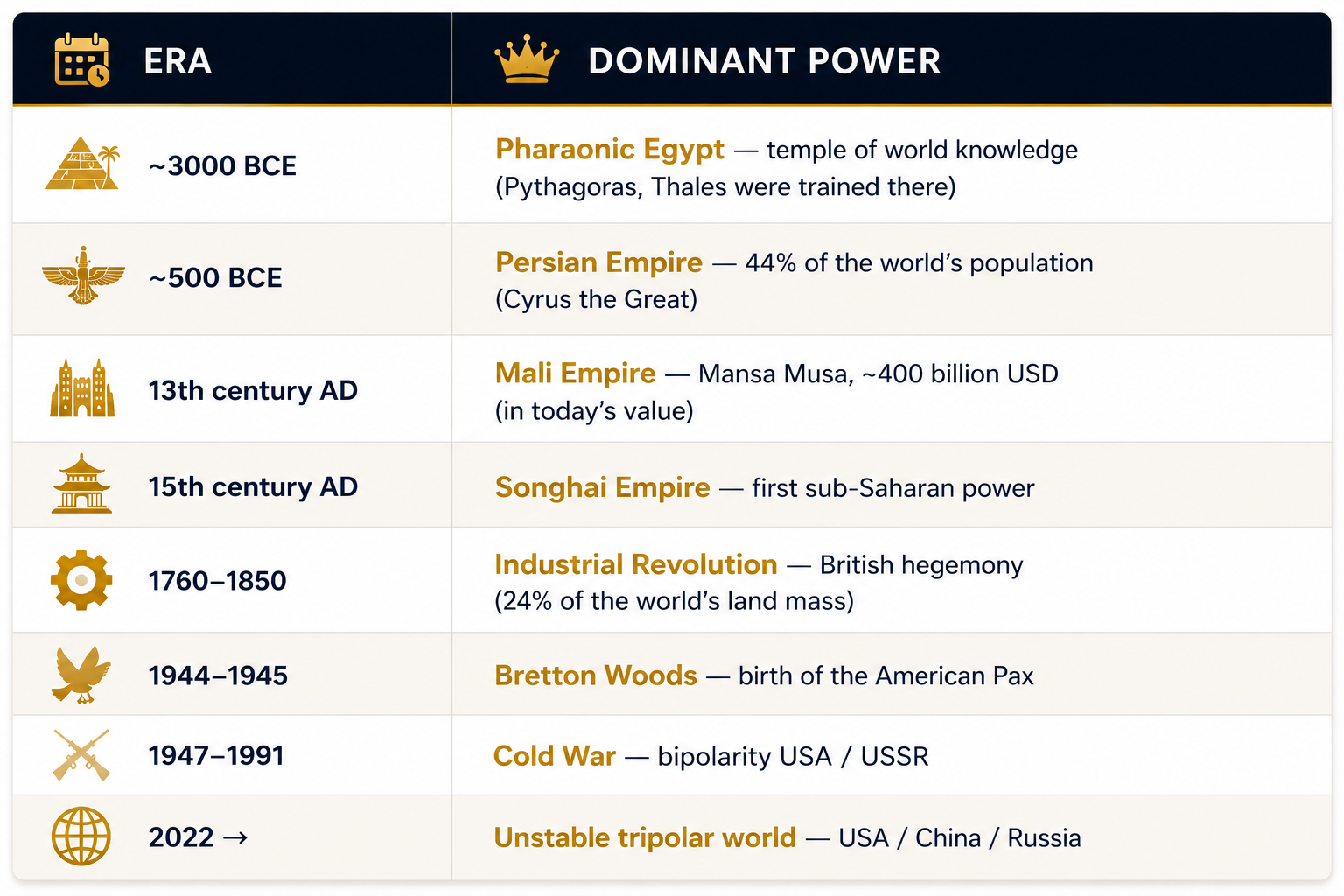
No power is eternal. What changes in every era is the criterion that defines dominance: yesterday territory, then money, and today something else.
Part I — The United States: An Empire That Cracks Yet Holds
Let us begin with the bare facts.
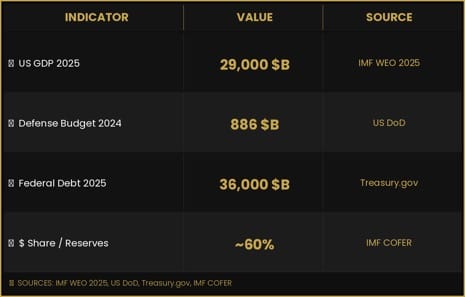
The United States remain the world’s foremost economy — $29 trillion in 2025, representing 25% of world GDP for just 4% of the global population. A defence budget of $886 billion in 2024 — more than the next ten military powers combined. Eleven aircraft carriers. Bases in over 70 countries.
But America’s true power is neither the F-35 nor the aircraft carrier.
It is the dollar.
The petrodollar system — born of the 1973 agreements with Saudi Arabia — compels every energy-importing nation to hold dollar reserves, thereby structurally financing the American deficit. Washington borrows in its own currency. No other power can claim the same. The Big Five tech giants generate over $2 trillion in combined revenues — a simultaneous dominance that is military, monetary, technological, and cultural.
And yet. Cracks are appearing.
The federal debt has breached $36 trillion at the start of 2025. For the first time since Bretton Woods, several countries are actively seeking to de-dollarise their trade — China, Russia, India, and Brazil are negotiating in yuan and roubles, bypassing the SWIFT system.
The empire holds. But it must now defend what it never had to justify.
This context of a weakened superpower leads us to look eastward — towards a civilisation that has never forgotten it was once the centre of the world.
Part II — China: A Millennial Civilisation Reasserting Itself
Before being a rising power, China is a wounded memory.
The Great Wall began its construction in the 3rd century BC — at a time when Rome was still a village in Latium. For most of the past two millennia, China was the world’s leading economy. It is not its rise today that is the remarkable historical phenomenon. It is its temporary eclipse.
The 19th and 20th centuries were a century of humiliation: the Opium Wars, unequal treaties, the sacking of the Old Summer Palace in 1860. All of this has etched into China’s collective memory a wound Beijing has never healed.
What Beijing calls its ‘great national renewal’ is not an ambition.
It is a historical reckoning.
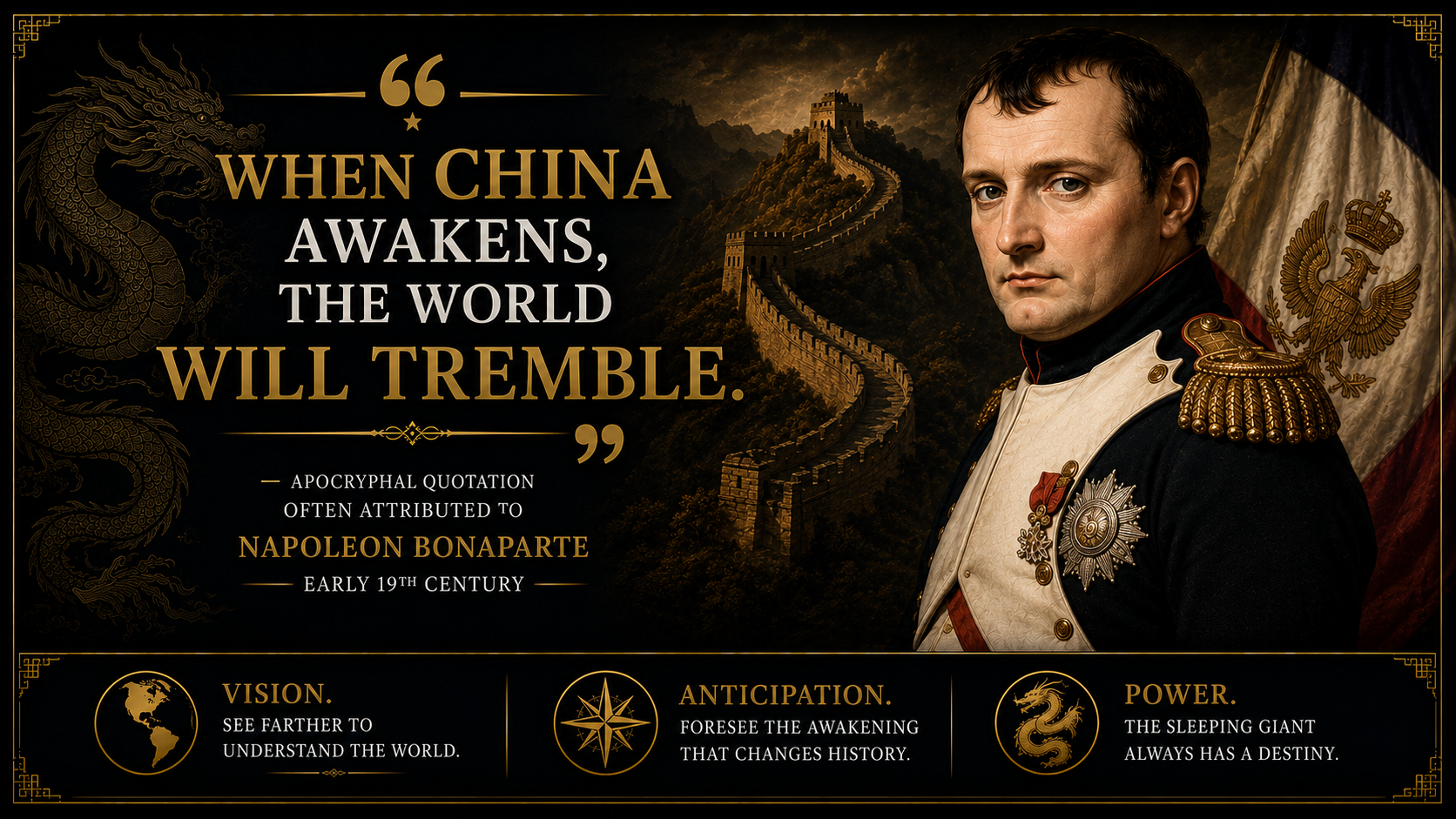
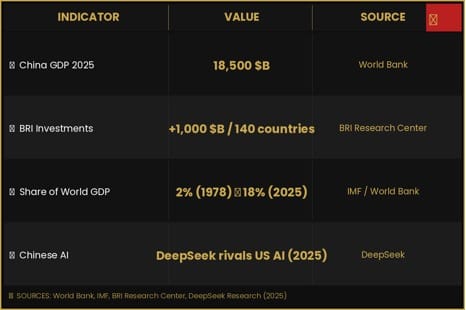
Napoleon was two centuries ahead of his time. In 1978, China’s GDP accounted for less than 2% of world output. By 2025, it exceeds $18.5 trillion. Where the United States exported democracy, China has exported infrastructure. The Belt and Road Initiative represents over $1 trillion in investments across 140 countries: ports, roads, undersea cables. Quiet and methodical concrete diplomacy.
China does not seek to persuade.
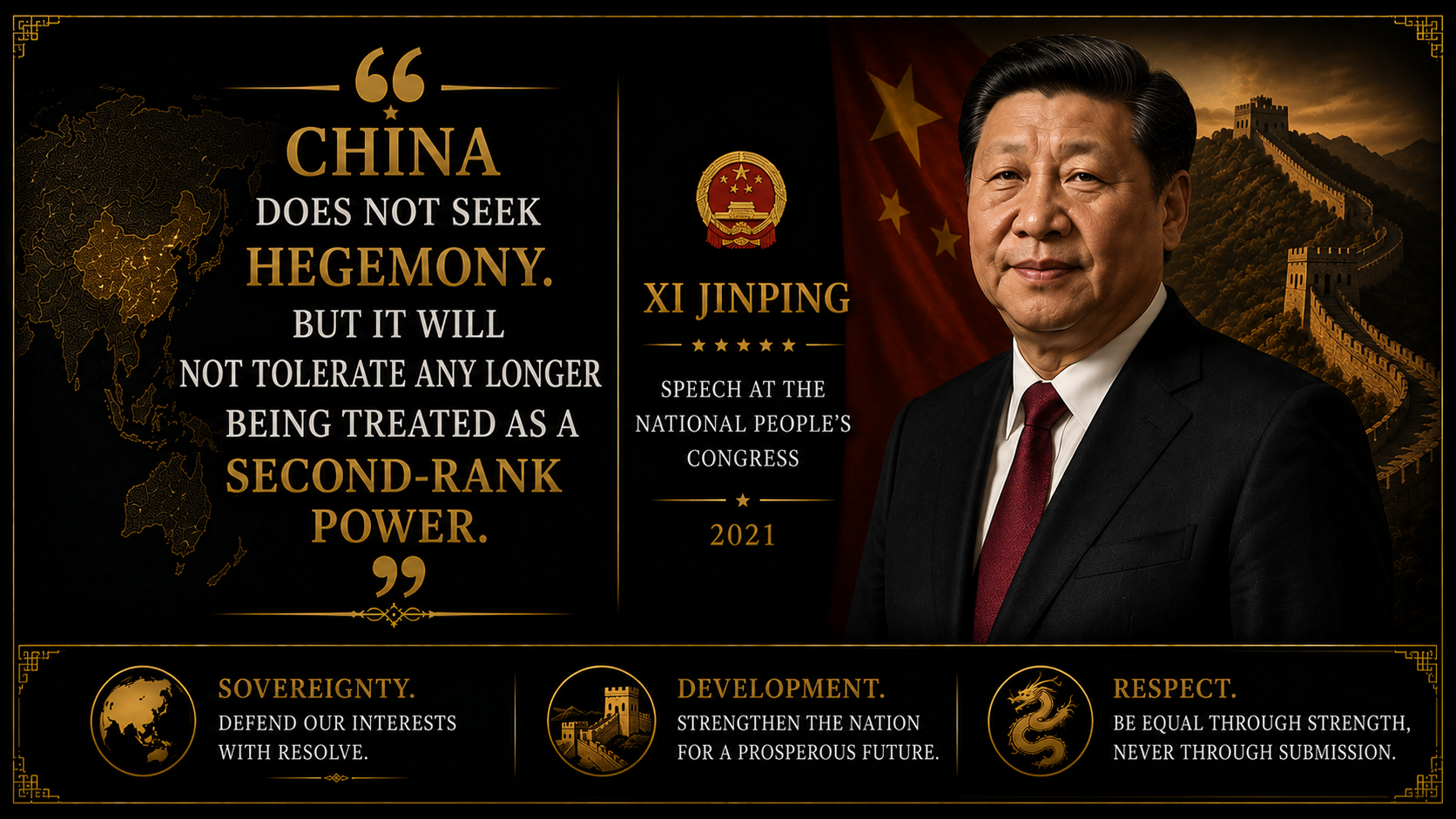
It seeks to connect. And whoever connects, controls.
In January 2025, DeepSeek demonstrated that it was possible to rival the best American AI models at a fraction of the cost. American technological dominance is no longer permanent. One blind spot remains: demographics. China’s population is declining. China is racing against time.
But there exists a third power. One the West was too quick to bury. One that chose to detonate everything rather than accept being ignored.
Part III — Russia: An Ideology of Power and a Return to the World Stage
To understand Russia, one must understand 1991. But also what came long before.
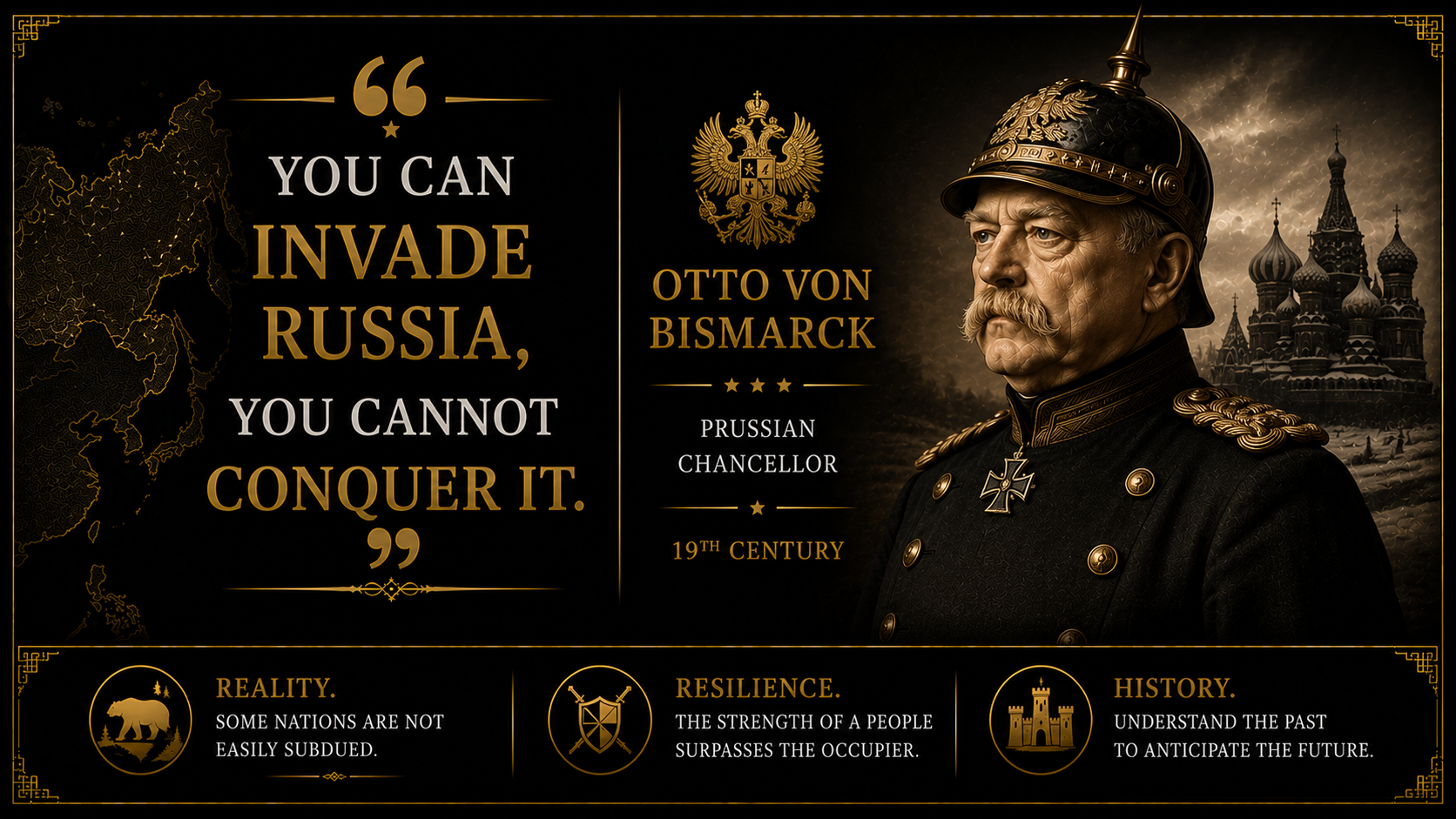
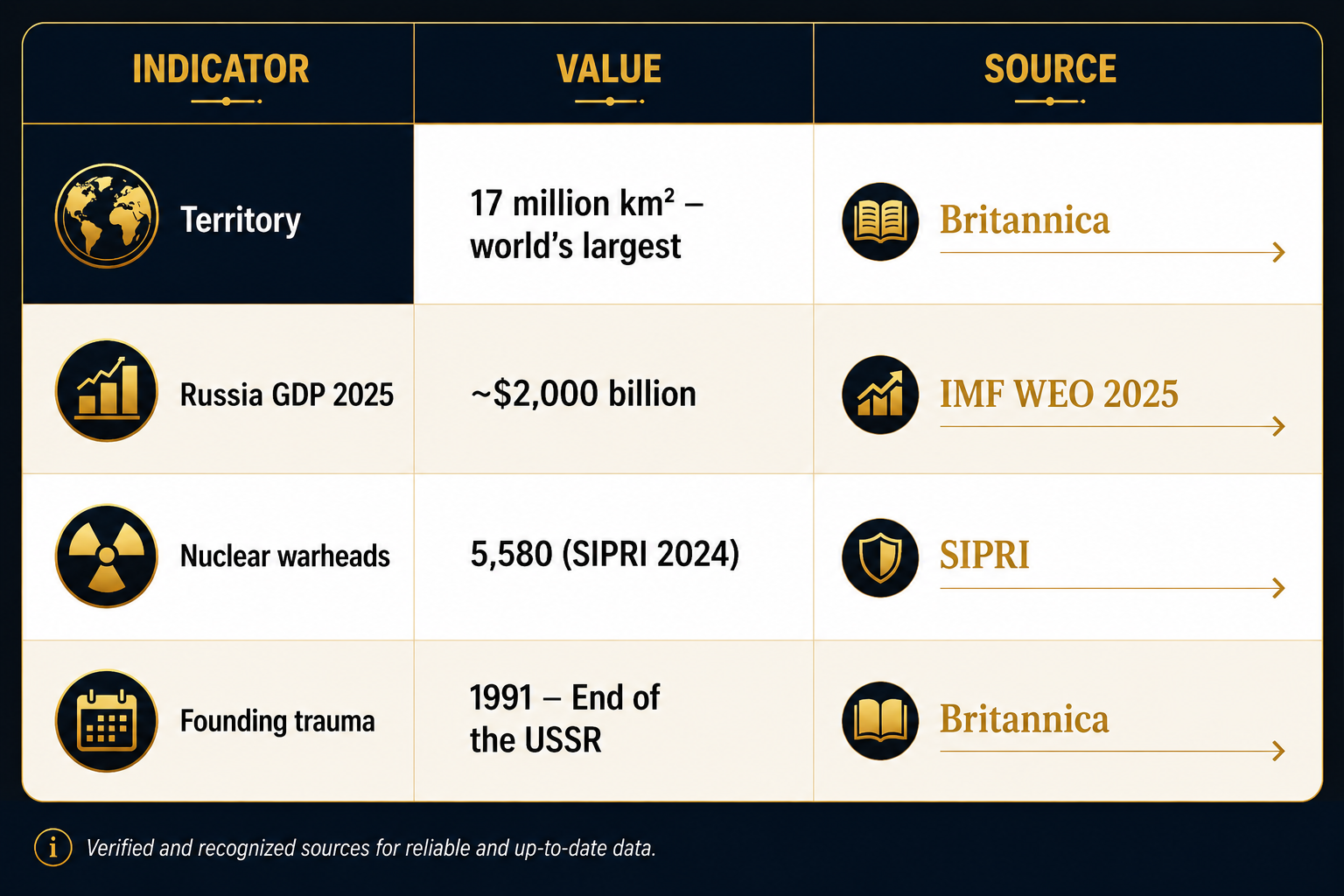
This territory of more than 17 million km² has succeeded, over the centuries, in preserving a founding myth: that of never having been entirely conquered. Not by the Mongols, not by Charles XII of Sweden, and least of all by Napoleon. In 1812, the Grande Armée launched its famous march on Moscow: 600,000 men, the largest army ever assembled in Europe up to that point. It took Moscow. Moscow burned. And Napoleon retreated — defeated not by an army, but by the sheer immensity of a land that digests its conquerors. This country has always fascinated the greatest minds through its vastness. And that vastness is itself a form of power.
Then came 1914. The Tsarist empire entered the First World War and emerged shattered: 1.7 million soldiers killed, the economy in ruins, revolution. In February 1917, Tsar Nicholas II abdicated. In October, Lenin seized power. Imperial Russia died. The USSR was born.
The Second World War was simultaneously Russia’s greatest nightmare and its most defining triumph. 27 million Soviet lives lost. Stalingrad — a siege of 872 days — proved the turning point of the entire war. It was the Red Army that drove into Berlin in 1945. That sacrifice forged an indestructible conviction in the Russian consciousness: we saved Europe. And no one was ever grateful
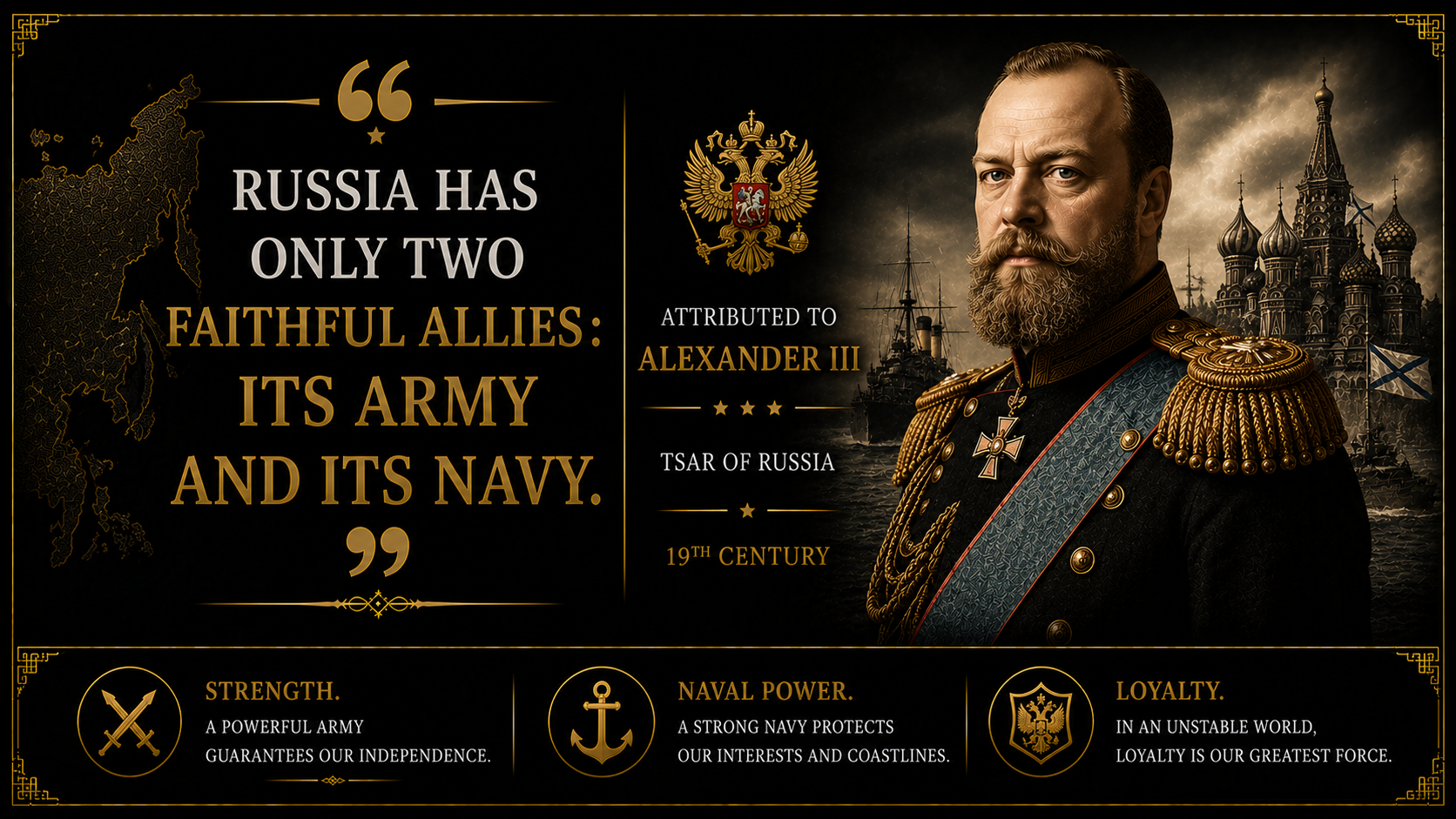
From 1947 to 1991, the Cold War divided the world into two blocs. Moscow extended its empire to the heart of Europe, beating Washington into space — Sputnik 1957, Gagarin 1961. Cuba, 1962: the world stood hours from nuclear annihilation. For forty years, two superpowers stared each other down amid an arms race and proxy wars.
Then, 1991. The USSR collapsed. Overnight, a superpower that had commanded the world’s respect for forty years vanished from the map. Gorbachev described it as 'the greatest geopolitical catastrophe of the 20th century'. Since then, Russia has carried a cross-party conviction: it is a great power — or it is nothing.
Let us be honest about what Russia is. And what it is not.
Its nominal GDP sits at around $2 trillion — comparable to Italy. But it holds 5,580 nuclear warheads, the world’s largest natural gas reserves, and the status of leading exporter of wheat, nickel, palladium, and titanium.
By attacking Ukraine in 2022, Putin achieved what no one had since the Cold War: forcing the entire Western system to reposition itself. European energy dependencies exposed. Western unity fractured. The Sino-Russian rapprochement accelerated — precisely what Washington had dreaded for decades.
Russia does not seek to lead the world.
It seeks to ensure the world cannot be led without it.
One does not negotiate with a veto power as one would with a commercial partner. One accommodates it. Or one confronts it. There is no third option.
Whether one approves or condemns him, Putin — as contested as he is — will have nonetheless achieved one thing: repositioning Russia within the concert of nations and imposing it as a power that cannot be ignored. It is a strategy of planetary veto. And it works.
Three powers. Three strategies. Three irreconcilable visions of the world. But then, who truly prevails? To answer, one must first choose the terrain on which the question is posed.
Part IV — The True Criterion of Power in the 21st Century
The answer depends entirely on the question one asks.
While citizens look at GDP figures, states look at undersea cables. History rarely recalls who was the wealthiest — it remembers who controlled the rules of the game.
|
CRITERION |
LEADER |
NOTE |
|
Military |
United States |
Budget + 11
aircraft carriers + 70 countries |
|
Economic
(volume) |
United
States* |
*China close
behind: $18,500B vs $29,000B |
|
Monetary |
United States |
Dollar = 60%
of global reserves (declining) |
|
Demographic |
China / India |
India
surpassed China in 2023 |
|
Geopolitical
Disruption |
Russia |
Planetary
veto & targeted destabilisation |
|
Digital
Infrastructure |
USA / China |
Race:
semiconductors, cables, AI |
But there is one criterion that analysts systematically underweight.
The control of the world’s cognitive infrastructure.
Who controls the data? The algorithms? The undersea cables that carry 97% of global internet traffic? The semiconductors without which no modern economy functions? The next world war will not resemble 1939. It will resemble a semiconductor blackout, a severed undersea cable, a cyberattack on critical infrastructure. On this front, the battle is now between America and China — with Europe as a legislating bystander and Africa as a territory to be reconquered.
The United States control the currency.
China builds the infrastructure.
Russia disrupts the equilibria.
But whoever controls the algorithms may well control all three.
Key Takeaways —
An Unstable Tripolar World, and a Power Yet to Be Named.
The unipolar world is dead.
The question is what will replace it.
We live in an unstably tripolar world — three powers incapable of destroying each other, incapable of imposing themselves globally. The United States dominate through institutional inertia and monetary control. China plays across decades, not electoral cycles. Russia has demonstrated that a medium-sized power can hold the entire Western system at bay.
But here is what no one says plainly:
The world’s true foremost power may no longer be a state. It is an infrastructure — digital, energetic, cognitive. Whoever controls data, energy, and algorithms will control the world. Not through force. Through dependency. Exactly as the dollar shackled the world without anyone signing a treaty of allegiance.
The empires of the 21st century no longer colonise territories.
They colonise infrastructures.
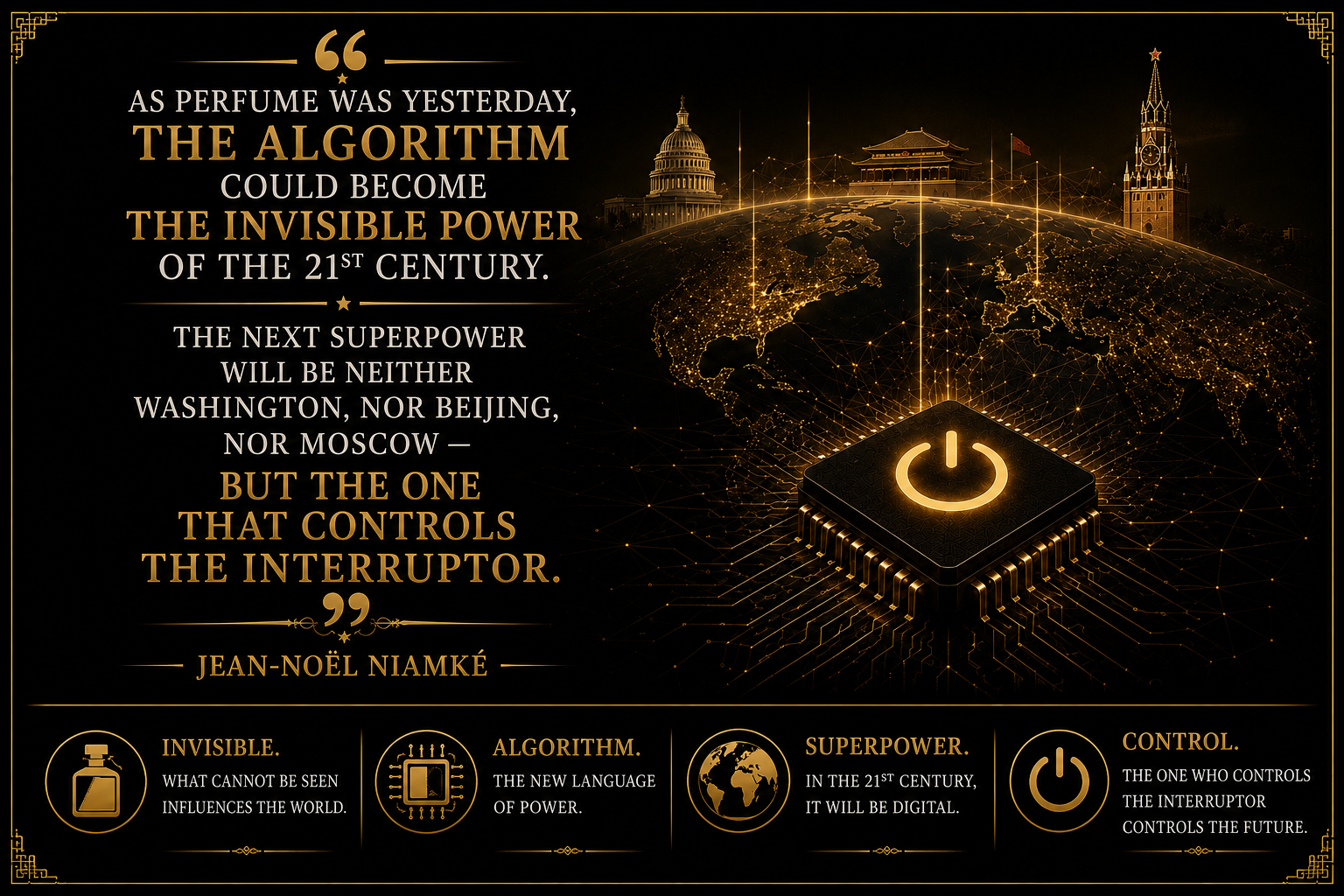
→ Is power still measured in tanks and trillions — or in kilometres of undersea cable and parameters of an AI model?
Intellectually yours,
Jean-Noël NIAMKÉ
Financial Expert — Geo-economic & Strategic Analysis
Sources:
IMF World Economic Outlook 2025 · SIPRI 2024 · World Bank · US DoD · Peterson Institute · Maddison Project Database · African Development Bank · Belt and Road Initiative Research Center · Fortune Business Insights 2025