DEVELOPMENT AID: SIXTY YEARS ALREADY, WHY SO LITTLE DEVELOPMENT?
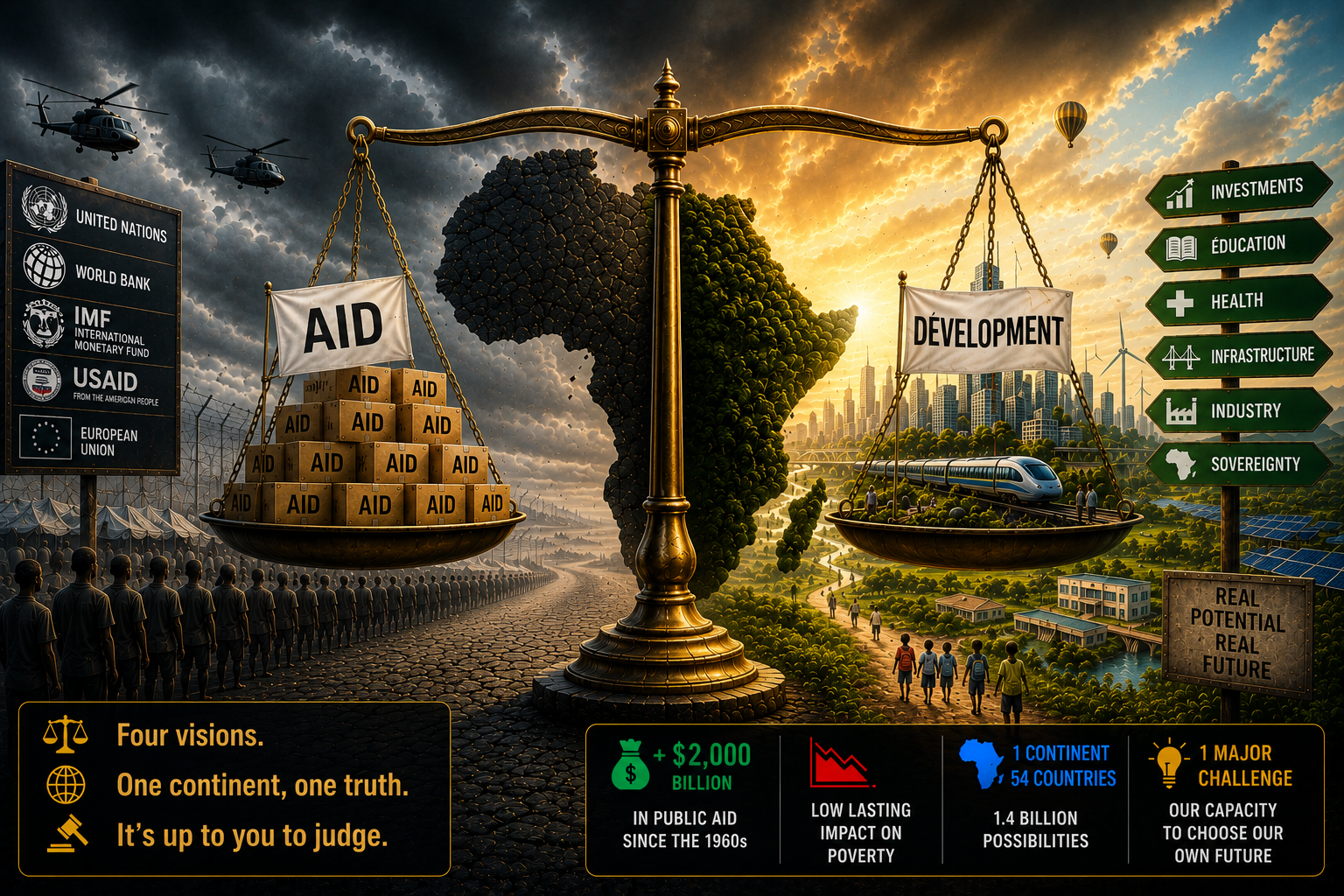
More than $2,000 billion paid. And a question that no one really wants to ask.
Every day, more than $100 million arrives in Africa in the name of development.
For sixty years, the world has been giving. Billions have been paid. Programmes launched. Conferences organized. Published reports.
And yet, the same question comes up.
Schools have been built. Children vaccinated. Marked out roads. Hospitals have been set up. And yet, three generations of Africans have been born on a drip of international aid. Thirty-three out of fifty-four countries remain officially classified as "least developed countries" by the United Nations.
How can a continent that has been helped for sixty years remain officially "developing"?
This is not a naïve question. This is the most uncomfortable question that international institutions prefer not to hear. Because the answer implies questioning not the intentions, but the entire architecture of the system.
Some forms of assistance have saved lives and continue to save lives. Others have created structural dependencies that benefit donors more than recipients. This is not an accusation. This is what the data shows.
In our previous article (excluding last week's unpublished excerpt on football), we showed that Africa loses between $50 billion and $88 billion in illicit financial flows each year — for every $40 billion it receives in aid. Today, we are looking at the aid itself.
For decades, the world counted the billions it sent. Much less so those who went back the other way.
As in football, the question may not be one of talent. It is first and foremost that of the system.
There may be no shortage of help. It is perhaps the development that is still struggling to keep up.
To understand this paradox, we must go back to the origin of the system. Because development aid was not born in a historical vacuum. It was born in a world already organized by power relations.
PART I How the World Decided to Help Africa
1944. New Hampshire. A mountain hotel. Forty-four countries, two empty seats, those of Africa. Because it is still colonized.
However, it is there, in Bretton Woods, that the rules organizing the world economy are written. The IMF, the World Bank, the international trade framework. Sixteen years later, 1960. Seventeen African independences in a single year. Development assistance is a moral obligation, a historical reparation, and an investment in global stability.
But behind the generosity displayed, there was also calculation.
In the midst of the Cold War, keeping Africa in the Western camp was less expensive than a war. Aid is not only humanitarian. It is geopolitical. These two dimensions are not mutually exclusive—but they explain why the system architecture was designed to serve multiple purposes simultaneously.
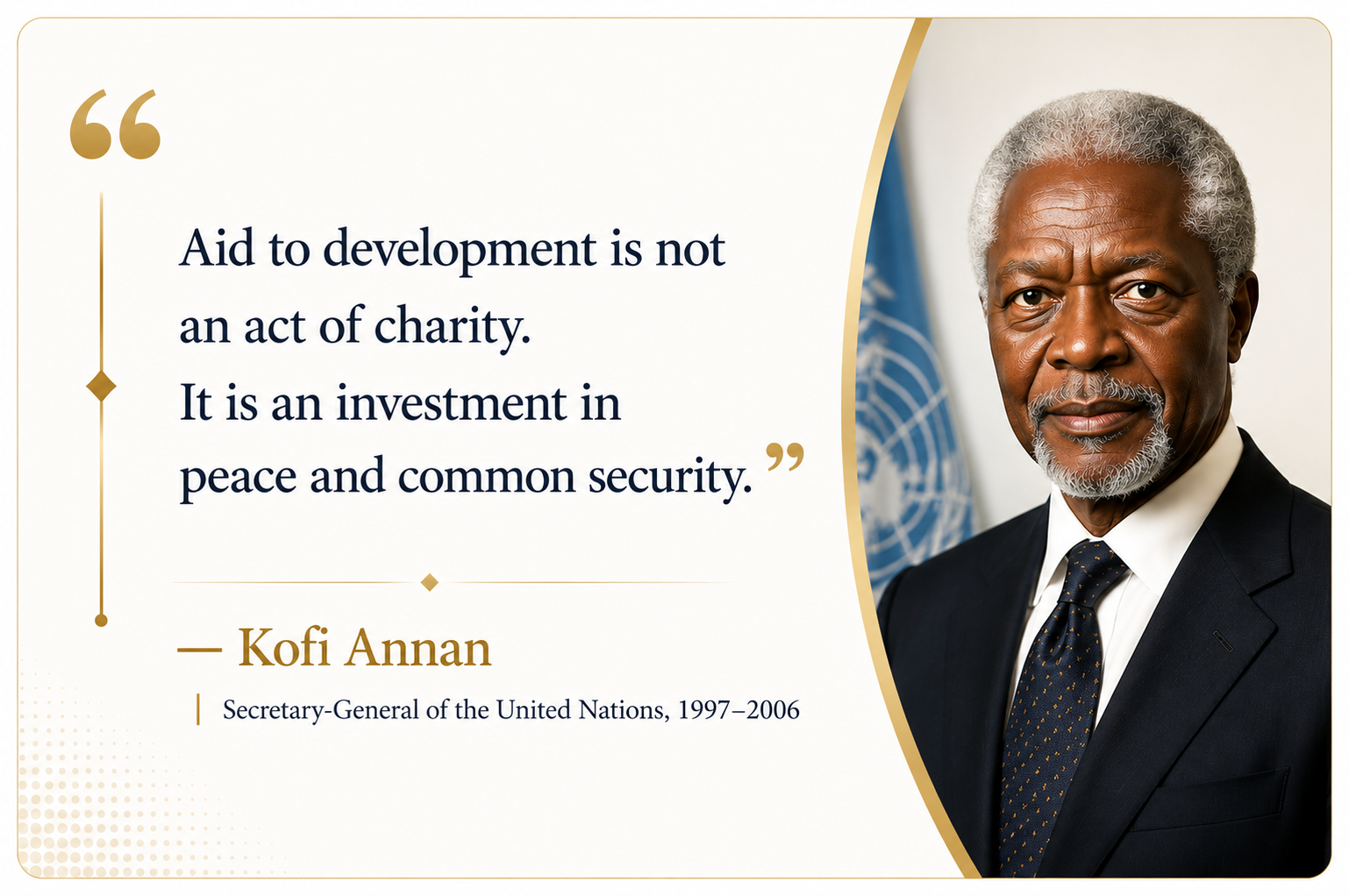
But before investigating this case, we must do something that few dare to do.
Part II What Aid Has Really Achieved
Let us stop. Before the trial, there are the facts.
In 1990, infant mortality in sub-Saharan Africa reached 180 deaths per 1,000 live births. In2023, this figure was almost halved (World Bank). These are not statistics. Millions of children survived.
In malaria, the distribution of insecticide-treated mosquito nets reduced mortality by more than 40% between 2000 and 2015 (WHO). Esther Duflo's work has shown through controlled trials that free mosquito nets significantly save more lives.
What about HIV? The PEPFAR program (2003) funded access to antiretrovirals for millions of African patients. It remains to this day cited as the most effective health aid program ever deployed on this scale.
Emergency aid saves. Targeted health aid is working.
And yet... None of these successes produced a single structural economic take-off. Sixty years. 2,000 billion. Thirty-three African countries are still "LDCs" (Least Developed Countries).
The aid has improved living conditions. It has not transformed the economic structure of the continent.
It is not the same objective, nor the same debate.
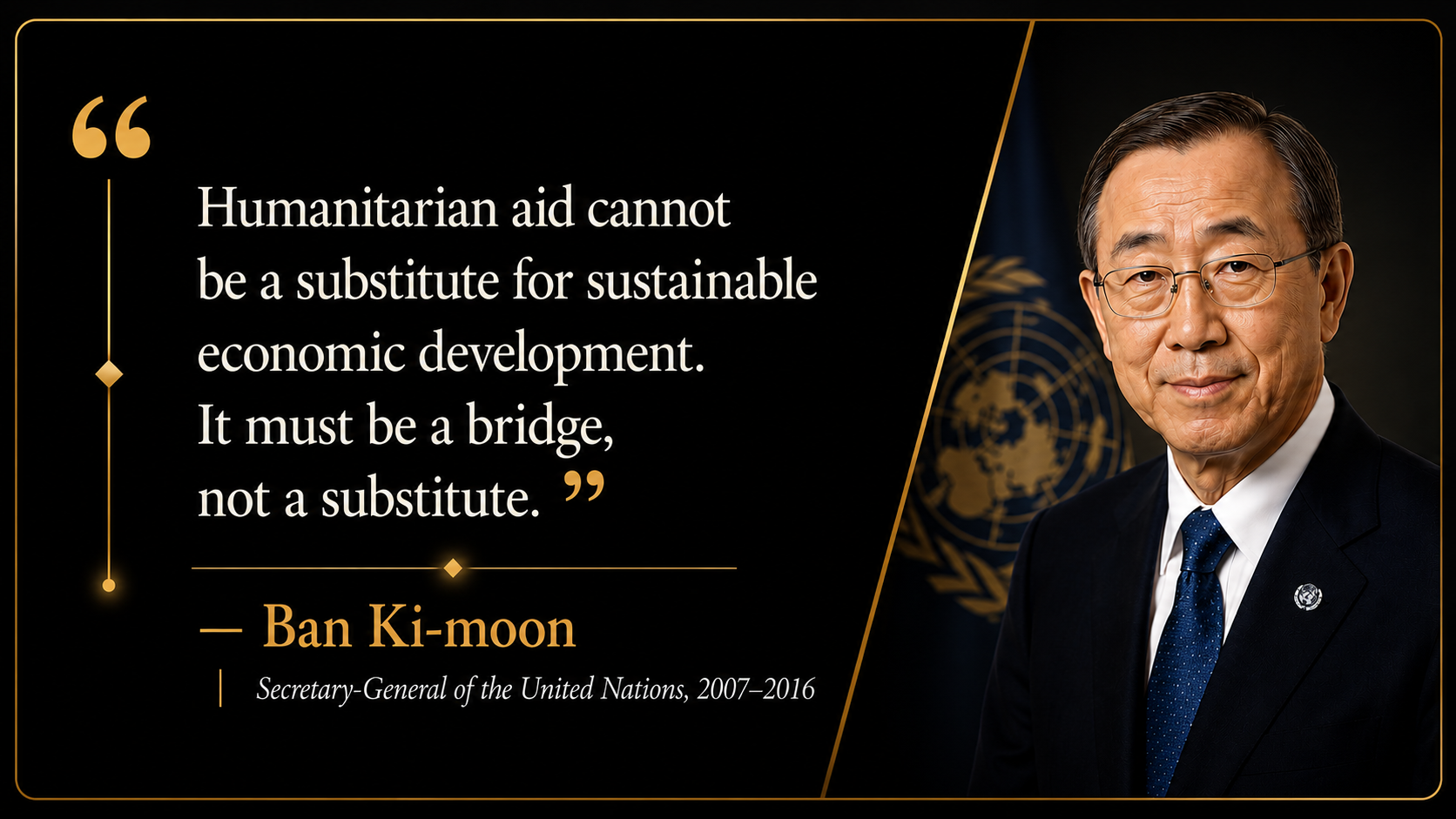
As Ban Ki Moon said so well:
The numbers tell a story. But numbers alone are not enough. Because behind every billion donated is a vision of the world. And on this point, economists disagree. Not at all.
Before going any further, let's clarify an essential point. Yes, corruption, conflict and poor governance explain some of the continent's difficulties. But the question remains: Are these factors alone enough to explain why more than $2 trillion in aid has produced so little sustainable economic transformation? This is precisely the question that the following four economists try to answer.
Part III Four Witnesses, Four Verdicts
On development aid, four economists are facing each other.
They look at the same data. They observe the same continent. They analyze the same failures. But they do not draw the same conclusions at all. And this is precisely where the debate becomes interesting.
- First, Jeffrey Sachs — Aid as a Trigger
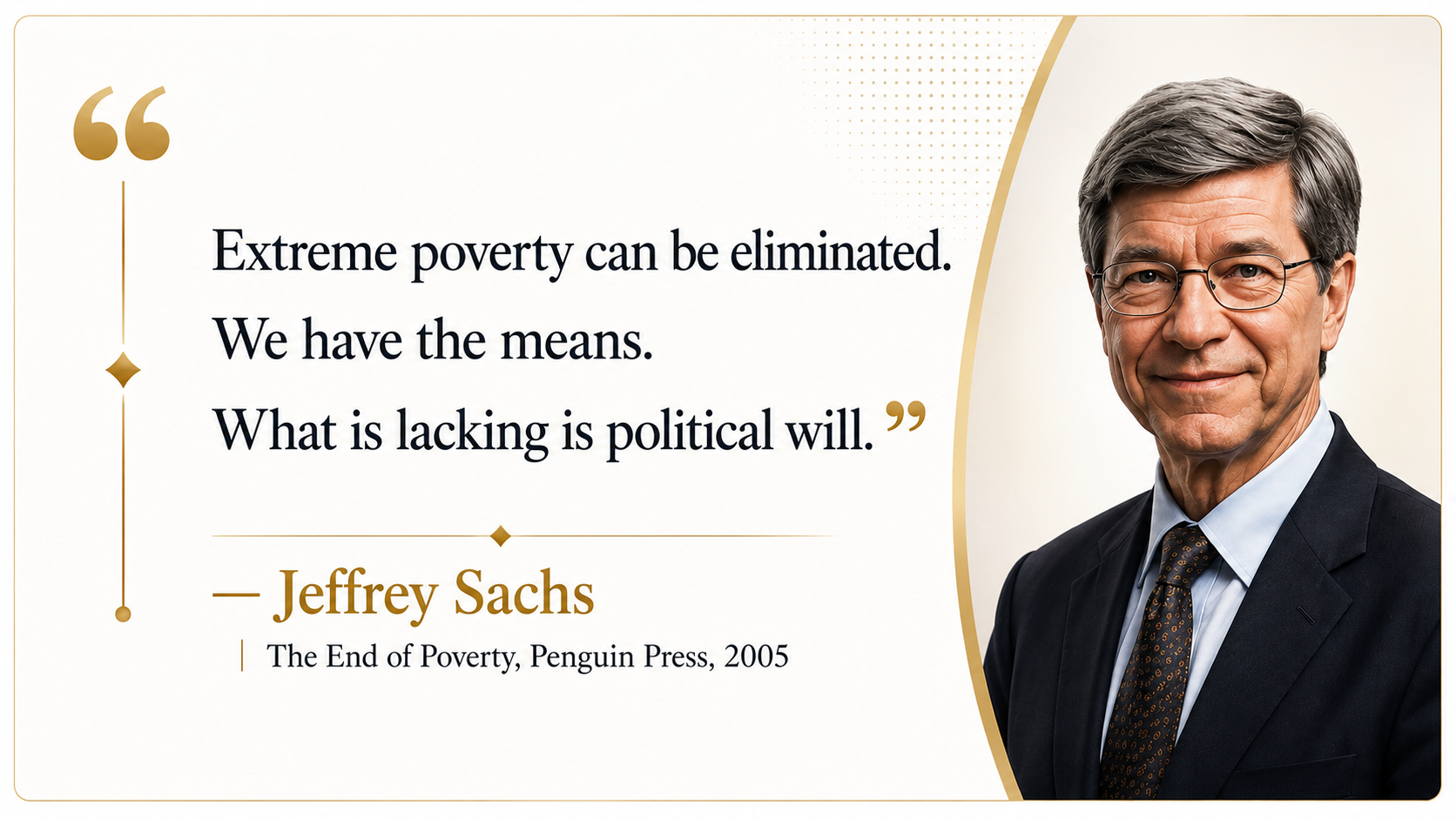
He starts from a simple idea: some countries are not poor because they lack willpower, but because they are trapped in a trap.
Not enough infrastructure to produce. Not enough savings to invest. Not healthy enough to work effectively. Not enough education to create a modern economy. In this logic, asking a very poor country to develop on its own is almost like asking someone who has fallen to the bottom of a well to build the ladder that will allow him to get out of it.
For Sachs, aid must therefore play the role of the great trigger. A massive, coordinated, simultaneous shock: roads, schools, hospitals, energy, agriculture, health. Everything must be started at the same time to allow the economy to cross a critical threshold. This is the logic of the Big Push.
The aid is not meant to be permanent. It must be a launching pad.
The problem, of course, is that this vision presupposes one immense thing: that the institutions that receive this aid are able to absorb it, coordinate it, and then transform it into productive capacity.
And it is precisely here that "the father of the trial" comes into play.
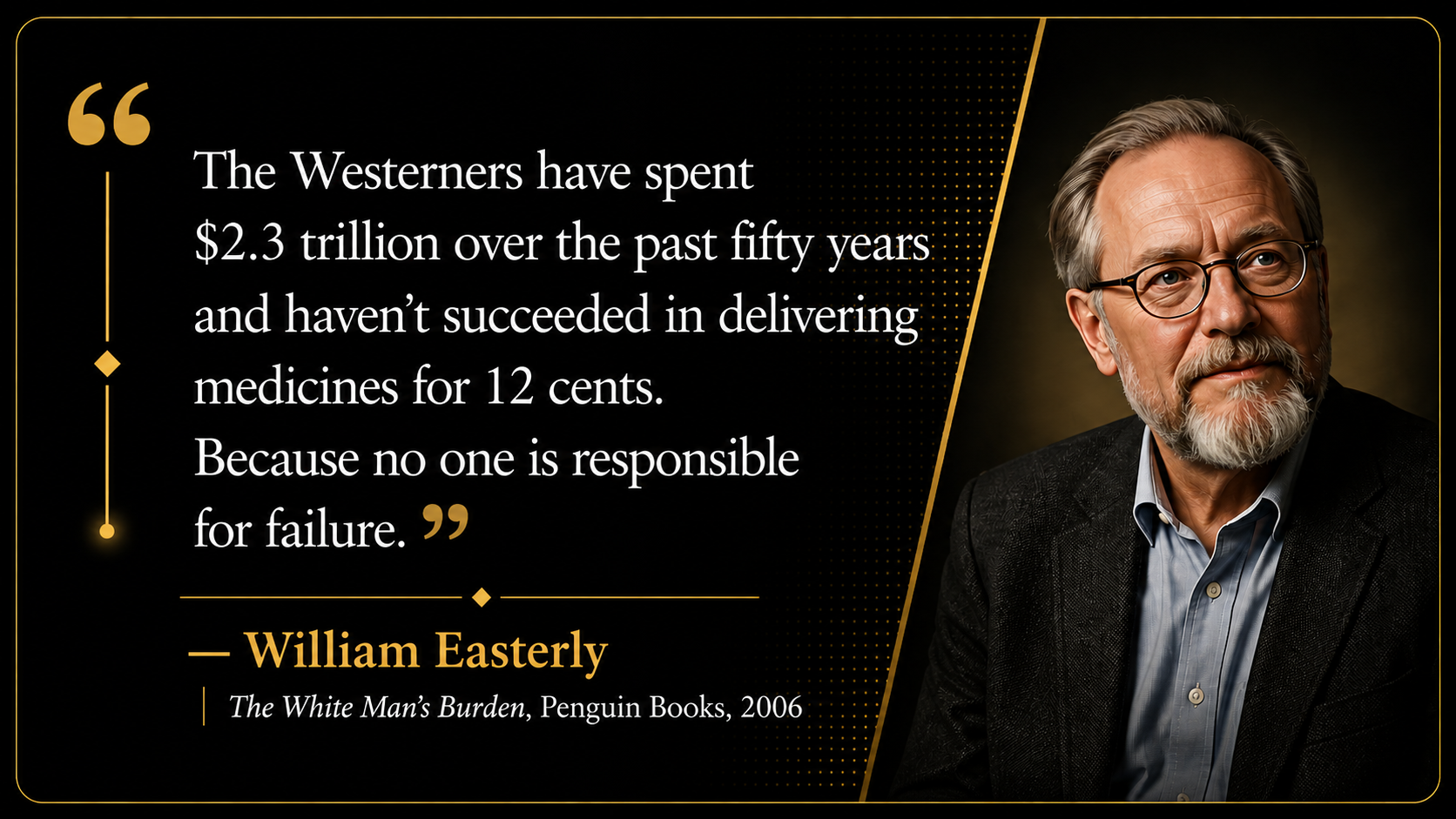
- William Easterly — The Trial of the Planners
Easterly , on the other hand, looks at Sachs and answers: the problem is not only the lack of money. The problem is those who claim to know how to use it from Washington, London, Paris or Geneva. For him, international aid suffers from a deep flaw: it is thought out by planners, experts, institutions, consultants. People who draw up major programs for populations that they sometimes only know through reports. His accusation is violent: the aid system rewards the announcement of projects more than their real success. A budget is released, a report is published, a conference is organized, a photo is taken.
But who really responds when the project fails? Who loses his job? Who reimburses? Often, no one.
This is what Easterly calls the agency problem: those who decide are not always the ones who suffer the consequences. Sachs wants to push the economy upwards. Easterly, on the other hand, wants to let solutions emerge from below.
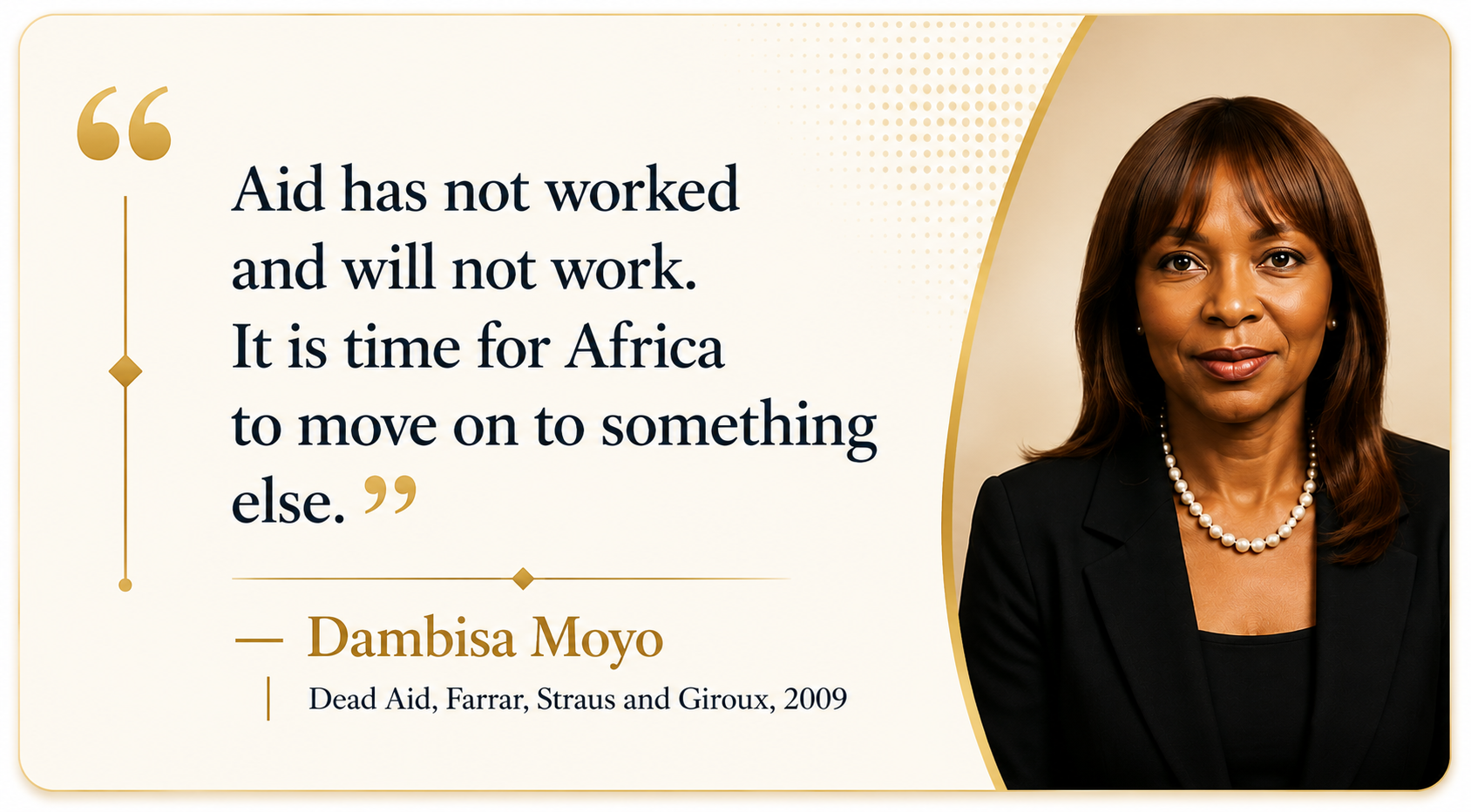
But Dambisa Moyo goes even further. It does not only say that aid is poorly organized. She says it can become toxic.
- Dambisa Moyo — Helping as an Organized Dependency
Rightly, the latter poses the most brutal criticism. For her, official development assistance, when it becomes permanent, no longer treats the sick. It settles him in the disease.
A state that receives a significant part of its resources from outside no longer has the same relationship with its citizens. Why increase taxation? Why develop a real tax base? Why be accountable to the population if the budget comes from international donors?
In a healthy democracy, taxation creates a requirement. The citizen pays. So the citizen asks. So the State responds. But when the state depends more on donors than on taxpayers, the social contract is distorted.
Moyo adds another effect: aid can weaken the local economy. Too much foreign currency, too many external programs, too many NGOs that bypass local administrations. As a result, the local private sector can be stifled instead of strengthened.
In this logic, aid is no longer a launching pad. It becomes a crutch. And sometimes, a crutch so comfortable that it prevents you from learning to walk on your own.
And this would not make sense without our eminent Esther Duflo, Professor at MIT in Massachusetts, who opts for a completely different path.
- Esther Duflo — The Proof Against Slogans
Faced with Sachs, Easterly and Moyo, Esther Duflo refuses the great ideological duel. She comes up with another question.
Not: "Is the aid good or bad?" But: "What really works?" His approach is almost clinical. We test. We compare. We observe. We keep what works. We abandon what fails.
Where Sachs reasons as an architect of development, Easterly reasons as a critic of institutions, and Moyo reasons as a procurator of dependence, Duflo reasons as an experimenter.
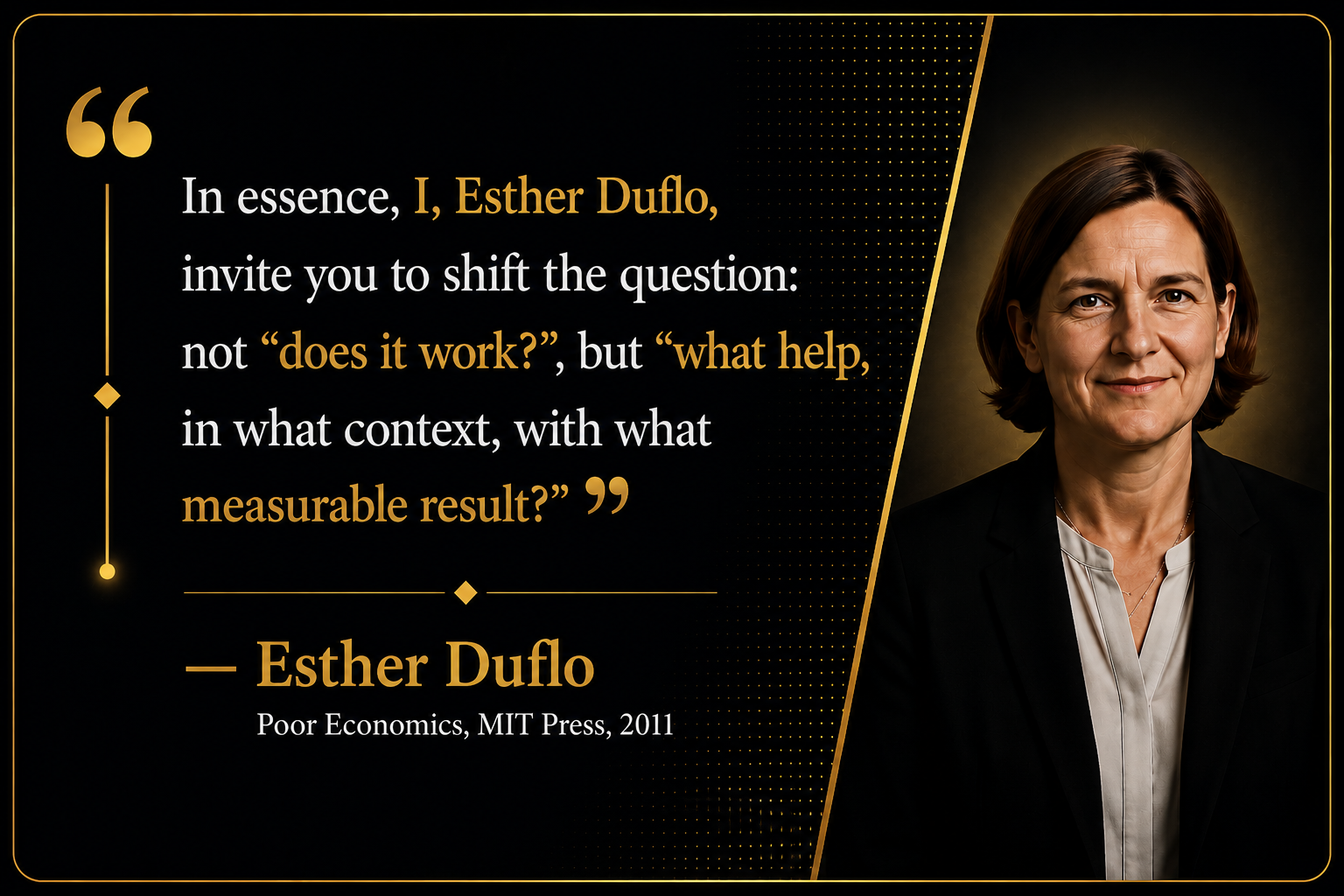
Some aids work. Others don't. Free mosquito nets save lives. Some direct transfers do improve living conditions. But other projects, although expensive and very well presented, have almost no lasting impact. The real question is therefore no longer: should we help or not help?
What help? For whom? In what context? With what measurable result?
It's less spectacular. It's less ideological. But it's probably more honest.
Thus, the real lesson is that, deep down, these four economists do not totally contradict each other. They shed light on four floors of the same problem.
Sachs reminds us that some countries need a trigger;
Easterly, for his part, that a grand plan without responsibility can become a bureaucratic machine;
Moyo, on the other hand, says that permanent aid can destroy the social contract.
And Duflo concludes that no theory is worth much without measurable proof.
And this is precisely where JN Insight asks its question.
If everyone has a part of the truth...
Why does the system continue to produce so little sustainable transformation?
Perhaps because the debate on aid too often opposes intentions. When the real issue lies elsewhere. In the mechanisms. In the incentives. In the flows. In power.
While they are debating, the problem persists. And when a problem persists for so long, it may no longer be just a failure. It may have become a system.
Part IV Four Mechanisms Weakening the System
These mechanisms are documented. They are not an accumulation of misfortunes. They are systemic.
The 1st mechanism: Budget dependence.
In Mozambique, Uganda and Malawi, external aid has accounted for between 30 and 50% of the national budget for several decades (OECD). A state financed from the outside has less incentive to develop its internal fiscal capacity. And a government that is less dependent on its taxpayers has a structural incentive to be accountable to them. It is a problem of incentives, not morality.
The 2nd mechanism: Conditionalities and blocked industrialization.
In the 1980s and 1990s, structural adjustment programmes imposed privatisation, liberalisation and deficit reduction. In Côte d'Ivoire, Ghana and Nigeria, nascent local industries were exposed to international competition before being consolidated. The West had not applied these same recipes during its own industrialization. There is also a structural question: an industrialized Africa would compete with the industries of donor countries.
The 3rd mechanism: Tied aid.
A significant proportion of bilateral aid remains in the donor country. In 2023, USAID partially reformed these rules, recognizing that buying locally in Africa would have been more efficient — and less expensive. This is what everyone has known for thirty years. In other words, aid that wallows in purchases made by the donor on his own soil from a third party may not be aid, but a disguised indirect dependence.
The 4th mechanism: The paradox of flows.
According to the UNECA (Mbeki report, 2015), Africa loses at least $50 billion in illicit financial flows every year. UNCTAD estimates this figure at 88.6 billion in 2020 (UNCTAD, 2020). For 40 billion received in aid (OECD, 2023).
The incoming flow: 40 billion. The outflow: up to 88 billion.
Aid does not make up the deficit. She hides it.
The problem may not be the tap. The problem is above all the leak.
We send 40 billion. We let 80 billion go. And we call it help. Bleeding is not corrected by simply filling the infusion. You don't develop a country for him. He is given the means to develop himself.
Part V Countries that broke the rules
If aid were the key to development, the countries that have received the most aid would be the most developed. This is not what the data shows.
South Korea and Ghana had comparable GDP per capita in 1960. The gap is a factor of fifteen today (World Bank). Korea has developed through a deliberate industrial policy, protected sectors while they consolidate, and massive investment in technical education. Not by help. They were initially part of the development aid program, so how is it that today the Aonese banker borrows from the Korean and not the Ghanaian?
Botswana has negotiated co-ownership of its diamond mines, created a sovereign wealth fund, and invested in education and health. Rwanda has limited the number of NGOs allowed, made aid conditional on measurable objectives, and developed an explicit national strategy. Mauritius has diversified its economy without natural resources or massive structural aid.
None of these models is perfectly transposable. But all of them show that a country progresses when it retains control of its economic strategy.
They accepted help. They have not built their future on it. That's the difference.
If these examples exist, why don't they set a precedent?
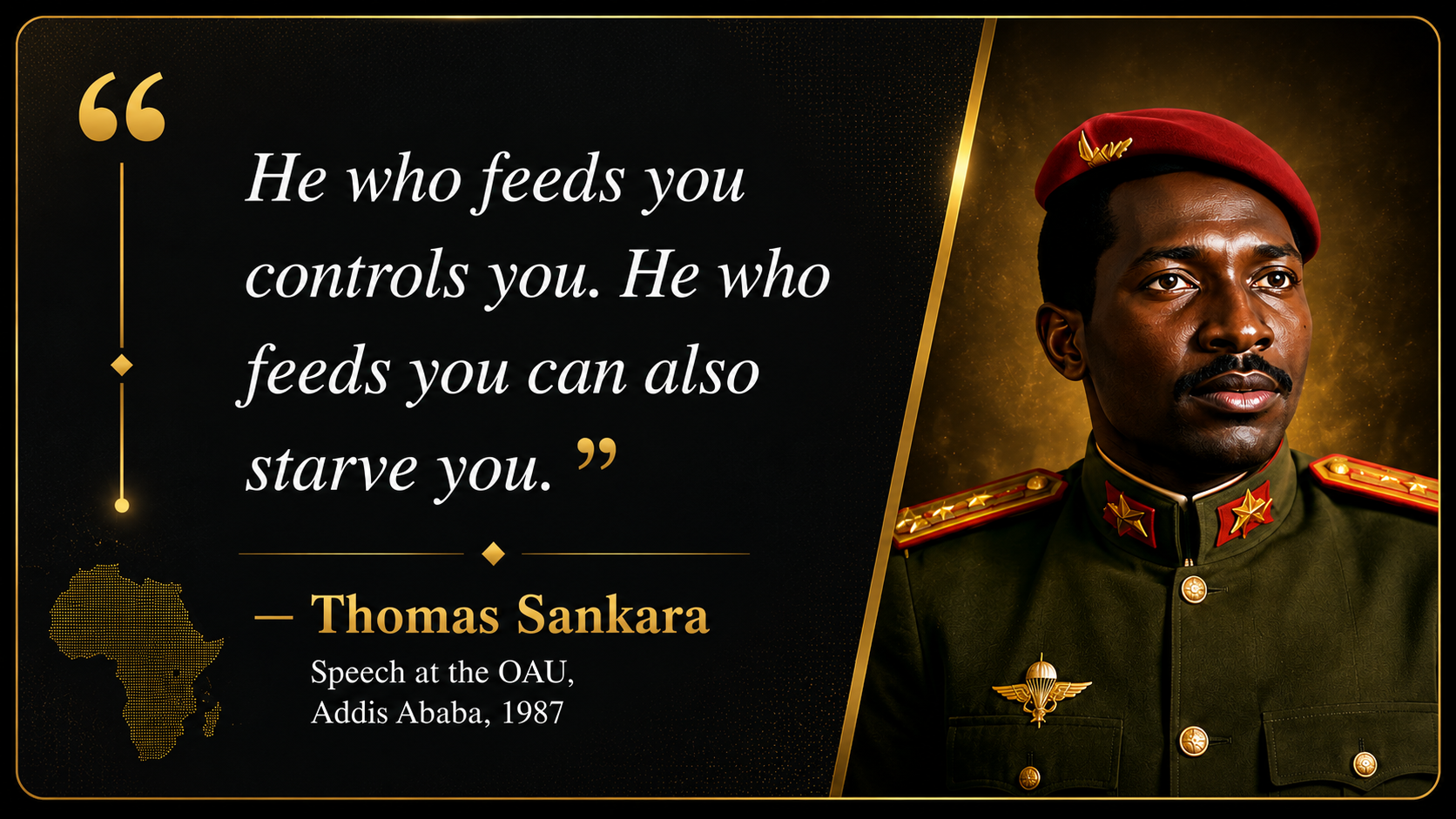
Part VI The Forgotten Paradox
For sixty years, the world has been asking itself: do we need more aid or less aid?
Maybe that's the wrong question.
Remittances from the diaspora: $53 billion in 2022 (World Bank). More than the entire ODA (Official Development Assistance). Arrived directly in the families. Without intermediaries. Unrelated. Without a conference.
Intellectual property: Essential medicines, agricultural technologies and improved seeds are protected by patents held almost exclusively by companies in the North. European customs duties tax African processed products more than raw materials.
The debate on aid is perhaps the most beautiful smokescreen of the world economy.
For sixty years, we have been discussing the amount. Not the rules of trade. Not transfer pricing. Not discriminatory tariffs. Not inaccessible patents. Not stability clauses that lock states in for twenty or thirty years.
The problem is not the amount of aid. It is the structure of the system that organizes the outflow of wealth. And the debate on aid, by occupying all the space, avoids talking about it.
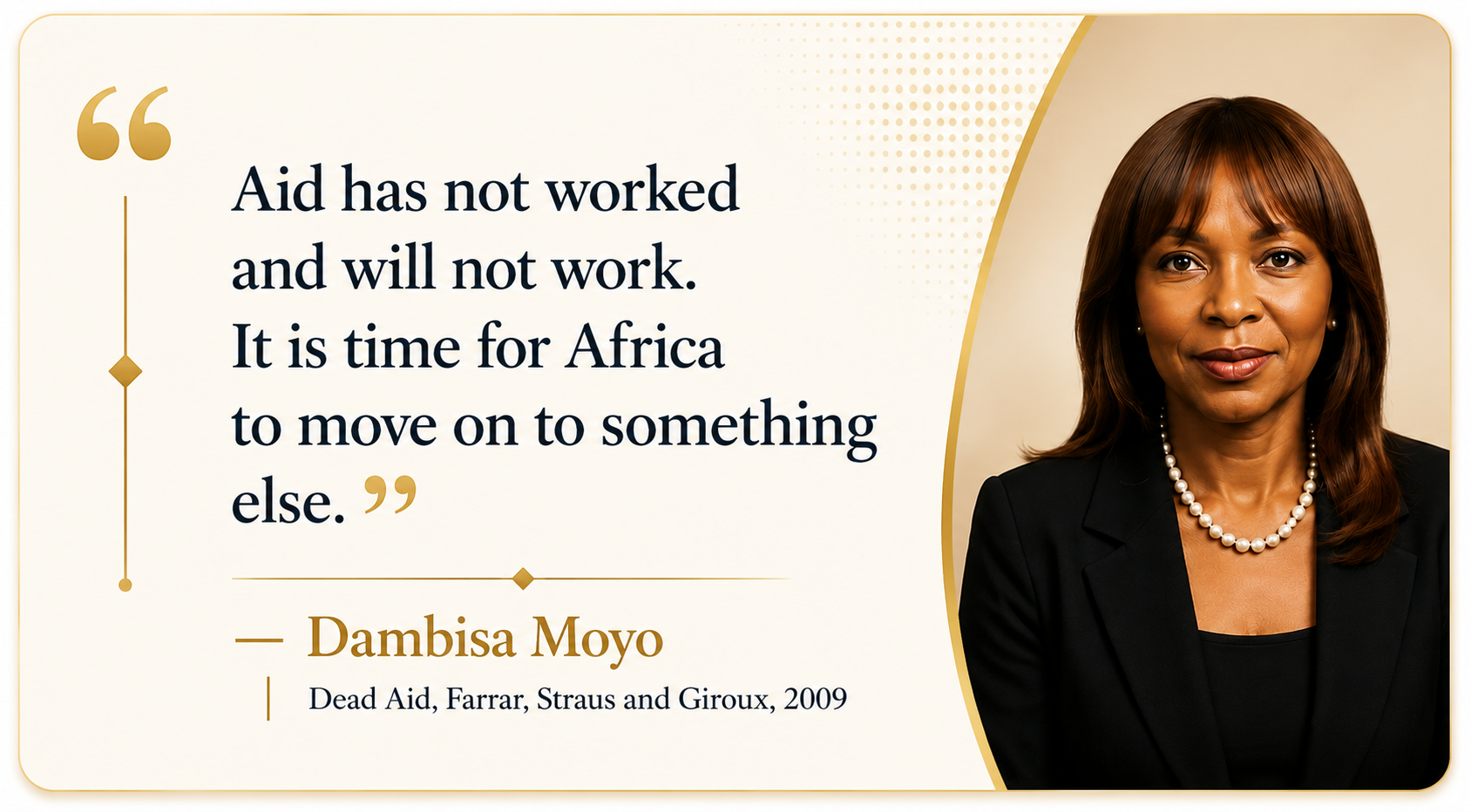
This observation leads directly to the only question that matters.
Part VII From Perfusion to Sovereignty
This chapter is not militant. It is structural.
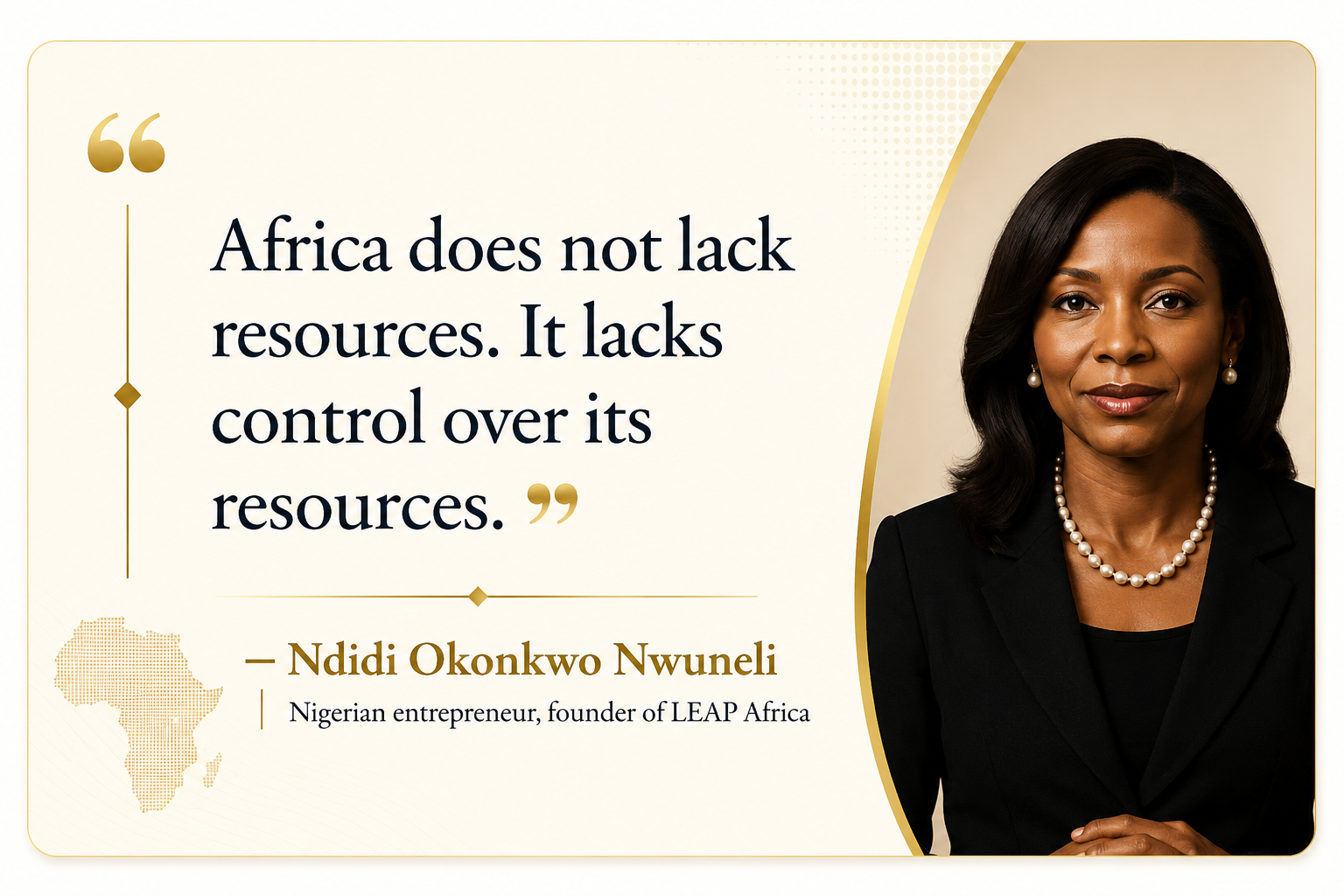
The AfCFTA — 54 nations, 1.4 billion people, $3.4 trillion in cumulative GDP. If it materializes, it will allow Africa to trade with itself, to build internal value chains, to structurally reduce its dependence. It is more powerful than any bilateral aid.
Local processing: Zimbabwe banned the export of raw lithium in 2022. African fintech — M-Pesa, Wave, Flutterwave — has transformed the financial inclusion of tens of millions of people without a dollar of public aid. These are acts of economic sovereignty.
Taxation: a state that finances its budget through taxes is structurally encouraged to be accountable to its taxpayers. This is the foundation of democracy. And the foundation of sustainable development. Aid cannot replace that.
Emergency aid saves. Targeted aid can work.
But permanent aid, when it replaces investment, taxation and sovereignty, becomes a substitute with no way out.
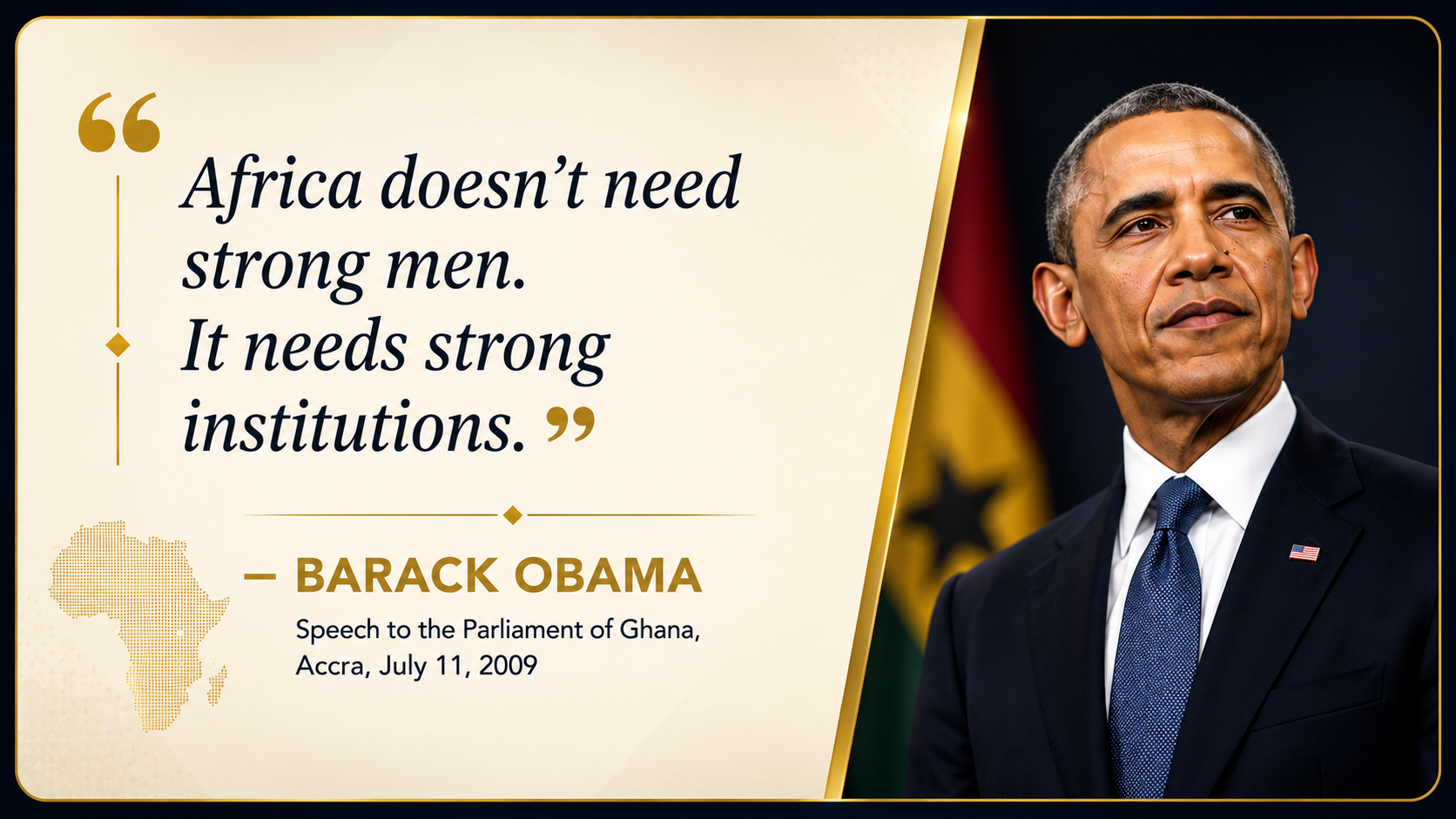
10 KEY INDICATORS
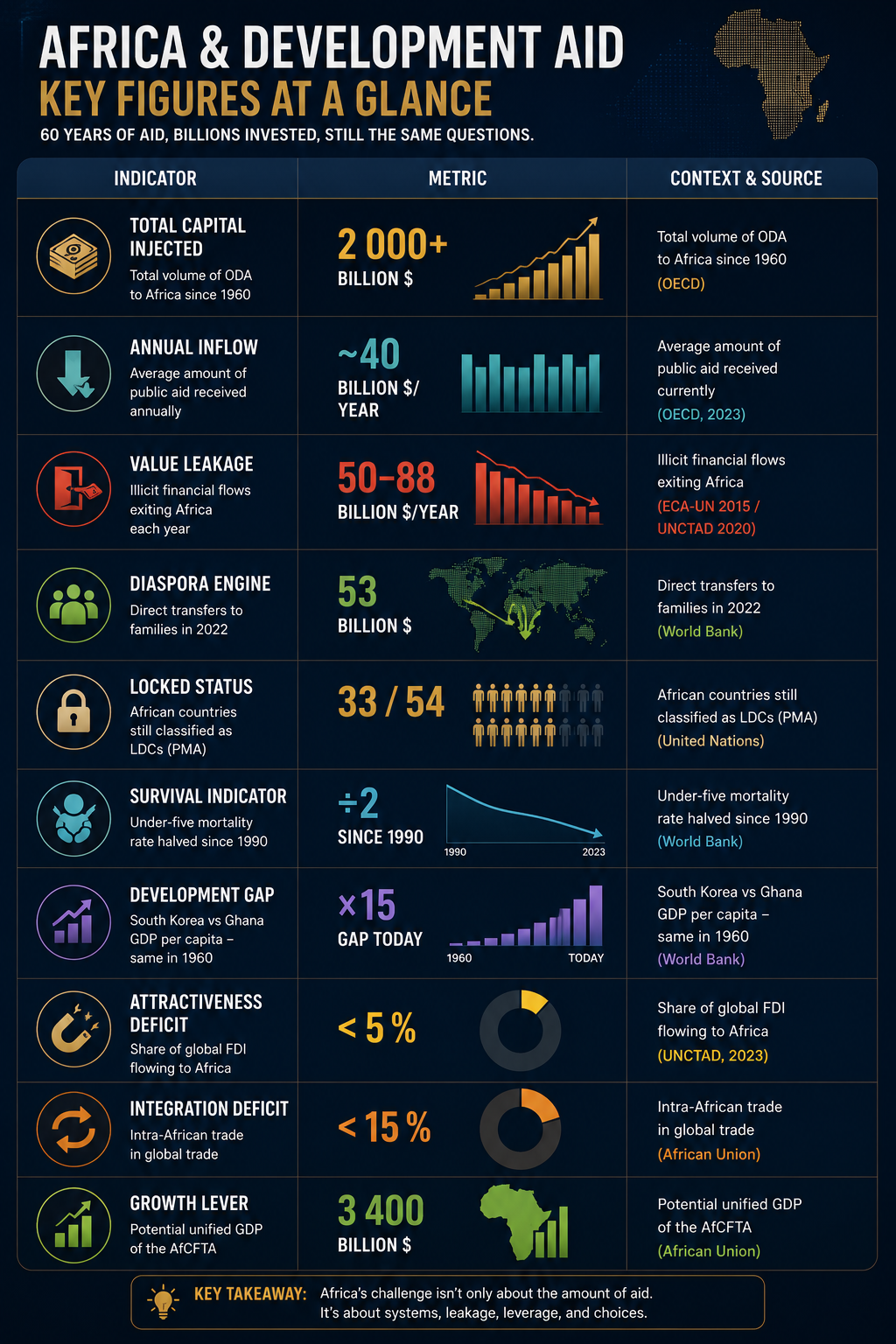
Sometimes help is essential. Addiction never is.
Generosity becomes a trap when it replaces autonomy. Development is not transferred. It is being built.
The real issue may not be to receive more aid.
It is to build a world where it gradually becomes useless.
This may be the real debate.
Not knowing whether the aid is good or bad. But to understand why, after sixty years, it is still necessary.
What to remember — Who really helps whom?
Official development assistance has saved millions of lives. Health data is there to testify to this. This is not in question.
But some of its forms have also generated, in certain contexts, effects of structural dependence that require a cold analysis. It is not a problem of bad intentions. It is a problem of incentives. And an incentive problem in economics always produces the same effects: behaviour aligns with interests, not intentions.
In "Africa and History", we showed how power could impose itself by controlling narratives. In "Is Africa really poor?", how it could be exercised through value chains. Here, it is sometimes perpetuated by dressing up the dependence of the words of help.
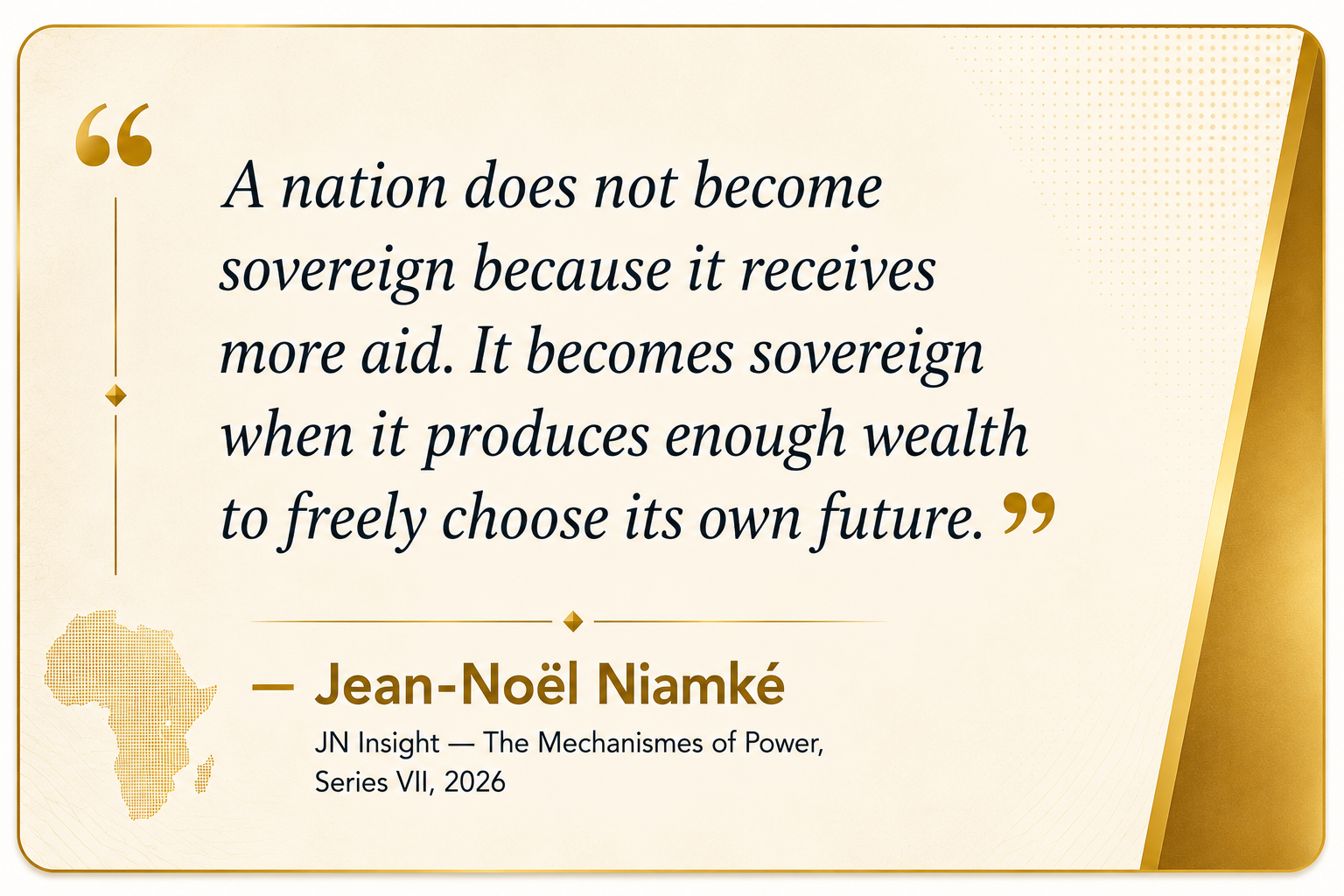
A nation does not become prosperous because it receives more.
It becomes so when it creates more.
→After sixty years and 2,000 billion, if aid had really worked as promised, what would be different today?
Who really benefits from a system that no one dares to question because it bears the name of generosity?
True development may not begin when the aid arrives. It begins when their absence no longer becomes a problem.
Intellectually yours,
Jean-Noël Niamké
FINANCIAL EXPERT
The Mechanisms of Power — Series VII | Strategic & geopolitical analyses
Sources:
JN Insight — Has Africa really never gone down in history?
JN Insight — Is Africa really poor?
Jeffrey Sachs — The End of Poverty, Penguin Press (2005)
William Easterly — The White Man's Burden, Penguin Books (2006)
Dambisa Moyo — Dead Aid, Farrar, Straus and Giroux (2009)
Esther Duflo & Abhijit Banerjee — Poor Economics, MIT Press (2011)
Nobel Prize in Economics — Esther Duflo (2019)
UNECA—Mbeki Report, Illicit Financial Flows (2015)
UNCTAD — Illicit Financial Flows $88.6 billion (2020)
WHO — Malaria, global stocktake
World Bank—Child Mortality, Sub-Saharan Africa
World Bank — GDP South Korea vs Ghana
World Bank — African Diaspora Remittances 2022
USAID — Food Aid Reform (2023)
Published by:
Member discussion
JN Insight © 2026
Powered by Ghost