39 Trillion Dollars - Why Does the World Keep Financing America?
SERIES III/IV | JN INSIGHT | OCTOBER 2026
THE DOLLAR — THE INVISIBLE WEAPON
US debt should terrify the markets. Instead, the entire world keeps buying it.
Washington, 15 August 1971. It is 9:07 p.m.
Richard Nixon, President of the United States, is addressing the nation live on every American television network. The country expects him to speak about Vietnam, inflation or unemployment. Instead, in ten minutes, he is about to change the world forever.
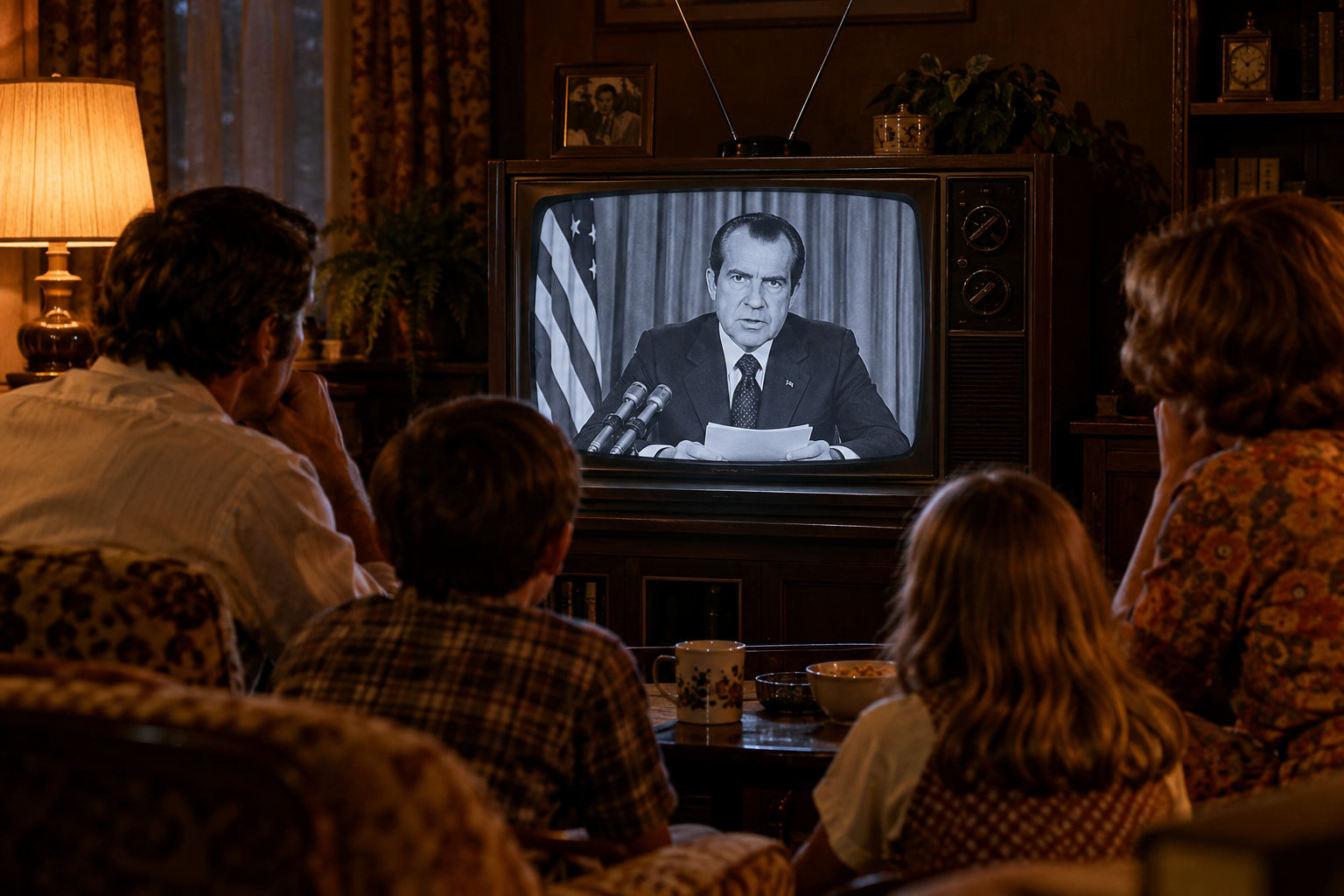
After intense deliberation in the Oval Office, against the backdrop of the Cold War, one decision is announced: the dollar will no longer be convertible into gold.
There is no vote in Congress, no consultation with America’s allies and no advance warning to the IMF. The decision is unilateral, abrupt and definitive.
Economists around the world watch their screens without fully grasping what it means. Fifty-five years later, we are only beginning to understand the scale of the transformation.
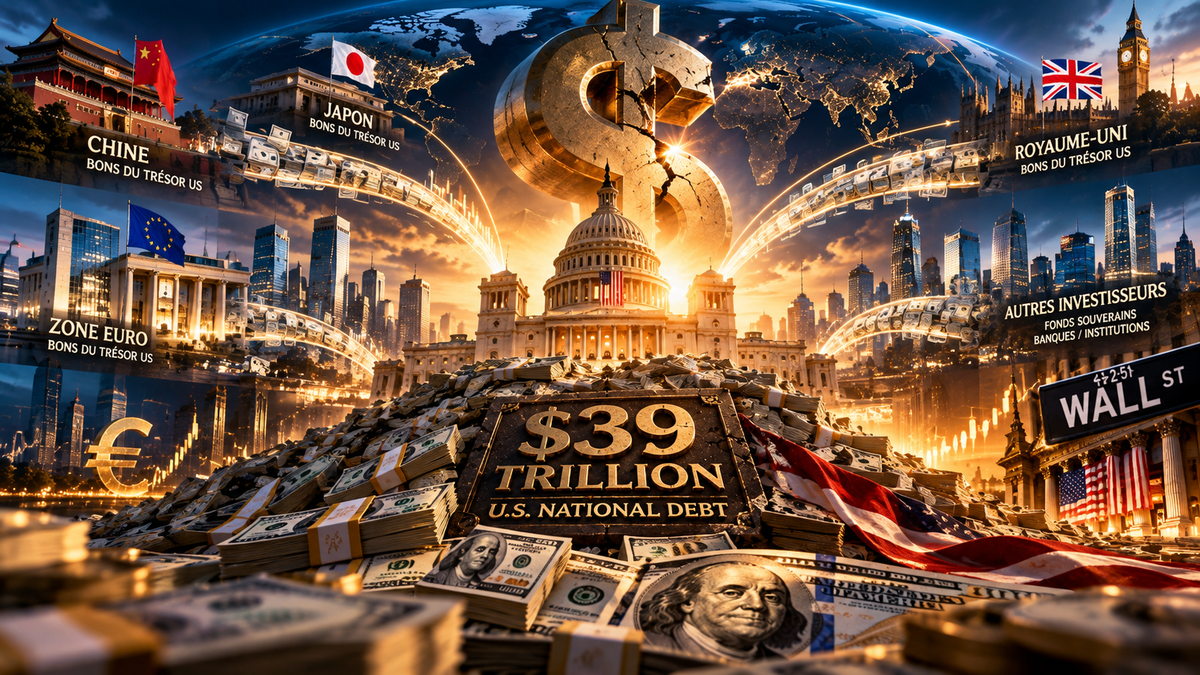
The United States now carries more than $39 trillion in gross federal debt, including intragovernmental holdings. The portion that actually circulates through financial markets—the securities sought by banks, funds and foreign central banks—is approaching $32 trillion.
And yet.
The world continues to buy US debt. Central banks hold it in their reserves. Sovereign wealth funds accumulate it. Asset managers place it at the core of their portfolios. Why?
How does this privilege—unique in modern monetary history—actually work? And how long can it last?
That is what this instalment sets out to explain, without euphemism.
PART I — THE NUMBER THAT SHOULD CHANGE EVERYTHING
Let us begin with the scale, because ordinary language is no longer enough.
$39 trillion.
If one million dollars had been spent every hour since the beginning of the Common Era, the total would still amount to only about $17.8 trillion—less than half of today’s US federal debt.
And that is not the most troubling figure.
In 2026, the United States is expected to pay more than $1 trillion in net interest on its debt.
One trillion dollars in interest alone, without reducing the outstanding stock of debt by a single dollar.
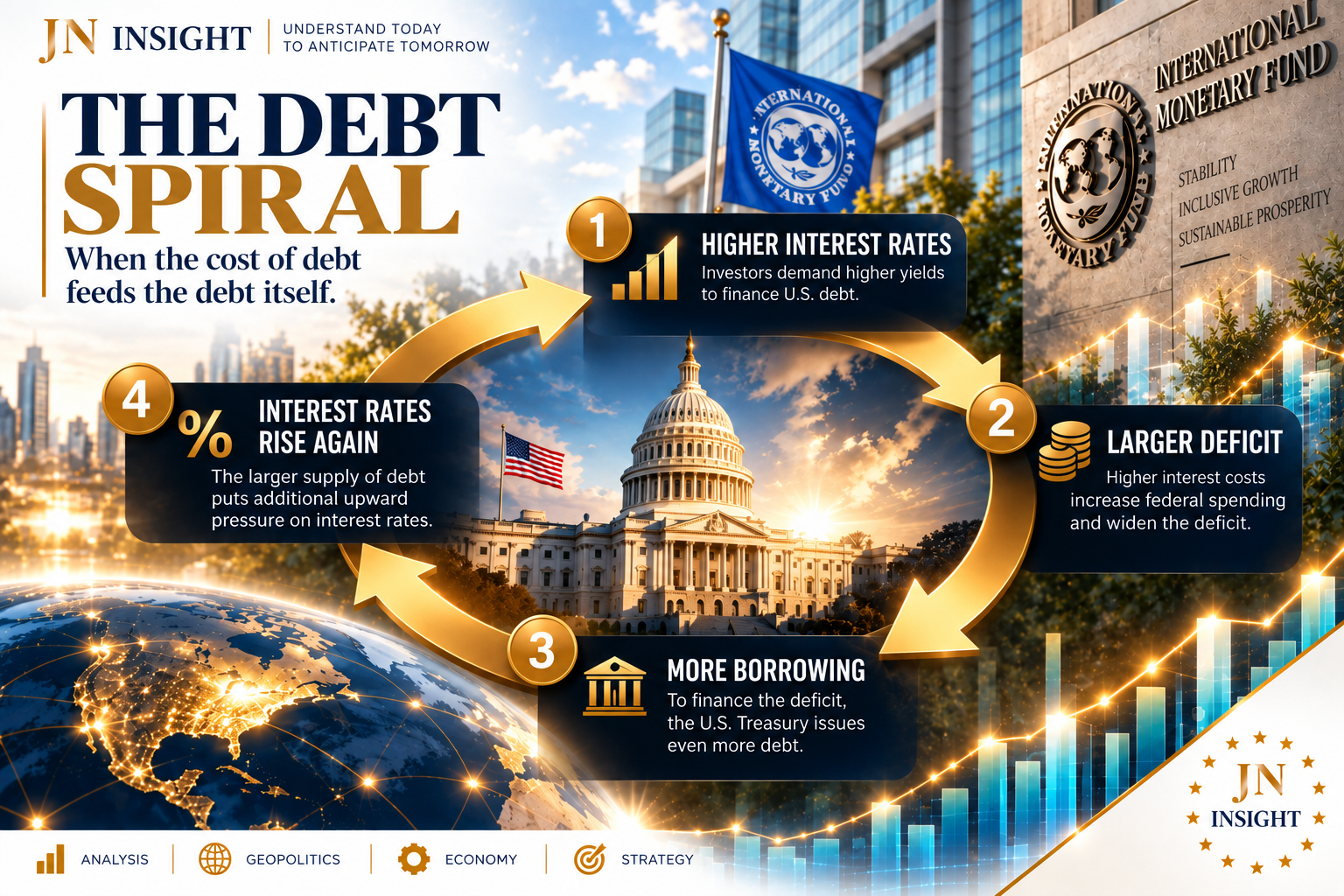
For the first time, the United States is spending more on interest than on its defence budget. Once debt service overtakes military spending, a dangerous cycle can develop:
Higher rates → larger deficits → heavier borrowing → still higher rates.
Greece experienced it. Argentina did too. So did Sri Lanka.
But the United States is not Greece.
The dollar does not make deficits free. America’s monetary privilege postpones the constraint of debt; it does not abolish it. Interest already absorbs more than $1 trillion a year, and the Congressional Budget Office identifies it as a major driver of long-term fiscal deterioration.
The question is not simply whether the trajectory is sustainable. The real question is why the world continues to finance it.
PART II — 1944 AND 1971: MONETARY CONQUEST IN TWO ACTS
To understand why the dollar is so difficult to replace, we must return to the moment it became the central currency of the international system—and to the way it survived the collapse of the order that created it.
Act I. July 1944. Bretton Woods, New Hampshire.
The war is not yet over, but the Allies are already designing the post-war economic order. Forty-four nations gather at a large hotel in New Hampshire to rebuild the international monetary system.
Their decision is historic: the dollar will become the world’s anchor currency, convertible into gold at $35 an ounce.
The dollar becomes the backbone of the world economy.
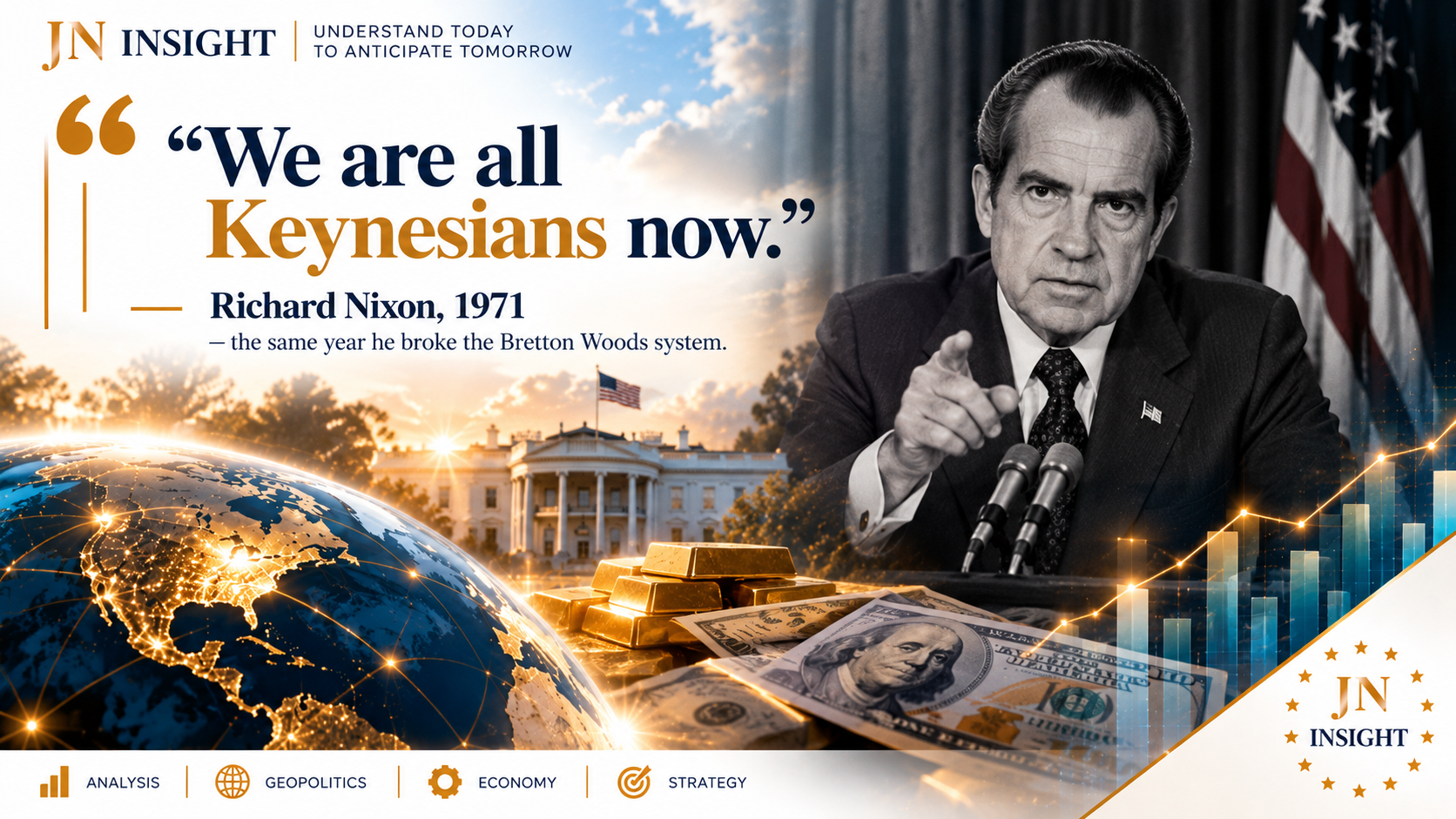
Act II. 15 August 1971. Nixon closes the gold window.
Nixon chooses to close the window rather than allow US gold reserves to drain away.
Overnight, the dollar is worth only what the world agrees it is worth.
It is no longer backed by gold. It is backed by American power.
Arrangements revealed decades later: the discreet foundations of the petrodollar system.
No formal treaty ever compelled Saudi Arabia to invoice all its oil exclusively in dollars. In practice, however, Saudi oil exports were overwhelmingly denominated in dollars for decades.
This is the environment in which the petrodollar system takes shape. Saudi Arabia and OPEC sell oil in dollars; countries need dollars to buy energy; central banks and oil exporters then invest much of their accumulated dollar reserves in US Treasuries.
The circle is complete. It has loosened over time, but it has never disappeared.
PART III — THE $39 TRILLION MACHINE
Follow a single dollar from the US Congress to Tokyo, Riyadh or Frankfurt. This is the mechanism that is rarely explained.
Congress has approved a deficit every year since 2001. To finance those deficits, the US Treasury issues securities—three-month bills, ten-year notes and thirty-year bonds.
A group of designated banks known as primary dealers—including financial giants such as JPMorgan, Goldman Sachs and BNP Paribas—purchase the securities at auction. They then distribute them to banks, pension funds, insurers and central banks across the world.
But Treasuries do not simply sit in vaults. They help the global financial system function.
A Treasury security can be used as collateral in interbank lending, repurchase agreements and over-the-counter transactions. Without this vast pool of liquid collateral, the global money market would be severely disrupted.
THE CIRCUIT IN FIVE STEPS
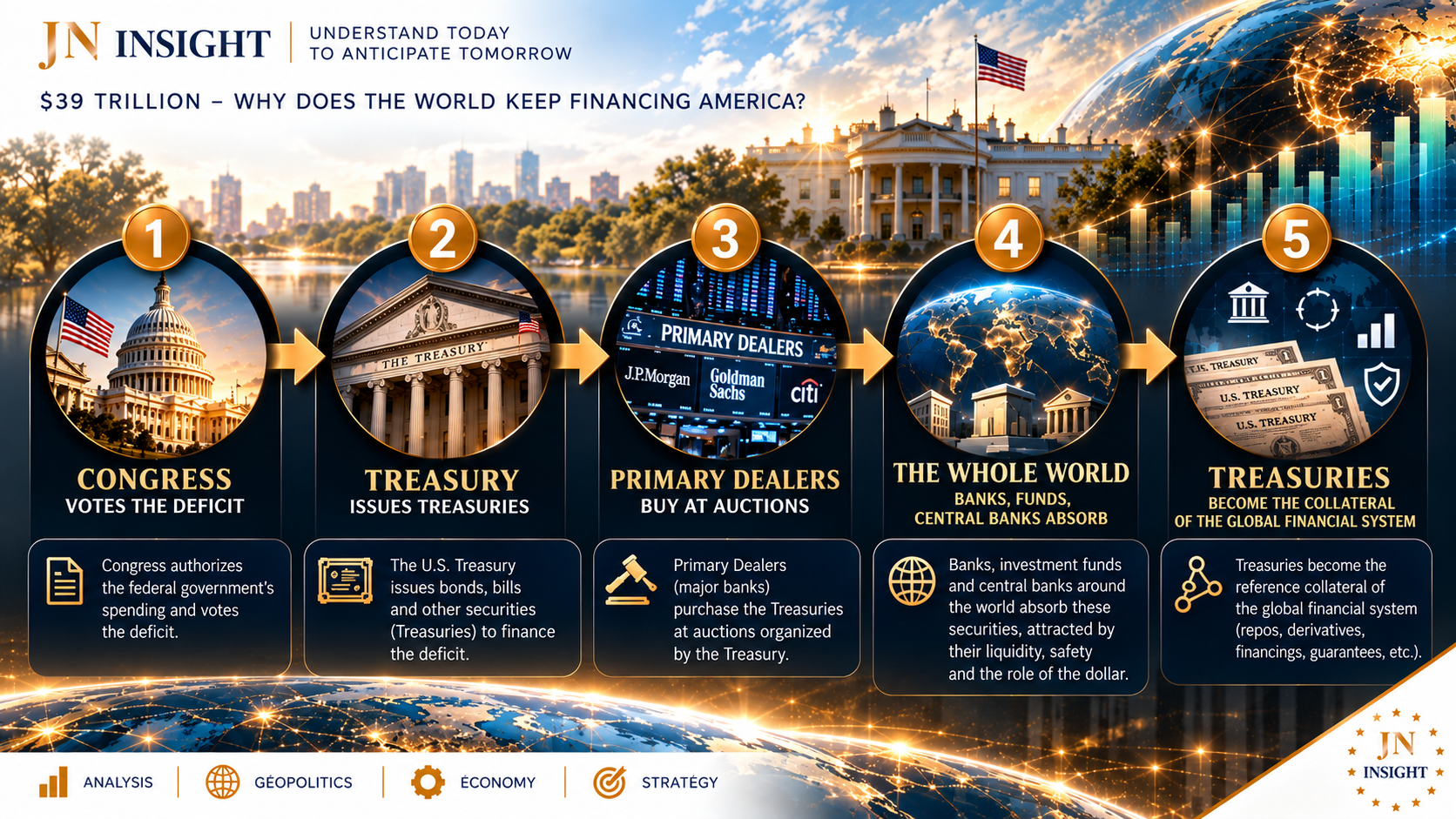
US debt is therefore not merely sovereign debt. It is part of the world’s financial infrastructure.
The world finances the United States not out of generosity or naivety, but because the system itself creates a structural demand for dollar assets.
So who actually owns the $39 trillion?
PART IV — WHO REALLY OWNS AMERICA’S DEBT?
The answer is surprising: to a large extent, the United States owes the money to itself.
The Federal Reserve holds roughly $4.5 trillion in Treasuries. American pension funds, commercial banks and insurers own trillions more. Once securities held by US public agencies and government funds are included, roughly two-thirds of gross federal debt is held by American entities.
In September 2008, Lehman Brothers collapses and the global financial system trembles. Beijing sees an opportunity and accelerates its purchases of US debt.
What looked like an instrument of power also became a constraint.
A sudden sale would push down the price of the securities China still owned, unsettle the dollar and damage the value of its remaining reserves. Beijing therefore has to withdraw gradually.
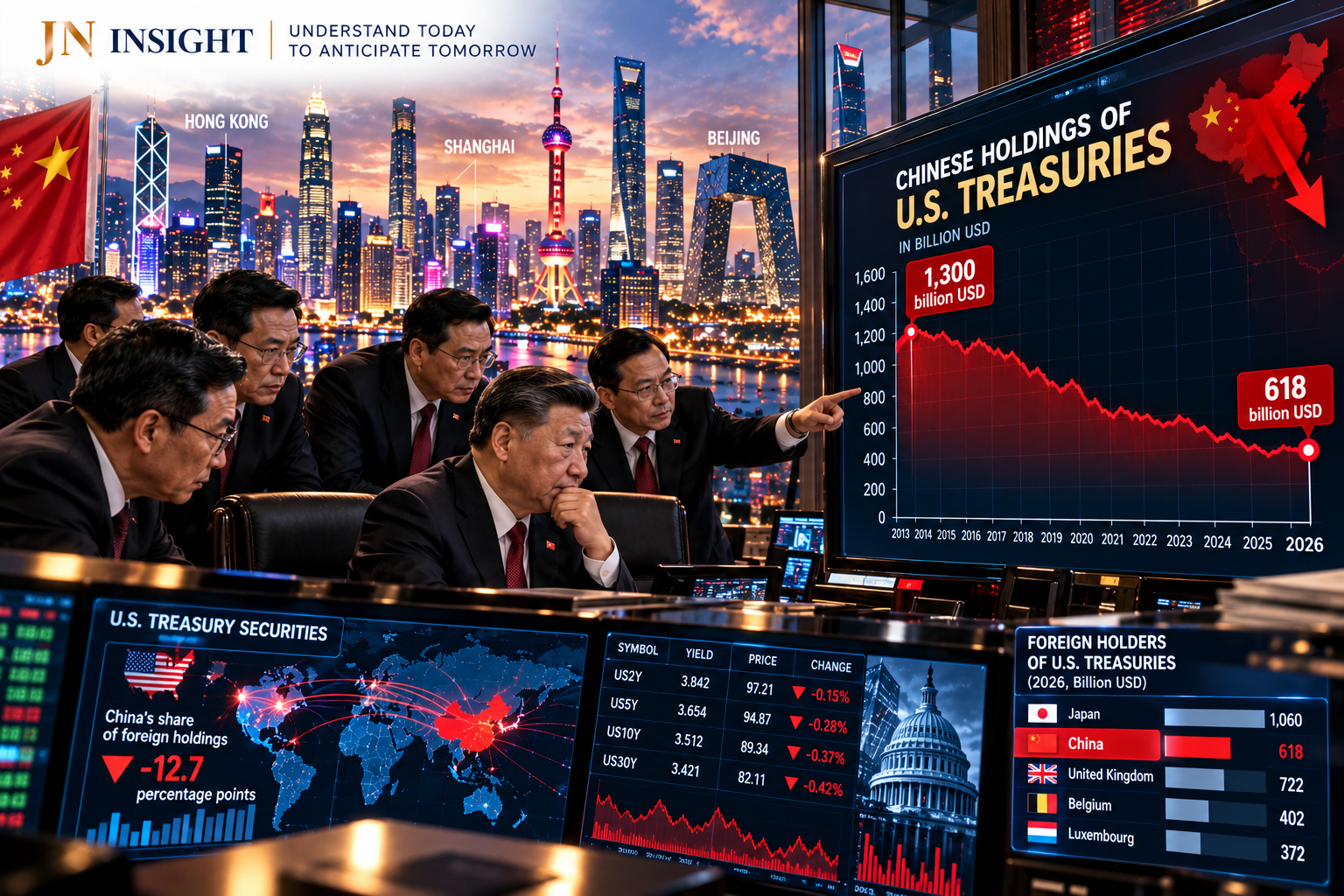
A methodological warning is essential: TIC statistics identify where securities are held in custody, not always their ultimate economic owner. Some holdings recorded in the United Kingdom may belong to funds or entities domiciled elsewhere.
America’s principal strategic rival still helps finance America.
PART V — THE EXORBITANT PRIVILEGE
In 1965, French finance minister Valéry Giscard d’Estaing gave American monetary power its most enduring description: the dollar’s “exorbitant privilege”. Six decades later, the phrase has lost none of its force.
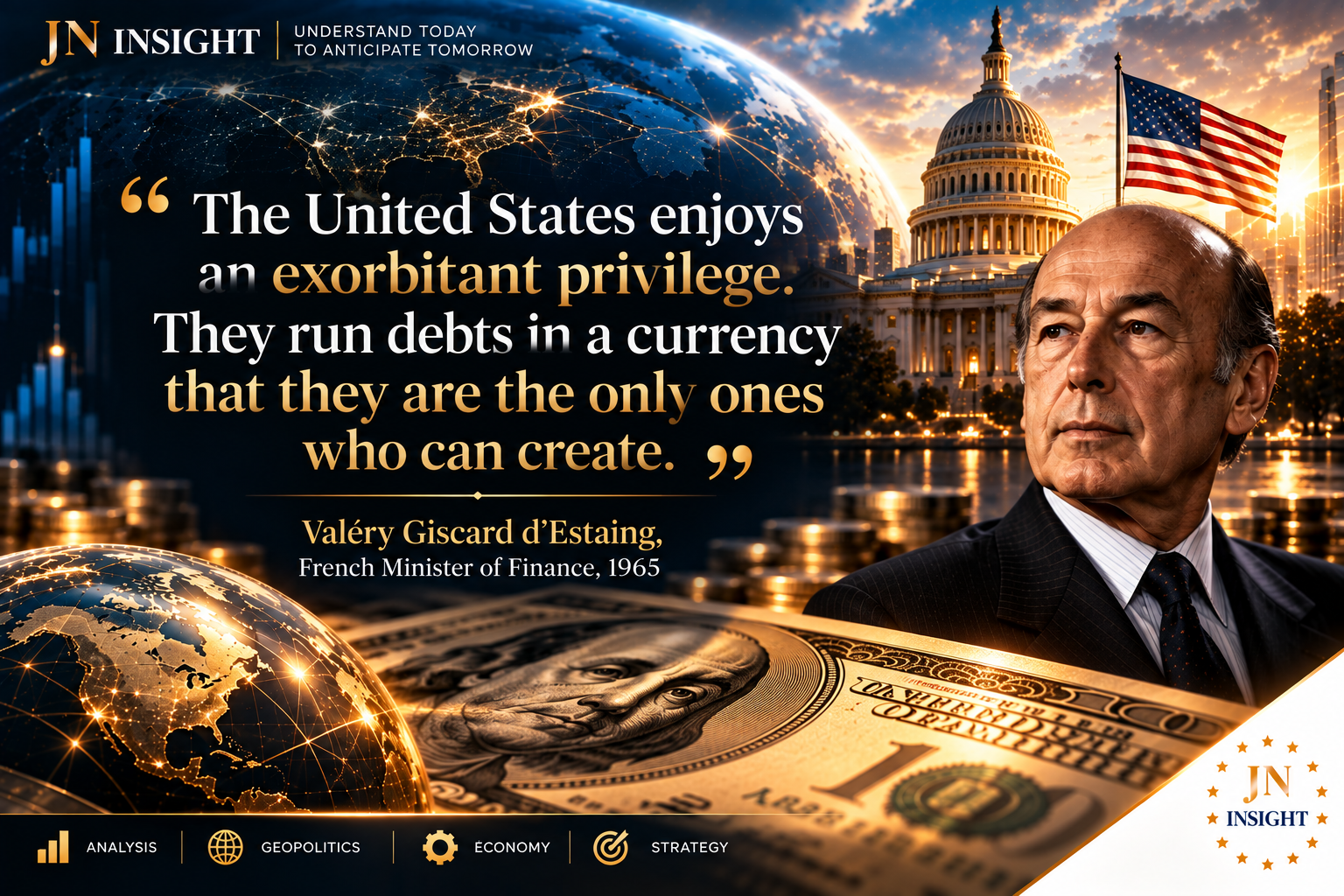
What does this privilege mean in practice?
France borrows in euros, a currency it shares with the other members of the euro area. It does not control monetary policy on its own. When markets lose confidence in France, yields rise and Paris immediately pays more.
The United States, by contrast, issues debt in the currency whose supply is controlled by its own central bank—and which the rest of the world structurally needs.
The Federal Reserve is institutionally independent of the Treasury; it is not simply a printing press for the White House. Yet Washington borrows in a currency no foreign power can create. That privilege has no equivalent in the modern system.
When an emerging-market central bank builds foreign-exchange reserves, it often accumulates Treasuries. When a crisis hits, global capital rushes into Treasuries. When a pension fund needs a benchmark safe asset, it buys Treasuries.
The refuge asset of a crisis is also the reference asset of ordinary prosperity.
No other contemporary currency performs all these functions on a comparable scale—not the euro, the yen, the yuan or even gold.
PART VI — THE SUMMER OF 2011: THE PARADOX THAT EXPLAINS EVERYTHING
The most revealing episode is not the Treasury-market shock of March 2020, but the political crisis of 2011.
Markets should flee US debt. That would be the normal reaction to a sovereign downgrade.
Instead, investors panic—and buy more Treasuries.
They fear a crisis originating in the United States, yet seek refuge in obligations issued by the United States, because no other market is deep, liquid and universal enough to absorb so much capital in search of safety.
In the weeks following the downgrade, Treasury yields fall further, driven by global demand for protection.
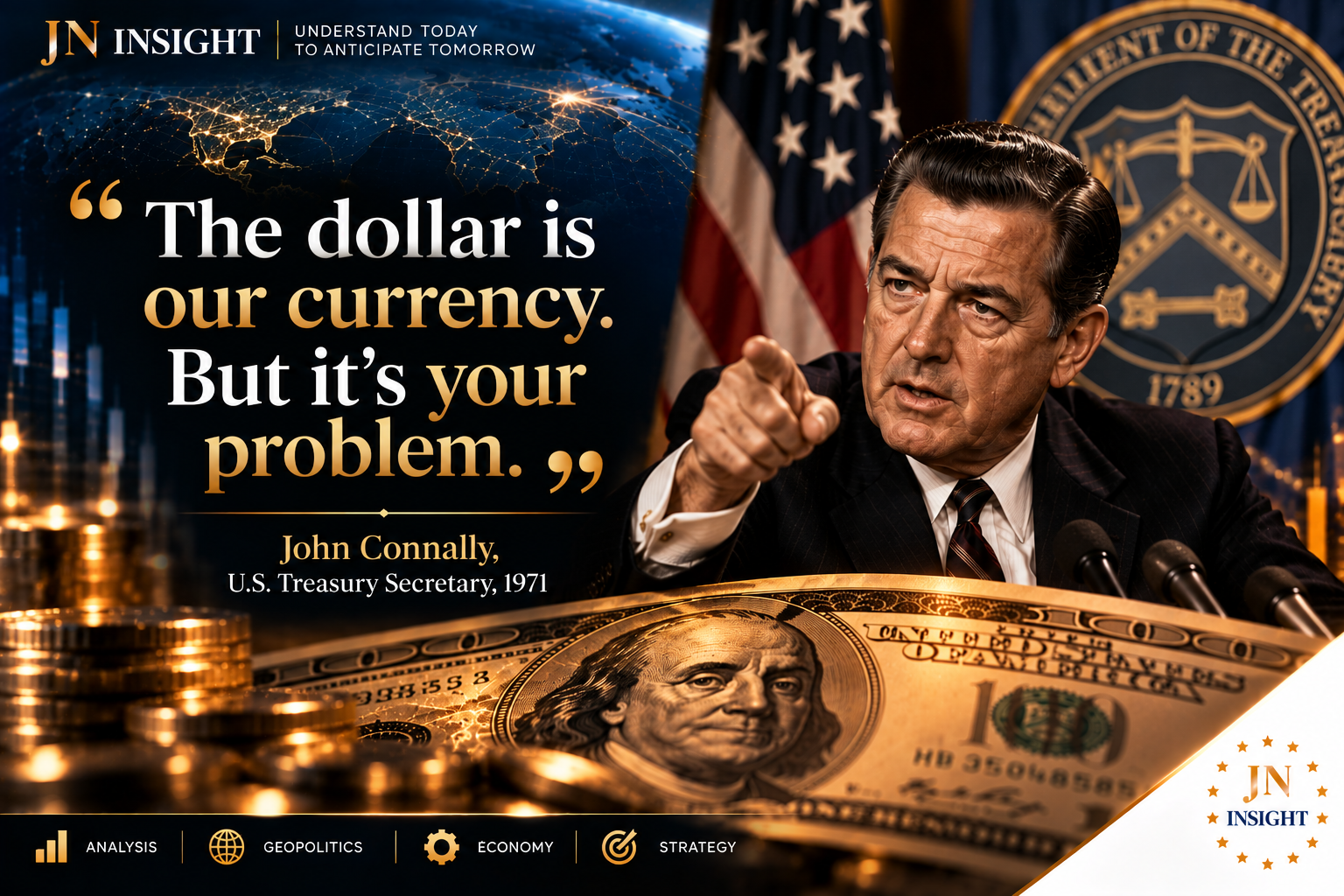
This resilience reveals the singular logic of the dollar system: even a crisis born in America can increase demand for American debt.
The system is sustained by the absence of a credible alternative.
And it is precisely within that absence that China has chosen to manoeuvre.
PART VII — WASHINGTON AND BEIJING: THE SILENT WAR
This is not a war of missiles, tanks or submarines. It is a war between financial architectures—and it is already under way.
China is not trying to destroy the dollar. It is trying to reduce its need for the dollar.
Washington’s power rests on five interconnected levers: the dollar as the dominant reserve currency; Treasuries as an indispensable global asset; Wall Street as the centre of international finance; SWIFT as the main financial messaging network; and sanctions as a strategic weapon.
Beijing is responding with a patient, multi-decade strategy: reducing Treasury holdings from $1.32 trillion to $618 billion; increasing official gold reserves from 1,054 tonnes in 2015 to more than 2,264 tonnes in 2026; developing CIPS as a partial alternative to SWIFT; expanding yuan-based trade with Russia, Iran and parts of the Gulf; and financing infrastructure across more than 150 countries through the Belt and Road Initiative.
THE WAR IN THE MIRROR
Saudi Arabia is not abandoning the dollar. It is gradually widening its options.
Does China want to replace the dollar—or merely become less vulnerable to it? These are not the same objective.
Replacing the dollar would require a fully convertible yuan, open capital markets, an independent central bank and decades of international trust. Beijing is not prepared to pay the domestic political price of those conditions.
Reducing vulnerability, however, is exactly what China has been doing for fifteen years.
This is the constraint that the dollar allows the United States to postpone. But for how long?
This quiet, patient movement—largely invisible in daily headlines—may eventually change the rules of the game.
WHAT THIS MEANS FOR YOU
Monetary geopolitics is not an abstract debate among economists. It eventually reaches your wallet.
Imagine that Asian central banks decide they want slightly fewer dollars, Gulf sovereign funds diversify further into gold and yuan-denominated trade continues to grow at the margins.
Washington may then have to offer an additional 50 basis points to place its bonds. US rates rise by half a percentage point.
The consequences quickly become tangible: American mortgages cost more; corporate financing becomes more expensive; equity valuations react; and because US yields serve as a global benchmark, the pressure spreads to French OATs, Italian BTPs and German Bunds.
A modest erosion of America’s privilege can therefore create a wider bill: for households taking out new loans, for variable-rate borrowers, for companies refinancing their debt and for pension and savings portfolios exposed to bond-price movements.
The exorbitant privilege is a vast shock absorber carried by the rest of the world, often without noticing it. Its disappearance would not necessarily begin with a spectacular crash.
It would begin with a bill—and that bill would slowly be presented to everyone.
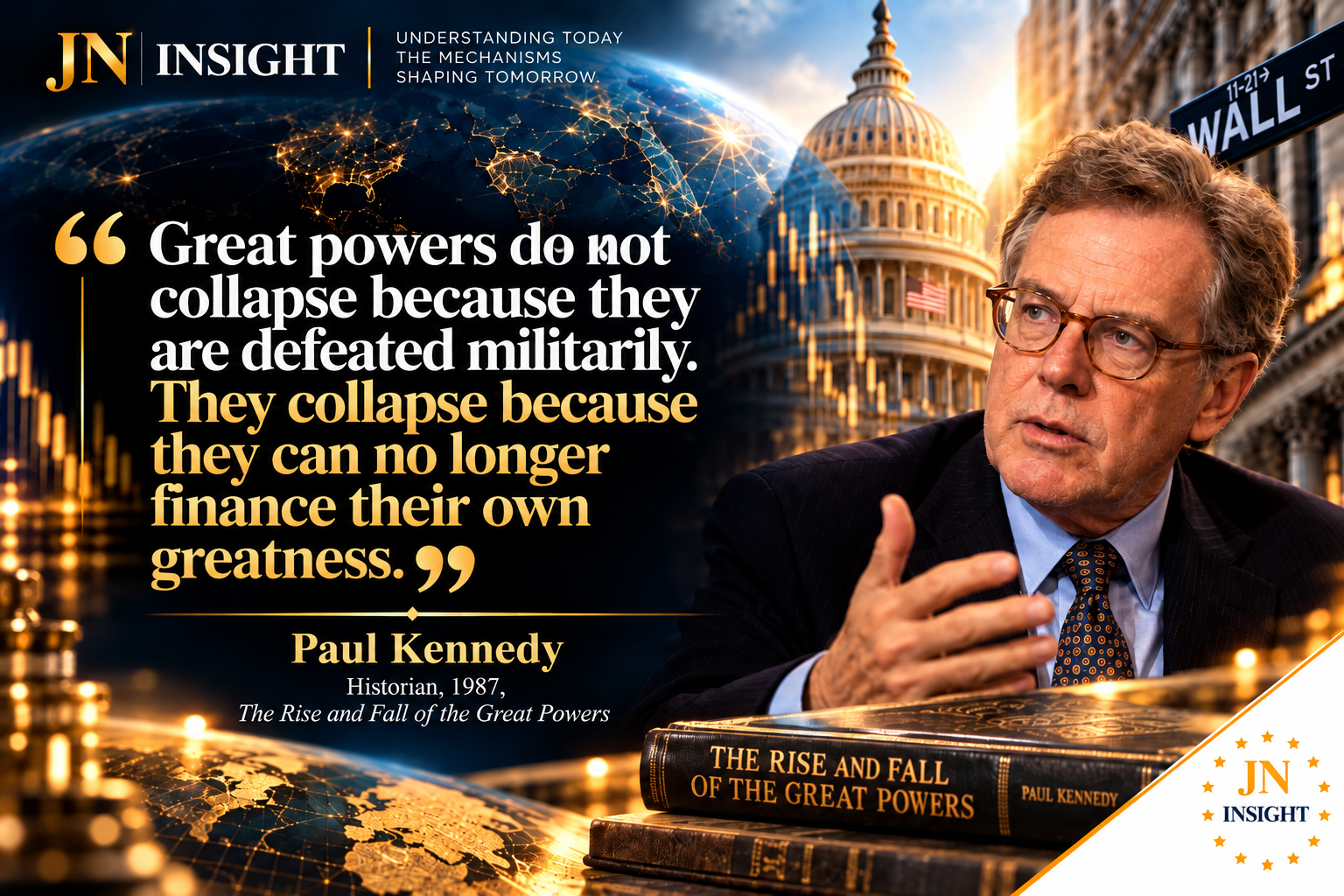
That is the only question that truly matters for the United States today.
The exorbitant privilege will not die in a single crash. It will die through a long process of indifference.
→ NEXT ISSUE: EPISODE IV/IV
Africa, China and the debt trap. Who really finances African development—and at what price?
Intellectually yours,
Jean-Noël Niamké
Financial Expert
Geostrategic and Geopolitical Analysis
JN Insight — The Mechanisms of Power | The truth beyond appearances.