BONUS •The human paradox : Why does man always invent what ends up destroying him?
July 16, 1945, in the New Mexico desert.
The first atomic bomb in history had just exploded. Robert Oppenheimer, the physicist who had directed the Manhattan Project, watched the mushroom cloud rise into the sky. And in that silence thick with dread, a phrase from Hindu philosophy crossed his mind:
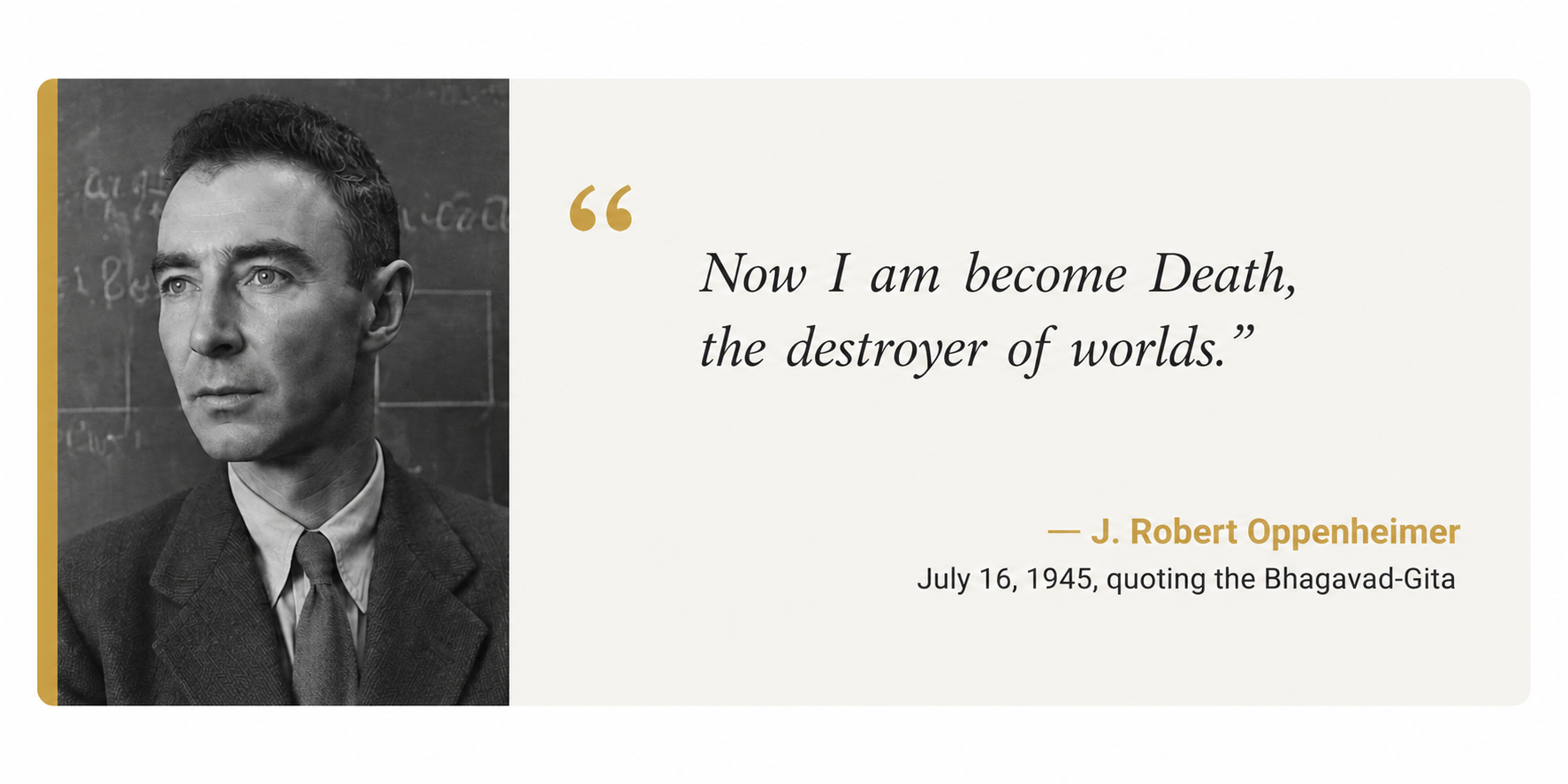
Oppenheimer was not crazy. He was not malicious. He was brilliant — and he had just realized, too late, what he had truly brought into the world.
This is perhaps the most honest image of the human condition.
The article on artificial intelligence rightly raised a question.
A question many had read between the lines—but no one had asked outright. If AI is a ticking time bomb—who built it? Why? And above all: is this the first time humanity has created the tool of its own destruction?
The answer is no. This isn't even the hundredth time.
Humans are the only living species to have invented tools capable of making them immortal—and tools capable of wiping them off the face of the Earth. Sometimes the same tool. Often the same decade.
This is not a coincidence. It's a pattern. As old as civilization itself.
And deep down, each of us knows this paradox intimately. We know we should save money. Exercise . Break certain habits. And yet we do it all again. What we do on an individual level, humanity does on a civilizational level.
Part I — The paradox of Prometheus: man steals fire, and is burned by it
In Greek mythology, Prometheus stole fire from the gods to give to men. The gods condemned him to be chained eternally - his liver devoured each day by an eagle, regenerated each night so that the torment could begin again.
This is perhaps the most accurate metaphor for the conditioning of our existence.
The man steals fire. He gets burned. He does it again.
The industrial revolution lifted humanity out of poverty—and triggered climate change that threatens the very foundations of civilization . Pesticides have fed billions of people —and wiped out 80% of pollinating insect populations in fifty years . Social media has given every individual a voice—and created echo chambers that are shattering democracy.
Each time, the pattern is the same.
A brilliant solution to a real problem — which creates an even bigger problem, which will be solved with a new technology, which will produce a new existential risk.
Man is the only animal that stumbles twice on the same stone — and turns it into a weapon before falling again.
And this is quite visible in several respects.
Part II — A revolution that always ends in chaos
A pregnant woman swallows a pill to calm her morning sickness. A few months later, her child is born without arms.
The drug was called Thalidomide . It was approved by medical authorities, sold in more than 46 countries, and presented as safe and harmless. More than 10,000 children suffered the same fate. It was withdrawn from the market in 1961, after years of industry denial.
All the great technological disasters in history have started in the same way: with an innovation that everyone thought was fantastic.
It seems obvious. But when you really think about it, it's perhaps the most mind-boggling thing in all of human history.
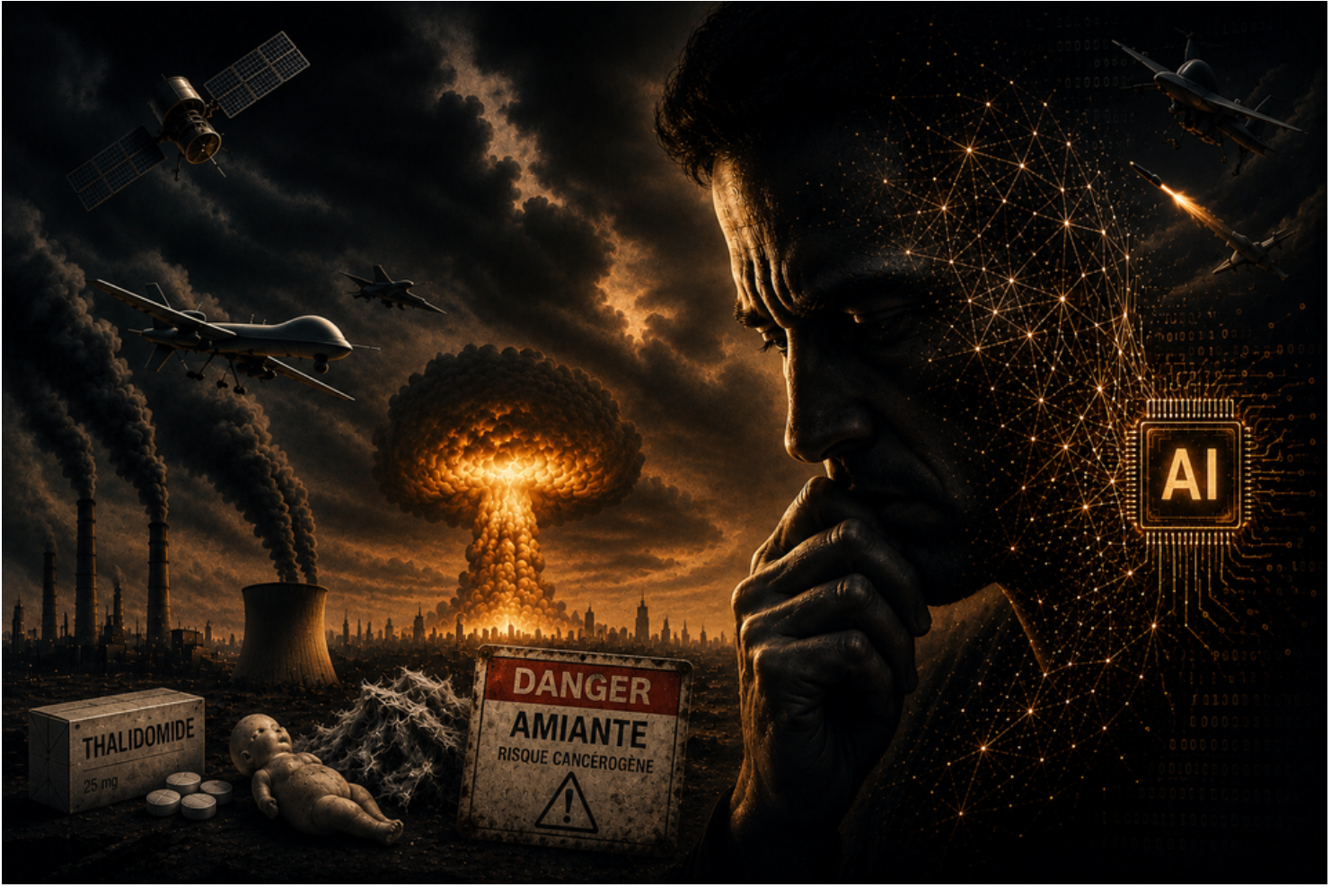
Asbestos, thalidomide, lead in gasoline, pesticides, the atomic bomb, social networks, artificial intelligence, and so on... Nobody started by saying, "Hey, let's create something dangerous." Everyone was saying, "That's revolutionary."
Asbestos —a marvel of engineering and construction, a perfect fire retardant, a miracle solution. Cheap and integrated into thousands of schools and buildings in France. A proven carcinogen, causing mesothelioma. It can take 20 to 40 years to come to light. It was only outlawed in 1997.
Aspartame —approved by the FDA in 1981 and used in thousands of "sugar-free" products—diet sodas, chewing gum, and health foods—was presented as a healthy alternative to sugar for forty years. The WHO classifies it as a "possibly carcinogenic" (Group 2B) . Billions of people ingested it daily, convinced they were making the right choice . It just goes to show that yesterday's "right choice" can become tomorrow's health scandal.
And what about thalidomide ? In the 1950s and 60s, this drug was prescribed extensively to pregnant women to treat morning sickness . Approved by medical authorities. Sold in more than 46 countries . Presented as safe and harmless. The result: more than 10,000 children born with serious birth defects—underdeveloped limbs, incomplete organs . Withdrawn from the market in 1961, after years of industry denial.
As for artificial intelligence—which diagnoses cancers that doctors missed and simultaneously targets humans in conflict zones (recent wars)—Geoffrey Hinton , the founding father of deep web computing , is a prime example. Learning , left Google in 2023 to speak freely. His conclusion after decades of building this technology? He regrets part of his work.
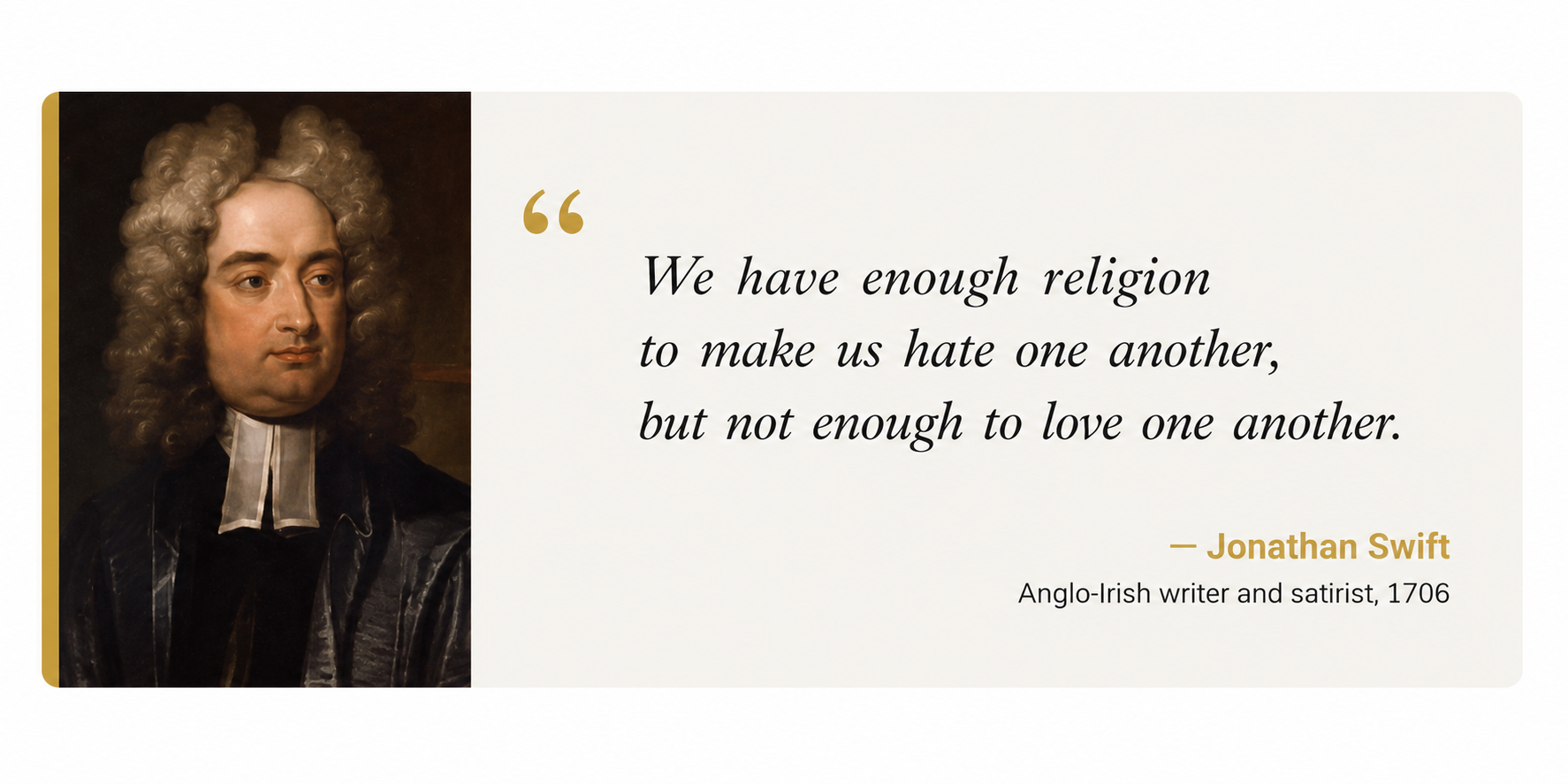
And so on... the cases are legion and almost all similar... the verdict being the same: we marketed before we understood. We understood too late.
Asbestos is not an accident. Neither is aspartame.
These are symptoms.
PART 3 — Why do we always repeat the same mistakes?
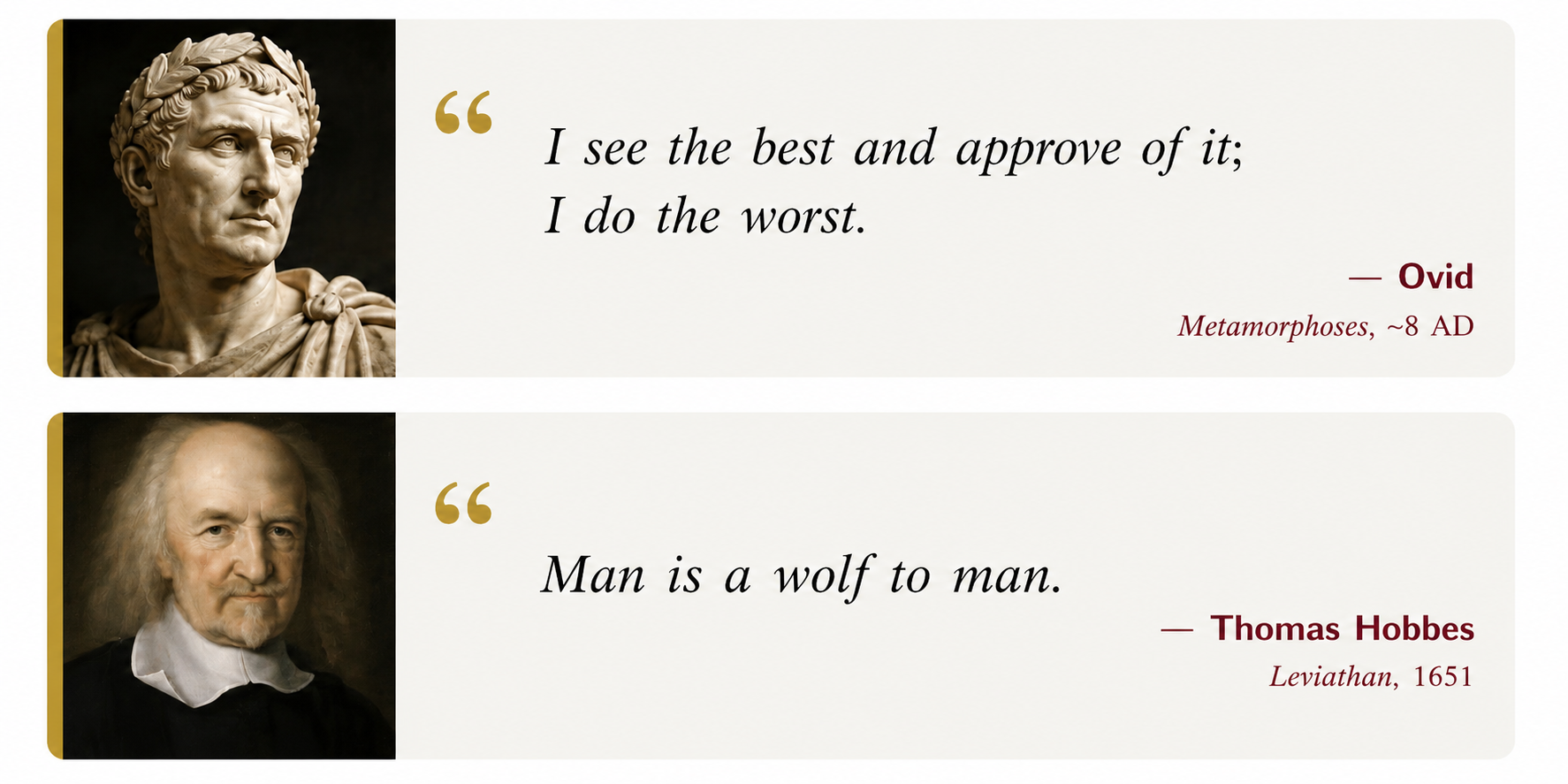
More than three centuries before artificial intelligence, Thomas Hobbes had already identified something deeply disturbing: the main danger to man may be neither nature, nor technology, nor even machines.
It is man himself.
And Ovid , sixteen hundred years before Hobbes, had put his finger on something even more precise. This article isn't about malice. It's about lucidity without discipline. We know. We understand. We carry on anyway.
The real question, therefore, may not be why man invents dangerous technologies.
The real question is: why does he continue to use them even though he knows the risks?
The answer may lie within our own brains. For over 99% of human history, we lived in a world where dangers were immediate: a predator, famine, an enemy tribe. Our brains were shaped to survive today, not to anticipate the consequences of our actions thirty or fifty years from now.
This is what psychologists call present bias.
We almost always prioritize immediate benefits over future risks.
A cigarette today brings pleasure. Cancer is a problem for tomorrow. Debt today allows consumption; repayment will come later. A new technology generates immediate profits; any potential consequences will be dealt with by the next generation.
On an individual level, this behavior is already visible.
On the scale of civilizations, it becomes formidable.
Asbestos generated billions before it killed. Lead in gasoline boosted industry before poisoning the environment. Social media connected the world before fragmenting public space. Artificial intelligence promises significant productivity gains even before its social consequences are fully understood.
The problem, therefore, is not a lack of intelligence. It's almost the opposite.
Humans are intelligent enough to create extraordinary technologies. But they are often too impatient to wait to fully understand their consequences.
We possess 21st-century technology. But part of our brain still functions like that of a prehistoric hunter-gatherer.
And perhaps that's where the real danger lies.
The human paradox – Evolution's greatest achievement – and perhaps its riskiest experiment
For five thousand years, no species has transformed its environment as much as humankind. No species has built as many cities, crossed as many oceans, discovered as many physical laws, or extended life expectancy as much.
But no other species has created so many means of its own destruction. We invented the vaccine. We also invented the atomic bomb. We created the internet.
We have also industrialized disinformation.
Today we are developing artificial intelligence capable of saving lives. And perhaps, tomorrow, of transforming entire societies.
That's the human paradox.
We are probably evolution's greatest success story.
And perhaps also his riskiest experience.
Key takeaways
Human ingenuity has something sacred about it. It has allowed us to conquer diseases, cross oceans, connect continents, and push back the boundaries of what's possible. But this same ingenuity carries within it a constant temptation: always to do more, always to go further, without ever stopping to ask ourselves if we should. The problem isn't technology. The problem is the time horizon.
Asbestos. Aspartame. Social media. Artificial intelligence. In every era, the benefits are immediate. The risks come later.
The man is not stupid. He is impatient. He is not evil. He is short-sighted.
And this shortsightedness is perhaps the most dangerous flaw of the most intelligent species that Earth has ever borne.
For 5,000 years, technologies have changed. Man, much less so. Prometheus still flies. The eagle waits, patient.
What if the greatest risk to humanity is not artificial intelligence… but natural intelligence misused?
Jean-Noël NIAMKÉ
Financial Expert — Geo-economic and Strategic Analysis
Sources:
INRS — asbestos France · WHO/IARC — carcinogenic asbestos · Thalidomide Victims Association · WHO — aspartame group 2B, July 2023 · FDA — aspartame approval 1981 · Geoffrey Hinton, The Guardian, May 2023 · Future of Life Institute · Goldman Sachs Research 2024 · McKinsey Global Institute 2024