WHY DOES AFRICA ALWAYS LOSE TOO EARLY?
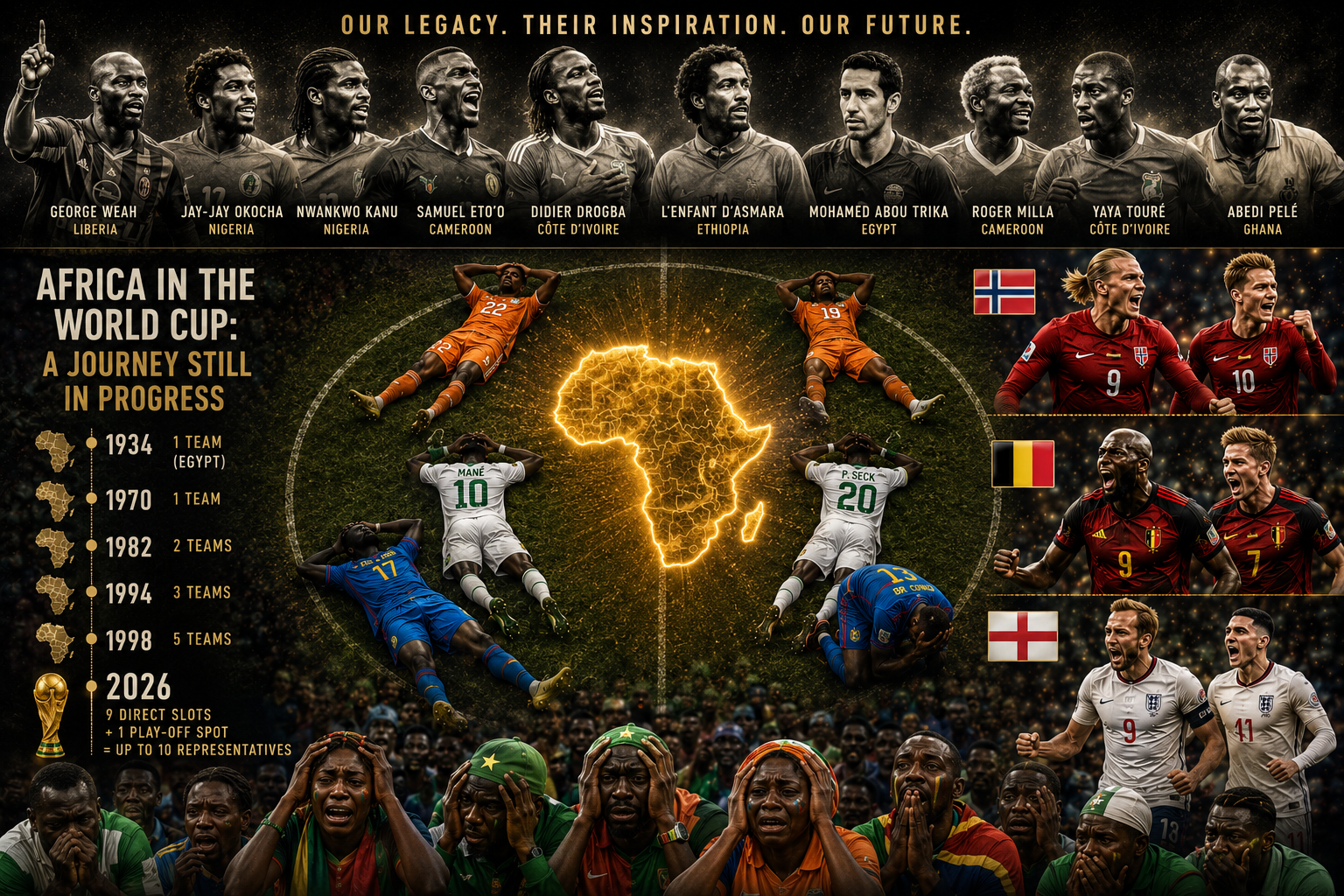
Autopsy of a system that fails well before kick-off.
African football has come a long way
It comes from a long history, first marked by the colonial period, then by independence, where the national jersey became a symbol of pride, dignity and political affirmation. Very early on, Africa had the talent, the instinct, the passion and players capable of igniting the crowds. But for a long time it lacked solid structures, powerful championships, sustainable infrastructure and continuity in its sporting projects.
For a long time, this ambition also came up against an arithmetic reality: Africa had few places at the World Cup. After Egypt's brief appearance in 1934, the continent remained marginalized for decades. In 1970, Africa finally obtained a guaranteed place, then two in 1982, three in 1994, five from 1998, before the great changeover of 2026: nine direct places, plus an additional possibility via the play-off, i.e. up to ten African representatives.
This historic opening was supposed to be a new window. More countries, more players exposed to the highest level, more international experience: everything seemed to be in place for Africa to finally take a step forward.
Entire generations have carried this hope: Roger Milla, George Weah, Jay-Jay Okocha, Didier Drogba, Samuel Eto'o, Yaya Touré and so many others have proven that the African player can belong to the very highest level in the world. Yet, despite these immense figures, African teams have rarely managed to transform individual talent into lasting collective power.
The 2026 World Cup was therefore supposed to mark a turning point. But alas, many registered and very few admitted.
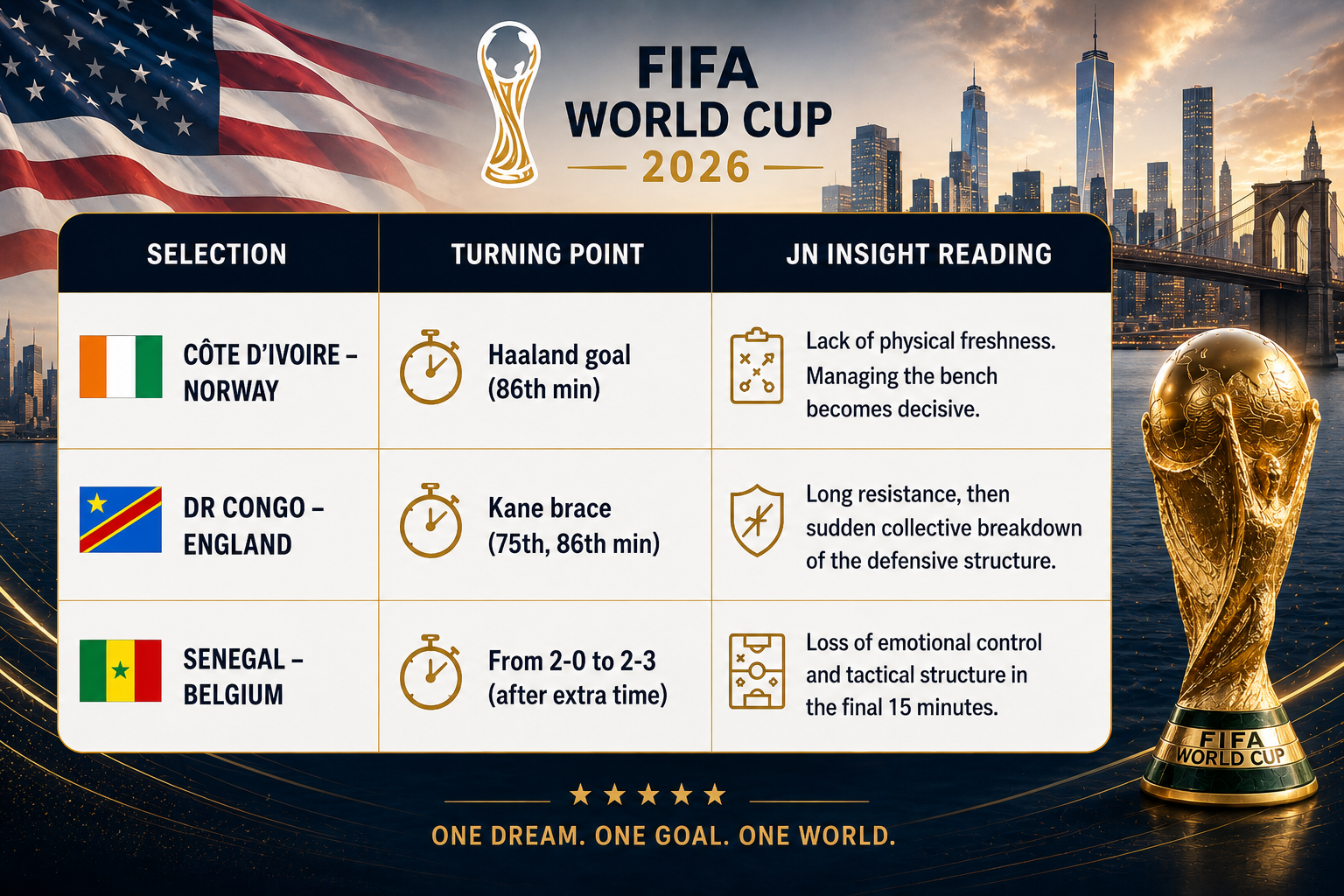
In Atlanta, Georgia, the Democratic Republic of Congo made England doubt for more than an hour. She played with courage, intensity and personality. Then Harry Kane came along: two goals in eleven minutes. Curtain.
A few hours earlier, in Dallas, Texas, Côte d'Ivoire fought a heroic fight against Norway. The Elephants had come back into the game thanks to the entry of Amad Diallo. The match seemed to have changed its face. Then, in the 86th minute, Erling Haaland popped up. Hecatomb.
In Seattle, Washington, Senegal leads two goals to nil against Belgium. The Lions of Teranga are close to qualification. There are five minutes left. Five short minutes. Then the scenario changed. The block is moving back. The landmarks disappear. Belgium equalized, then won in extra time.
Atlanta, Dallas, Seattle : three games, three poorly controlled finishes. It's not just bad luck. This is a symptom of a deeper problem.
At JN Insight, we have made a choice: not just to comment on the results, but to understand them. Because when the same phenomenon is repeated, emotion is no longer enough. The problem did not start in the 86th minute. It starts well before kick-off.
The matches last ninety minutes. Systems, on the other hand, are built over decades.
Chance can explain a match. It is much more difficult to explain a repetition.
This is where our analysis begins.
PART I — The Decisions That Decide Everything
Victory rarely belongs to those who improvise. It almost always rewards those who have prepared every detail.
A World Cup does not start on the day of the first match. It begins several weeks before. In an office, around a list. Around decisions that no one will see... until the day when they produce their consequences. Because a coach does not only choose players. He chooses a balance, a complementarity, a depth of bench, a way of finishing games. At this level, reputation no longer scores goals. The form, yes.
During the AFCON, the absence of Nicolas Pépé in the Ivory Coast squad had already fuelled the debates. A few months later, Sébastien Haller, Martial Godo and even Wilfried Zaha, who are not on the list for the World Cup. No one can say that a single player would have changed the destiny of a competition. But one question remains: doesn't a World Cup deserve to bring together the most successful players of the moment?
The other subject: the bench. Against Norway, the entry of Amad Diallo immediately changed the rhythm of the match. Speed. Percussion. Risk-taking. Côte d'Ivoire found space and came back to the score. Why not continue this dynamic? Why keep some midfielders whose intensity was gradually decreasing when the bench was overflowing with players capable of turning the tide? It's all a question of appreciation,
But at a very high level, a tired player doesn't just lose his speed. He loses his lucidity. And in modern football, lucidity is sometimes worth more than legs.
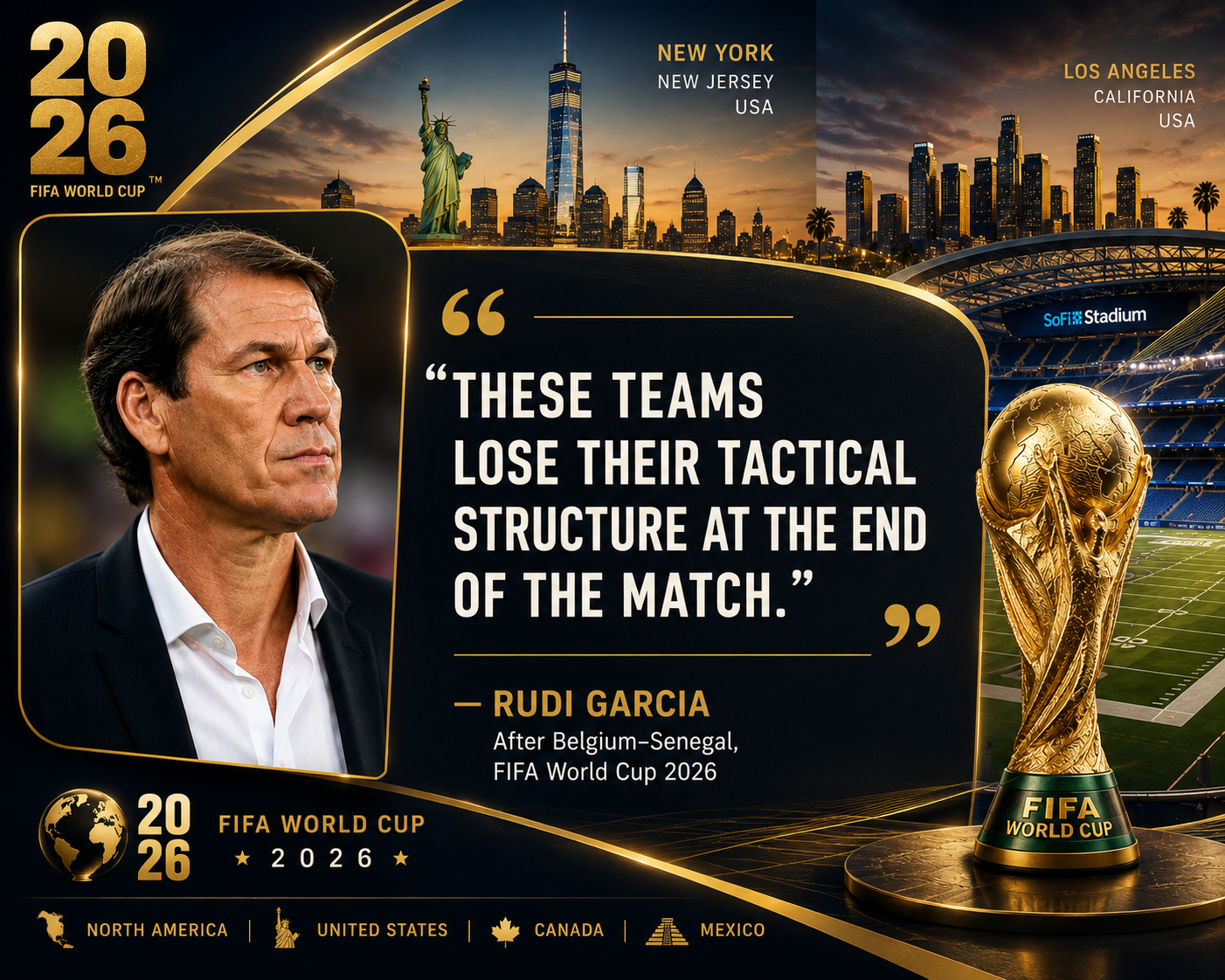
This sentence completely changes the reading of events. When an opponent identifies your weakness, they are no longer trying to dominate you. He waits, he waits, he knows that time will play on him. And that's exactly what Haaland, Kane and Lukaku did. They didn't take advantage of a mistake. They took advantage of the moment when the entire opposing organization was starting to lose its coherence.
The problem seemed to be that of the players. In reality... Players may be just the tip of the iceberg. A World Cup is never won only on the day of the match. It is prepared long before. The Belgian coach simply points out: a match is studied in advance to establish a strategy, can we say the same on the African side?
And this is precisely what brings us to the second part of this analysis.
PART II — The Four Dimensions of Victory
A World Cup doesn't just reward talent. It rewards preparation. This preparation is based on four inseparable pillars. When just one of them falters, the whole team loses its balance.
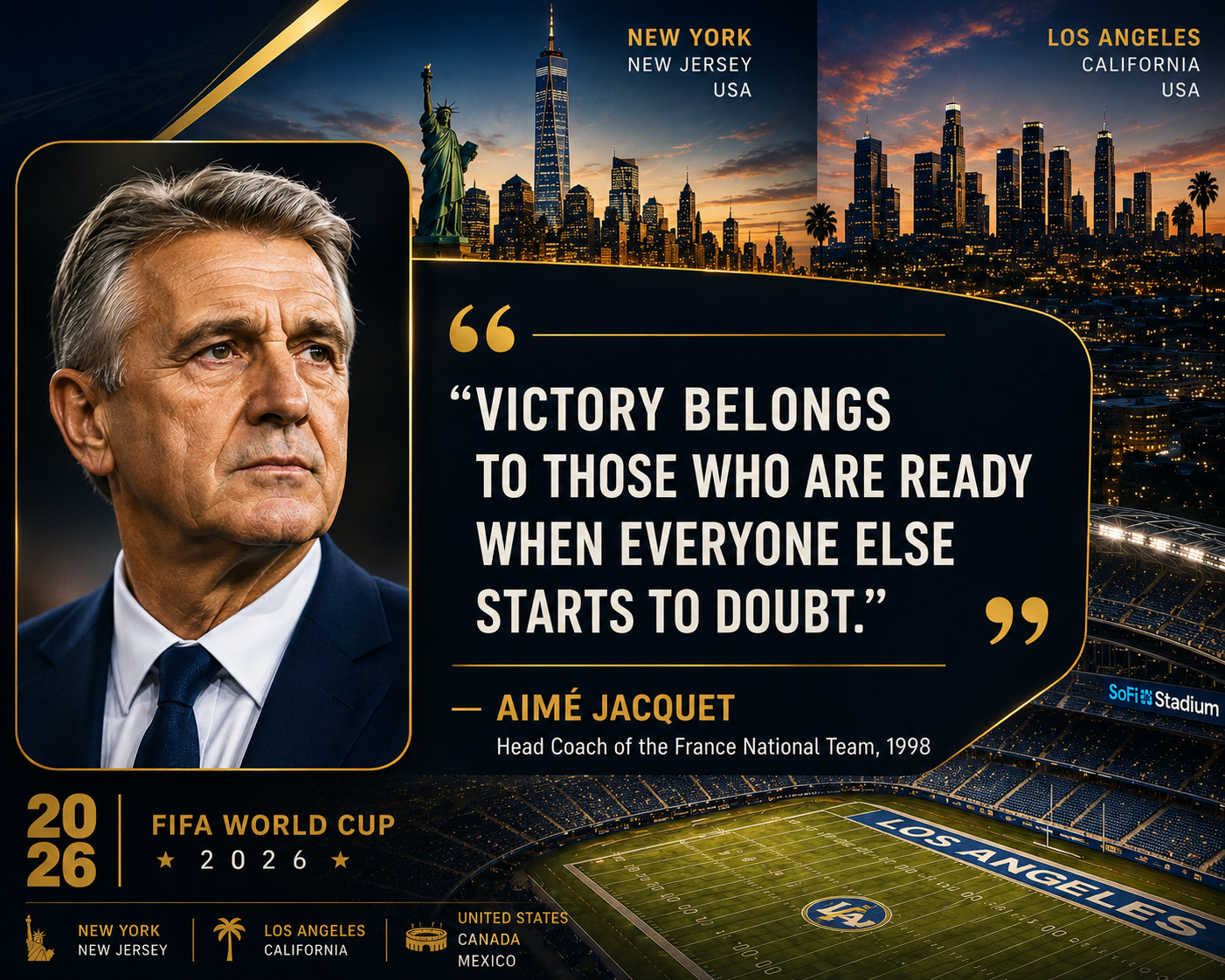
1. Physical preparation: the 90-minute war
Modern football is no longer that of the 1980s. It is no longer enough to be stronger than your opponent. We have to be stronger... longer. Côte d'Ivoire conceded Haaland's decisive goal in the 86th minute. The DRC lost to Harry Kane in the 75th and 86th minutes. Senegal saw a two-goal lead disappear before giving way in extra time. Three different scenarios. The same critical zone: the last quarter of an hour.
These players all play in the biggest European leagues. They know how to run, suffer, repeat efforts. The problem is therefore not only individual. It is collective: workload, rotation, quality of recovery, management of replacements, communication.
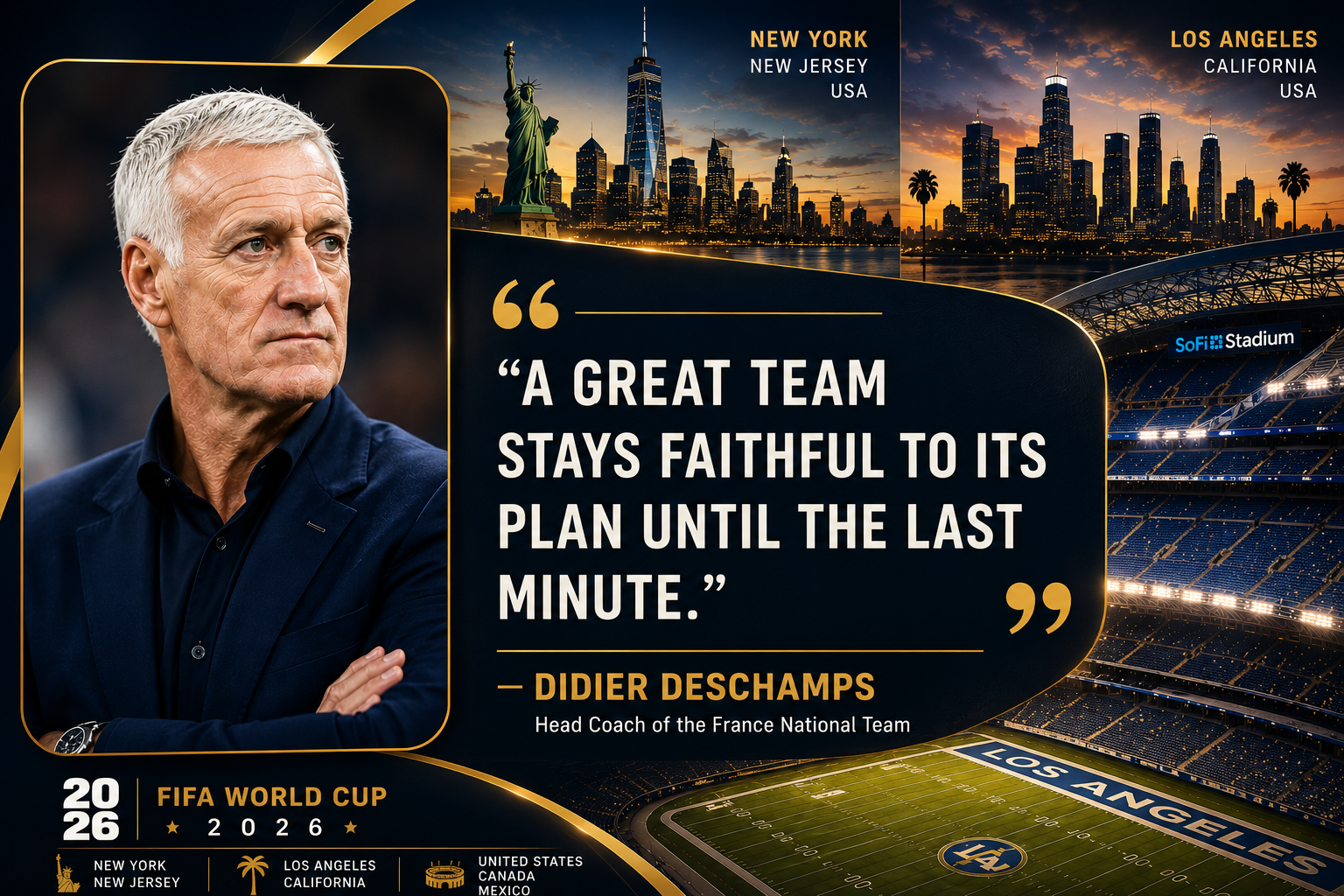
A good physical preparation takes into account all these aspects and especially the management of the last minutes which could be crucial, even irreparable...
2. Technical preparation: knowing how to win differently
Modern football no longer rewards only those who attack the best. It rewards those who know how to manage weak moments. Slow down when necessary. Keep the ball. Make the opponent run. Break the rhythm. To get a fault. Breathe. Then leave. True luxury is not to score much. It is to prevent the other from believing in it. And this is probably based on work upstream of the technique of approaching the match.
Managing a match is not just about individual talent. It's a question of collective cohesion and automatisms forged over the long term. This is acquired in years together, not in ten days of training.
The physical makes you run. Technology organises. But a completely different element often decides the outcome of the last ten minutes. Hence the third part of our analysis.
3. Mental preparation: winning before doubt sets in
The legs execute. The brain decides. The last ten minutes were not only a physical fight. They are above all a psychological battle. When the score becomes close, when millions of fans hold their breath, when fatigue sets in... each decision costs more. Every second seems to last an eternity.
The biggest selections no longer leave this aspect to chance. Mental trainers, visualization, breathing, stress management, leadership, concentration routines. These rituals — sacred or secular — act in sports psychology as cognitive anchors: they seal collective alignment and defuse mass stress under the pressure of the 90 minutes. The All Blacks have their Haka. The French team its rituals. Senegal led 2-0 against Belgium. The Lions had done the hardest part. Then something broke. Not physically. But rather mentally.
And the worst thing is that the players themselves recognized it so well at the end of their respective matches:
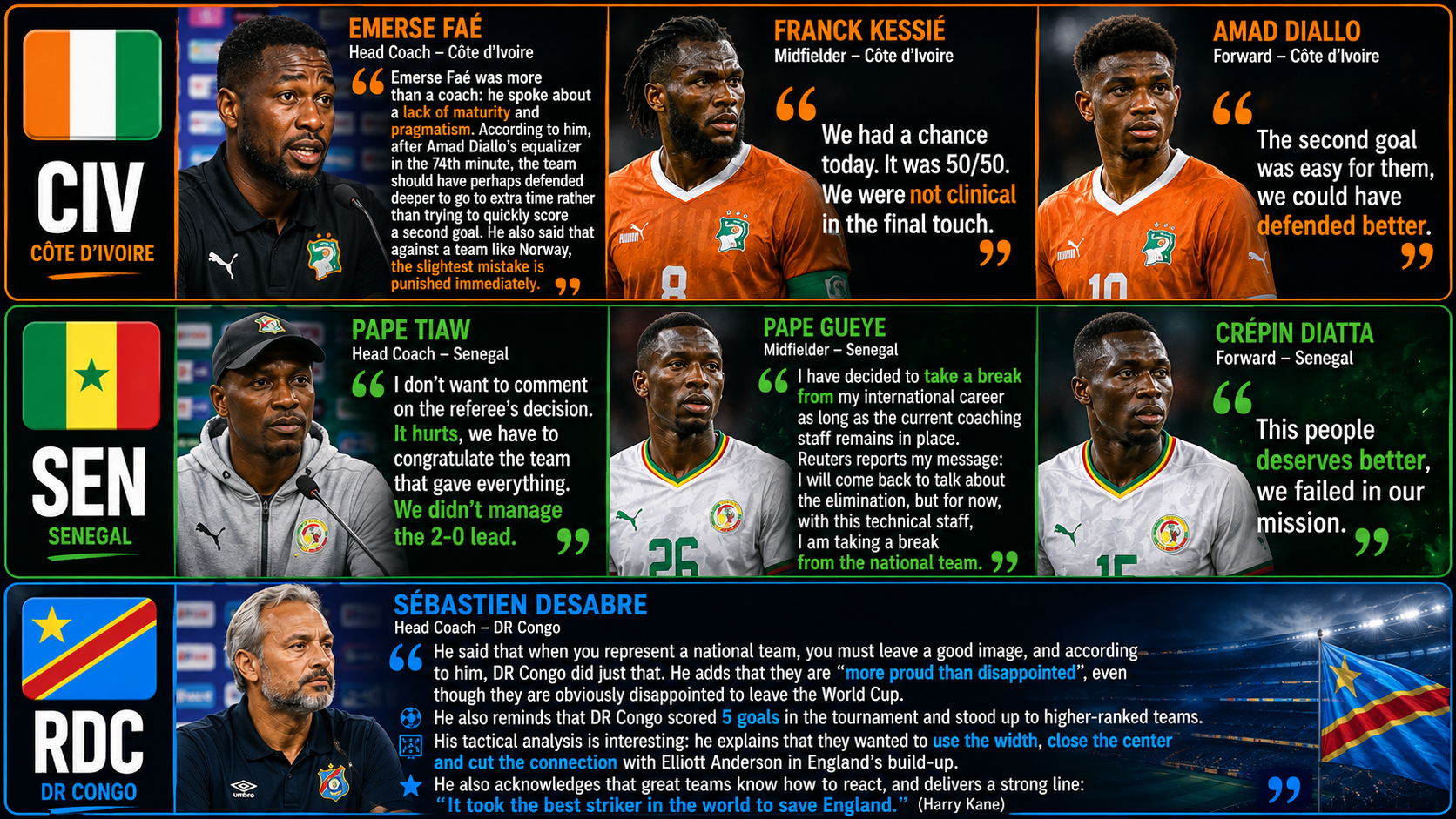
Three different readings, the same truth: these teams have not been swept away. They let games slip away that they could hold.
4. Spiritual preparation: the dimension that no one dares to name
Talking about spirituality in modern football can be surprising. And yet... since ancient times, the greatest civilizations have rarely dissociated the great battles from the spiritual dimension.
Before leading Israel into battle, Moses invoked the God of Israel. The rulers of Persia and Babylon consulted their priests before major campaigns. Pharaonic Egypt gave an essential place to oracles before its great expeditions. These peoples considered that victory was prepared as much in the invisible as on the battlefield.
Even today, this dimension is still present in many teams. A collective prayer, a moment of silence, a song, a pre-match ritual. For some, it is a spiritual process. For others, it is a powerful tool for cohesion. The repetition of the scenarios at least invites us not to dismiss this dimension too quickly.
The physical prepares the body, the mind prepares the spirit, and the spiritual prepares the invisible.
We talked about the players. We talked about their preparation. But one question remains. Why do these difficulties seem to be repeated from one generation to the next, despite the immense quality of African talent? The answer may no longer be found on the ground. It is found in what surrounds it. It's time to talk about the system.
PART III — The Real Diagnosis: The Problem May Not Be Football
For a long time, we explained African defeats by the players. The goalkeeper, the referee, the coach, the bad luck, the fatigue. But what if all these explanations were only the tip of the iceberg?
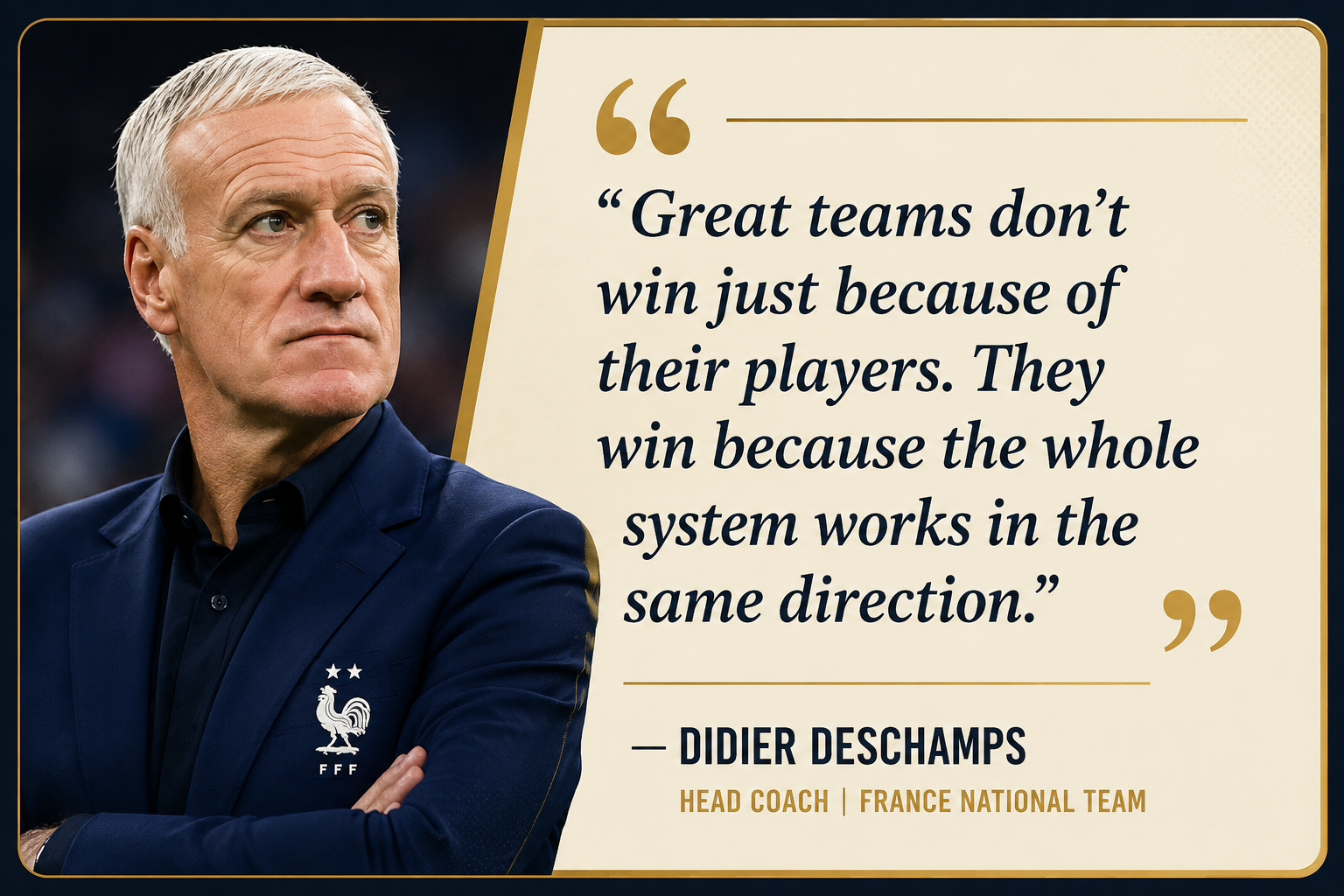
When the same difficulties are repeated over several generations, with several coaches, several countries and several competitions, the nature of the question changes. It's no longer a succession of accidents. Maybe it's a symptom of a system.
The African paradox: producing talent, letting value go
Africa has never had a talent problem. Every season, hundreds of young players leave Dakar, Abidjan, Kinshasa, Accra to join European training centres. A few years later... they became European Champions, Champions League winners, among the best players in the world.
This pattern is not new. It is strangely similar to that of cocoa, coffee, cobalt, lithium. Raw materials often leave the continent with low added value. The transformation is taking place elsewhere. Football reproduces this same logic: African academies detect talent, European clubs perfect it, major competitions reveal it. And the final value is mainly built outside the continent.
Africa exports its best players as well as its raw materials: Raw. Undervalued. The transformation is taking place elsewhere.
Talent makes a stadium stand up. The system makes a World Cup rise.
But even an excellent training system is not enough. But it is still necessary to create the conditions for a national team to function as a real team.
Time: the most underestimated resource
Great nations win because they have time. Time to prepare, rehearse, create automatisms, build a playing identity. African teams often get their players back a few days before major competitions. Players from England, Spain, Italy, all excellent individually, but who play every week in totally different systems.
Modern football has become a synchronized sport. Half a second late, poorly coordinated pressing, a defensive line that moves back three meters... and the whole organization begins to crack. The last ten minutes often reveal what the first eighty had managed to mask.
Governance: the invisible match
According to PwC quoted by Africa Top Sports (2022), 23% of African federations had not carried out an external audit. Côte d'Ivoire has only used 50% of the FIFA funds allocated for the 2023 AFCON. CAF has experienced documented governance scandals. These dysfunctions have a concrete impact on performance, particularly in the management of resources and the preparation of matches.
Meanwhile, FIFA's Forward programme has funded 385 projects with $717 million since 2016. Money exists. The question is where it is actually going.
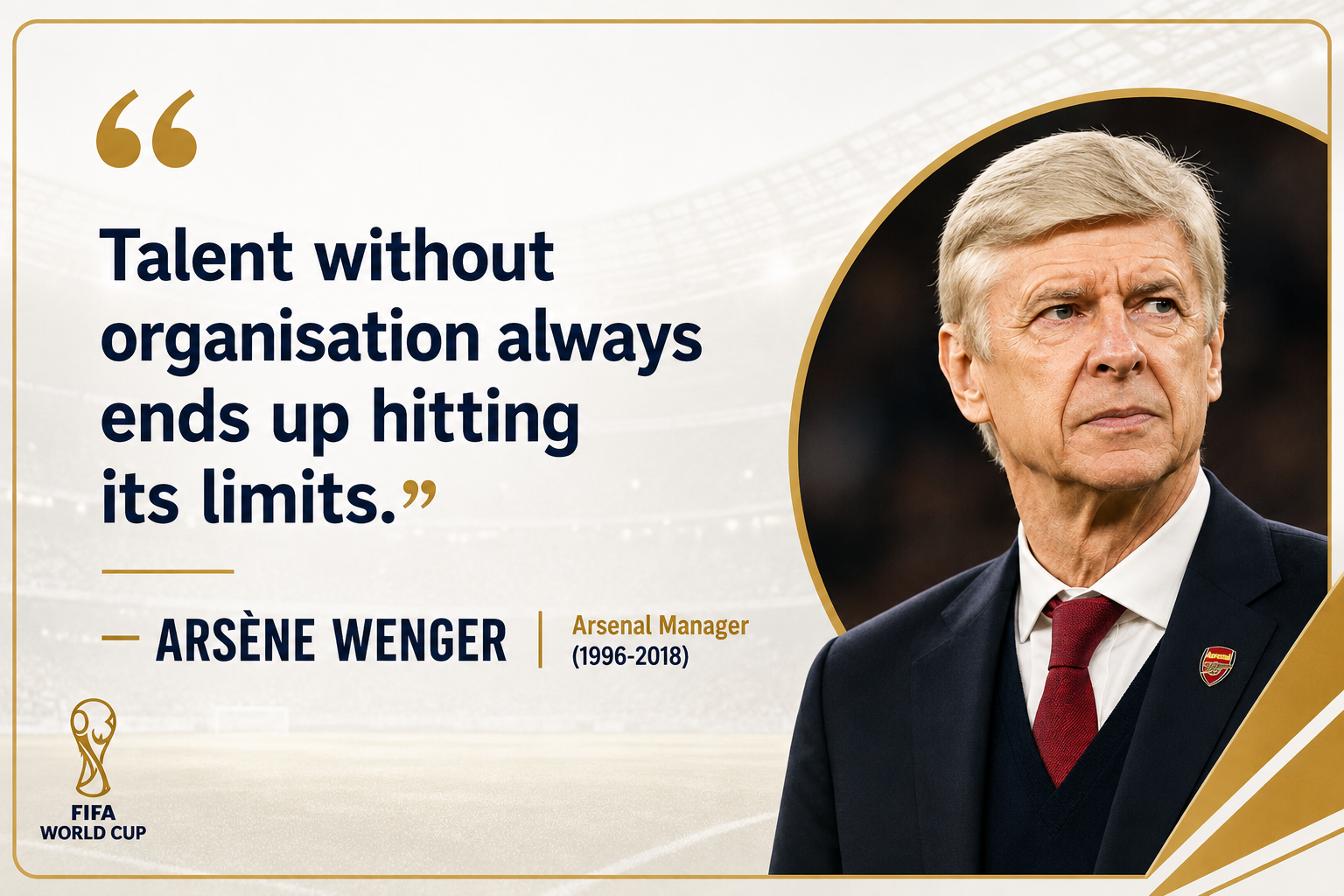
Players win games. Institutions build generations.
Modern football has become an industry of performance. Every detail counts. Every decision has a consequence. This is why governance is not an administrative matter. It is a sporting subject.
But beyond this point there remains a more intriguing property.
The real adversary
Africa, in the end, lacks neither courage, nor talent, nor passion. She already has all of that. What he still lacks is the ability to sustainably align all the elements of the same project. When the selection is consistent, when the preparation is demanding, when the governance is stable, when the players really know each other, when the mind resists the pressure. So the last ten minutes cease to be a weakness.
They become a strength. Africa's real opponent is therefore not always the team on the other side of the pitch. It is sometimes the system that it has not yet fully succeeded in building.
Our diagnosis could end here. Yet... One last element deserves to be observed.
PART IV — Chance... Or just coincidence?
At this stage, a final series of facts deserves to be mentioned. Not to draw definitive conclusions, but because they raise questions.
Three African teams. Three different scenarios. And yet, the same late changeover. Côte d'Ivoire conceded in the 86th minute to Haaland. The DRC sees Kane strike in this same critical zone. Senegal, on the other hand, collapsed in the last quarter of an hour after leading 2-0 against Belgium.
Three games, three number 9s, three African dreams shattered at a time when physical fatigue, psychological pressure and tactical errors are reaching their breaking point. Simple coincidence? Perhaps. But the repetition is challenging.
It is all the more striking because, in American slang, the expression "to 86 someone" means to push someone aside, to take them out, to get rid of them. On American soil, seeing several African teams eliminated around that famous 86th minute gives this coincidence an almost cruel resonance: as if they had been "86'd" at the very moment when they were still touching hope.
Nigeria already knows this injury. In the 2018 World Cup, the Super Eagles still held on to their qualification against Argentina. Then Marcos Rojo appeared in the 86th minute. Argentina 2, Nigeria 1. Nigeria exits. Here again, Africa was not far away. Here again, the axe falls in this murky zone where big matches choose their side.
Another element also deserves to be remembered: this World Cup was not only played on the pitch. It was also played out at the borders, in consulates, visa procedures and conditions of access to American territory. Several African fans have been confronted with refusals or administrative difficulties, including around Ivorian, Senegalese or Congolese delegations and audiences.
This is not to say that a visa is denied a match. But it reminds us of one thing: international performance never depends solely on the twenty-two players on the pitch. It also depends on the environment, logistics, popular support, psychological climate and the feeling of being fully welcomed in the competition.
Should we see it as a simple succession of independent events? A statistical irony? An administrative constraint among others? Or a sign that African teams continue to evolve in an environment where nothing is ever totally neutral?
It is up to each of us to draw our own conclusions.
Because the problem is not only to concede in the 86th minute. The problem is arriving at the 86th minute without enough structure to survive the storm.
And sometimes the questions are more powerful than the answers.
📊 Performance 75th–90th: the critical ten minutes
Understanding a defeat does not erase it.
But that's often how the greatest victories begin.
Basically... Football may have only been the revealer.
What to remember
This article is not only about football. He talks about preparedness, governance and leadership. He talks about the ability of some nations to transform their potential into results in the long term.
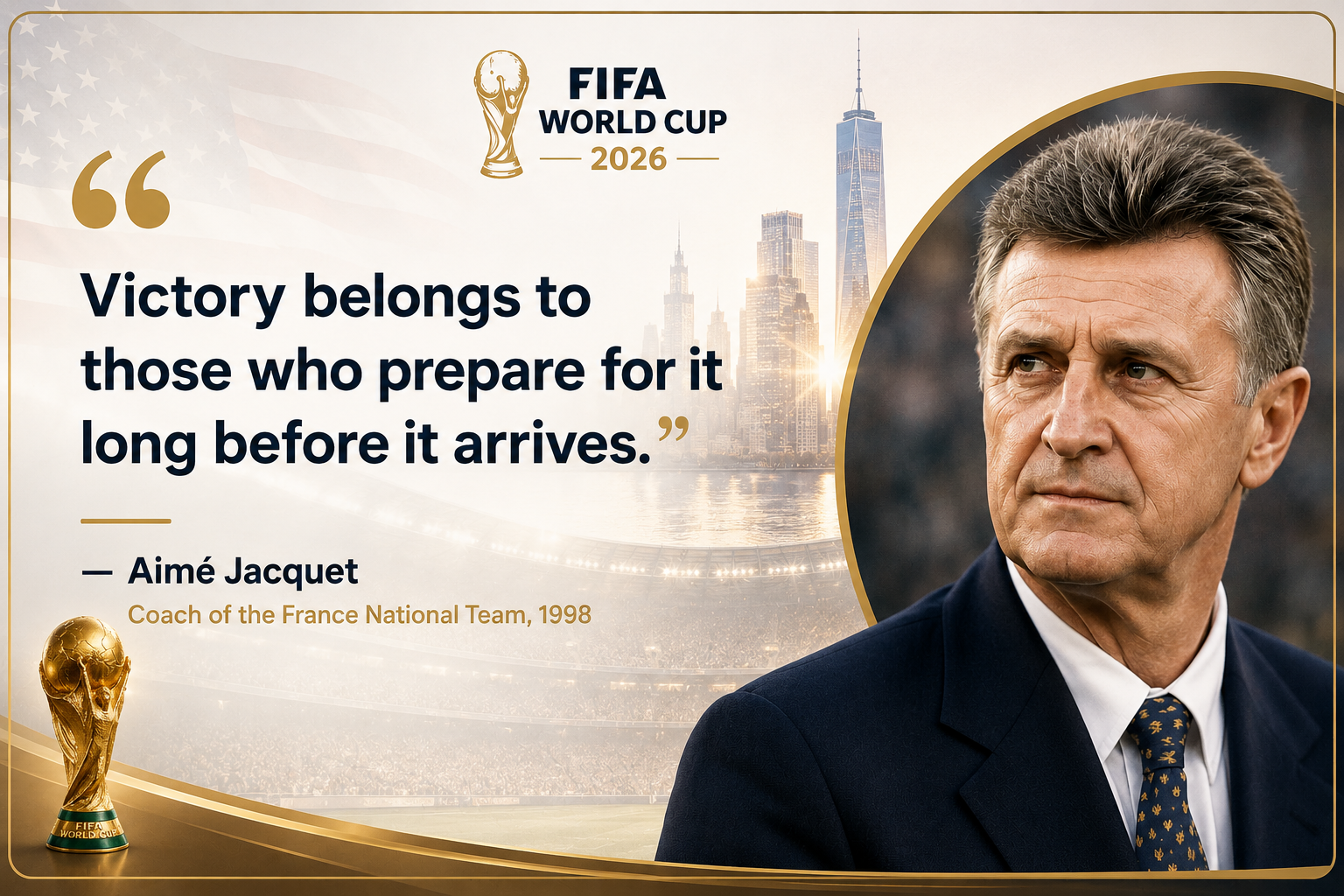
Ivory Coast, Senegal and DRC were not dominated for ninety minutes. They competed. They even, at times, gave the impression that they could overthrow their opponents. Then... something broke. It is precisely this "something" that we have sought to understand.
In November 2025, Gennaro Gattuso, then coach of Italy, publicly questioned the expansion of African places for the World Cup. A few months later, before Germany-Ivory Coast, Bastian Schweinsteiger described the Ivorian game as "a bit wild and not totally tactical football". These statements have rightly sparked a lively controversy. Because they reduce African football to clichés that reflect neither the quality of its players nor the richness of its history.
But the best answer will never come from a television set. It will come from the field.
Africa already has the players capable of winning a World Cup. The real challenge lies elsewhere: to build the environment that will allow this talent to last. Because in modern football as in economics, systems always end up producing the results they are designed to produce.
Talent opens doors. The system decides who crosses them for the long term. And the invisible sometimes decides what the visible cannot explain.
Africa already has the talent. It now remains for him to build the system capable of transforming it into a lasting victory. And maybe the real game starts precisely now.
=> What if the real challenge of African football was no longer to produce talent, but to finally build the systems capable of carrying it to the end?
Intellectually yours,
Jean-Noël Niamké FINANCIAL EXPERT Football Special Edition | Strategic & geopolitical analyses
Sources: click here
NB: Quotes from sports leaders are reproduced or rephrased from their available public statements.