HAS AFRICA TRULY NEVER ENTERED HISTORY?
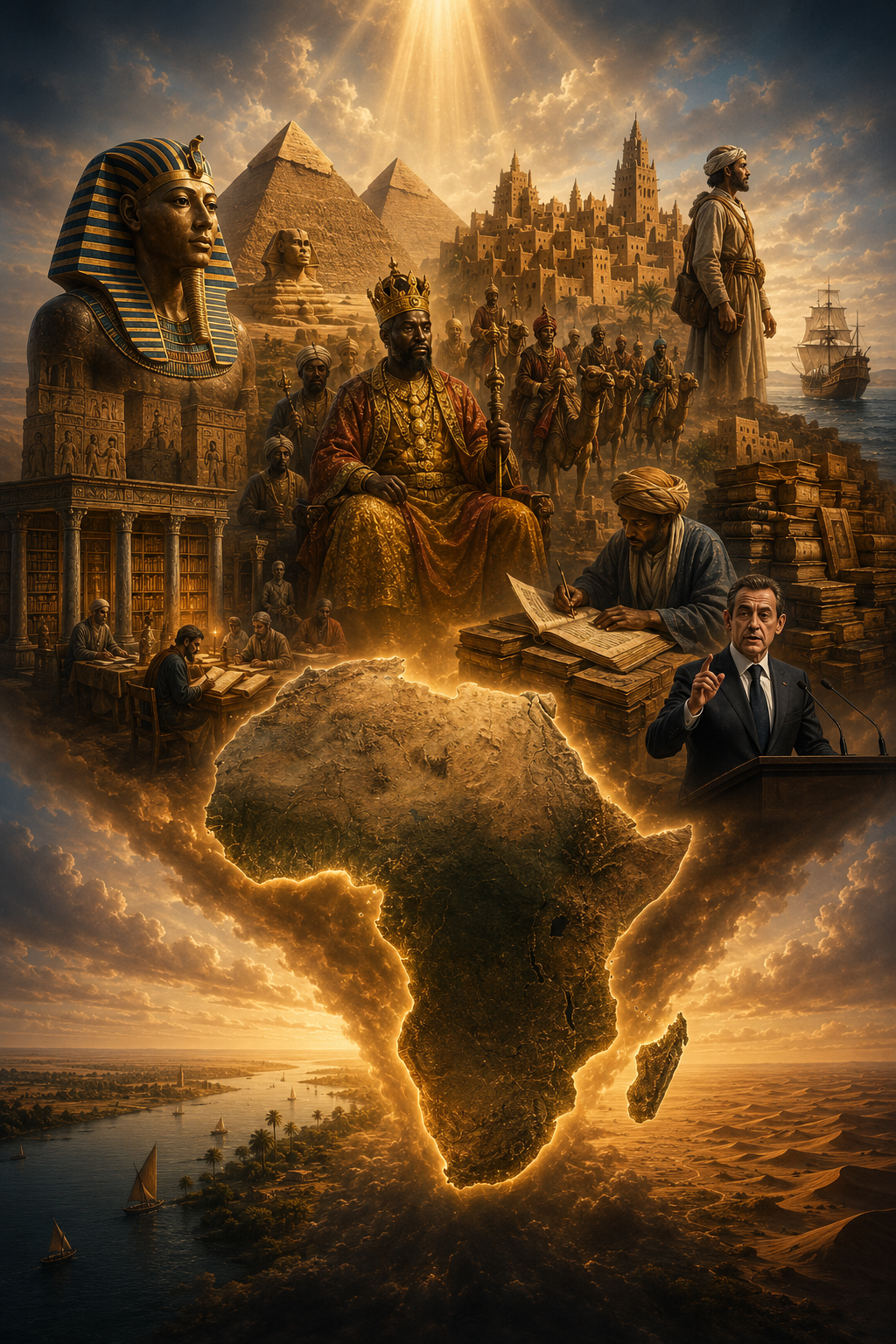
From Pharaonic Egypt to Timbuktu, from Mansa Musa to the manuscripts of the Sahel: what the erasure of Africa reveals less about Africa than about those who wrote History.
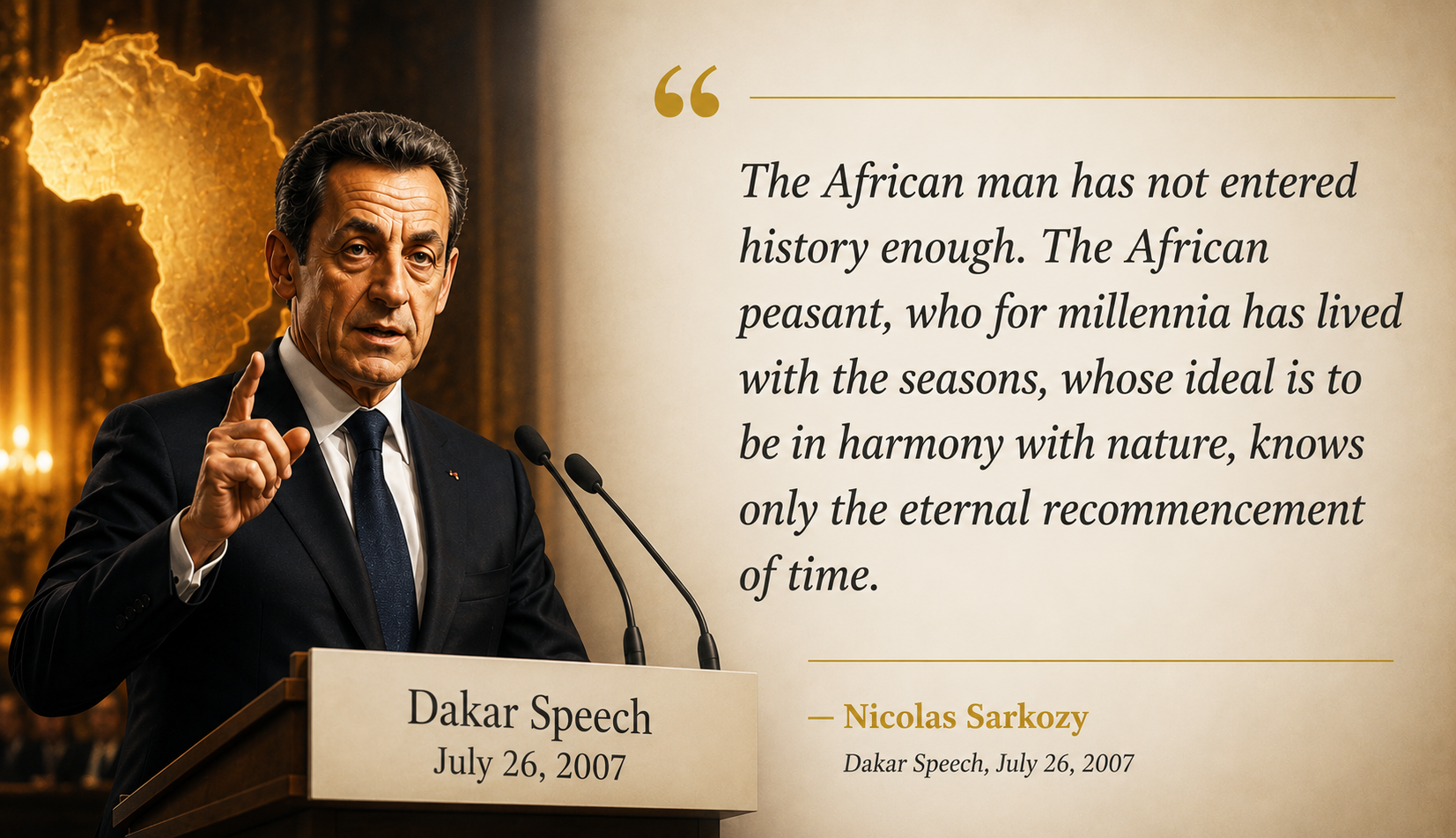
In 2007, Nicolas Sarkozy said in Dakar that the African man had not sufficiently entered history. It was not a blunder. It was a summary.
A summary of several centuries of Western gaze upon Africa: a continent observed, exploited, commented upon — but rarely recognized as the subject of its own history. This speech does not deserve merely an indignant response. It deserves a factual one.
Rehabilitating African history does not require inventing certainties. The established facts are already enough to overturn the dominant narrative.
PART I — The World’s Library
We must go back 4,500 years.
While the civilizations of northern Europe still lived under rudimentary shelters, Africa’s Nile basin was constructing structures that contemporary engineering still observes with perplexity. Through its extraordinary structure and architecture, Pharaonic Egypt defied the limits of human understanding of its time. The Pyramids of Giza are not a magazine mystery. They are an open scientific problem.
Researchers understand some of the techniques used: ramps, levers, organized labor. But the astronomical precision of the alignments, the transport of 70-ton blocks over kilometers, the systemic coherence of a construction site spanning several decades — several aspects remain debated in the specialized literature.
This is not mythology. This is engineering we have not yet fully replicated.
And then there is an image no one comments on openly.
On the American dollar — the world’s reserve currency — stands an African pyramid.
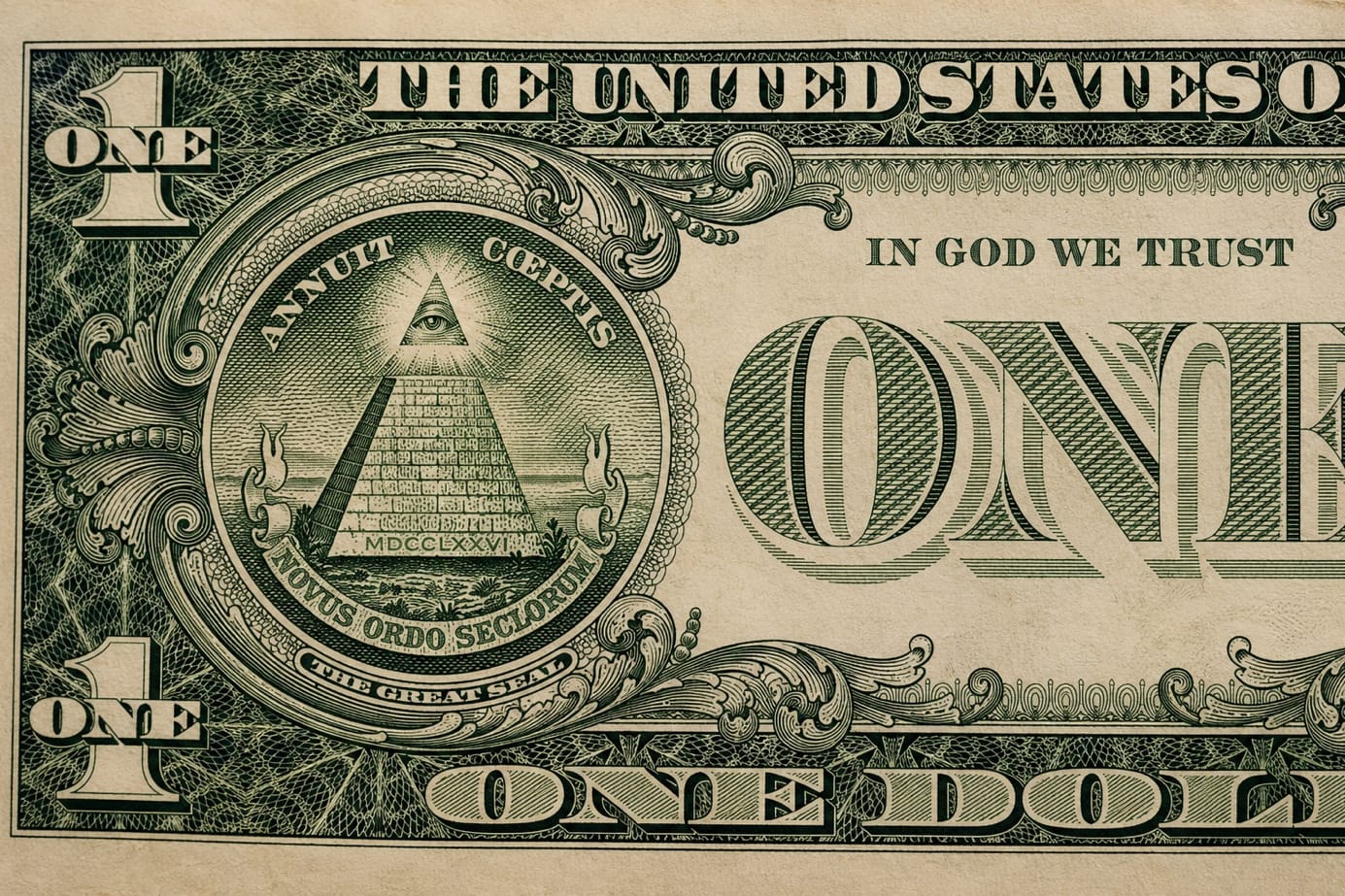
The Eye of Providence atop an unfinished pyramid. This symbol, adopted by the Founding Fathers of the United States in 1782, is directly drawn from pharaonic imagery. The most powerful economic empire of the 21st century placed an African symbol on its global reserve currency. And the eagle that symbolizes its sovereignty? Its direct iconographic ancestor is the falcon of Horus — the divine emblem of the Egyptian pharaoh.
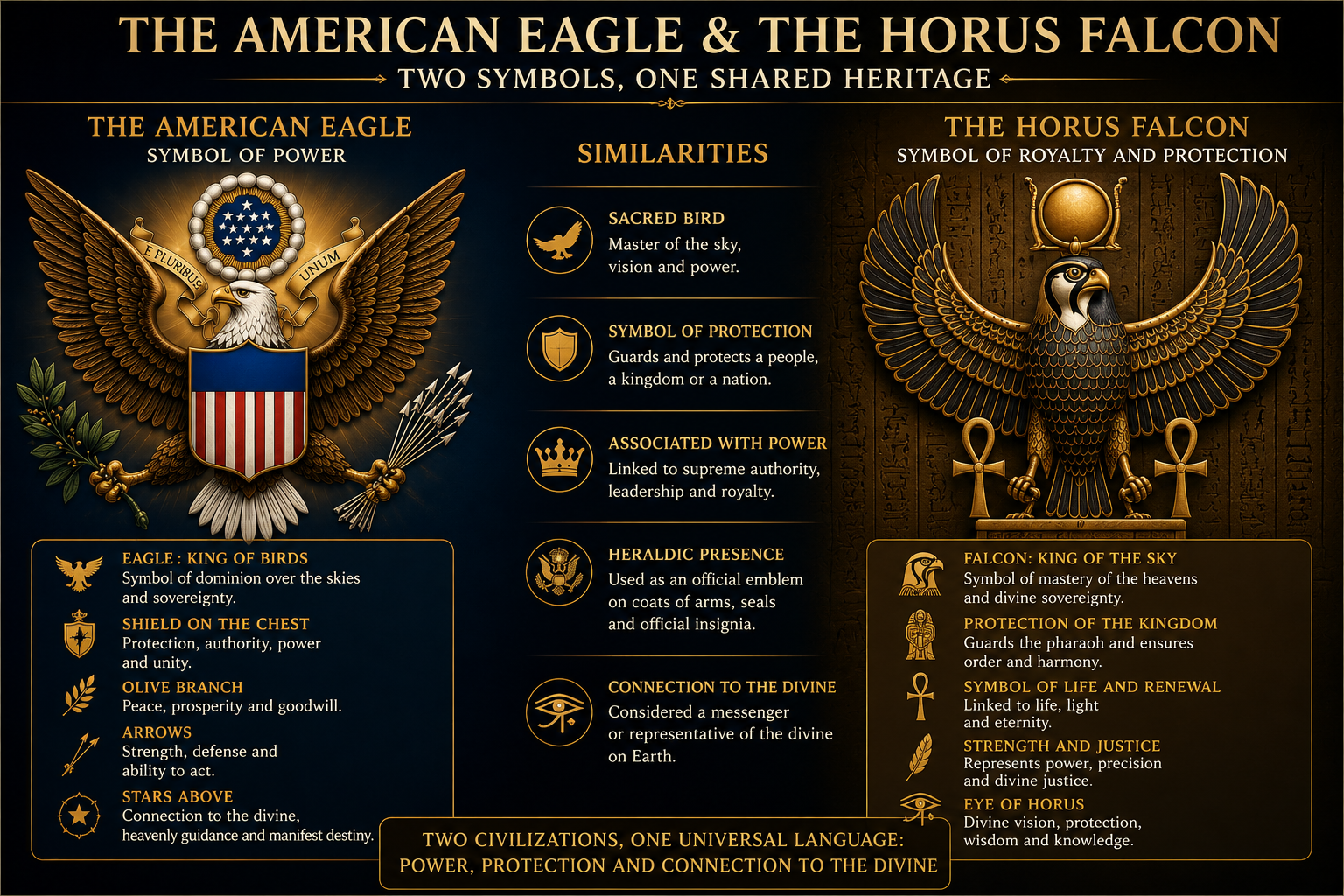
This is not a symbolic coincidence. It is a lineage that official history prefers not to name.
Pythagoras, Thales, Plato. The names the West presents as the fathers of philosophy and mathematics had all spent time in Egypt to learn. The Pythagorean theorem existed in Egyptian temples centuries before a Greek name was attached to it. Geometry, astronomy, medicine, philosophy — all of it passed from Africa to Greece, before Greece transmitted it to Rome, and Rome to Europe.
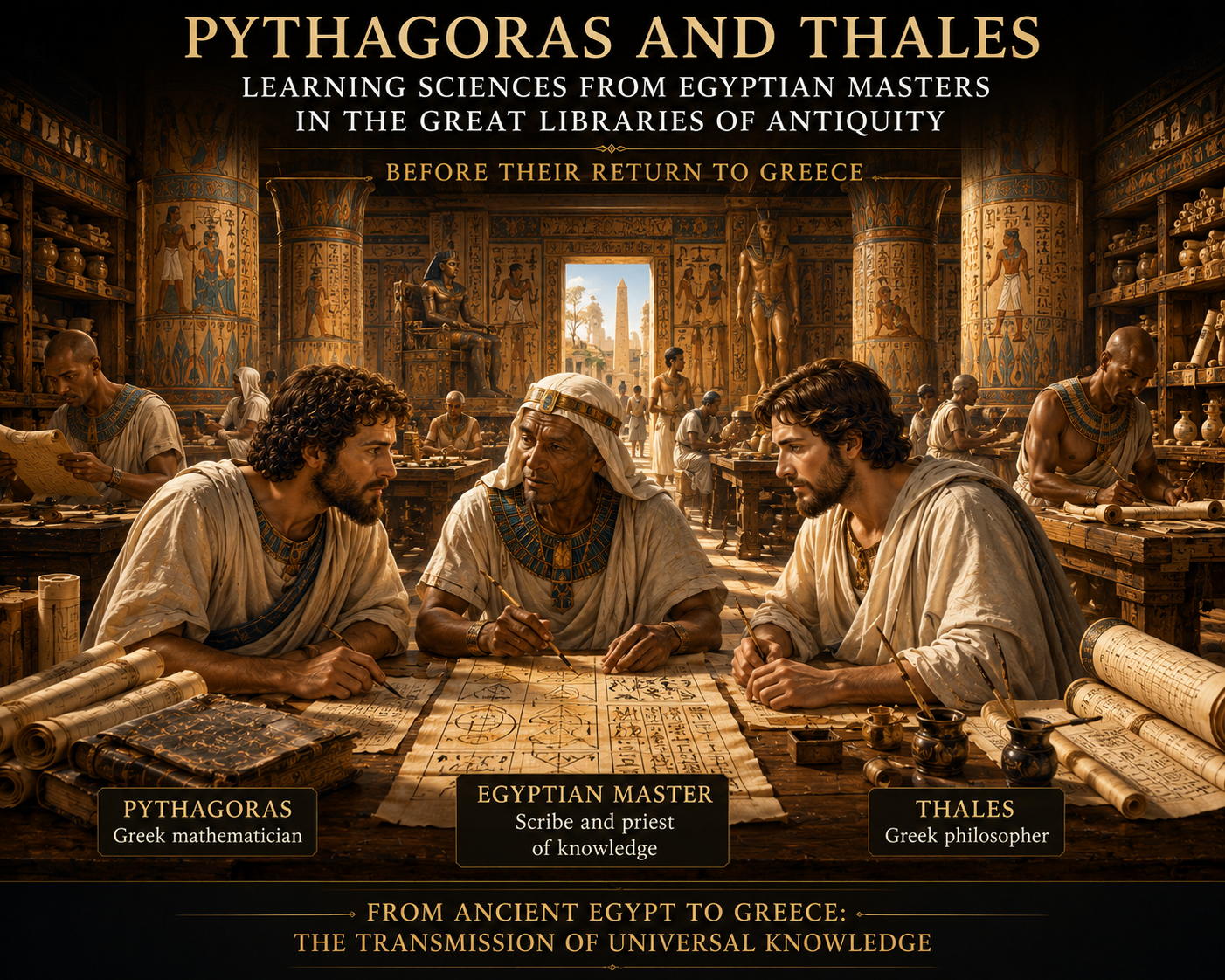
The West inherited from Africa. Then it preferred to forget the address of the inheritance.
But this African power did not rest solely on knowledge — it also rested on the might of its empires.
PART II — The Empires No One Taught You About
African history does not begin with colonization. Let us give this statement the substance it deserves.
Ghana Empire — not the modern state, but the medieval empire centered on present-day Mali and Mauritania — dominated the gold and salt trade routes from the 8th century AD. Before France was France, before England was England. A structured empire, with a fiscal administration, an army, and intercontinental trade routes.
Before feudal Europe, Africa already had a system.
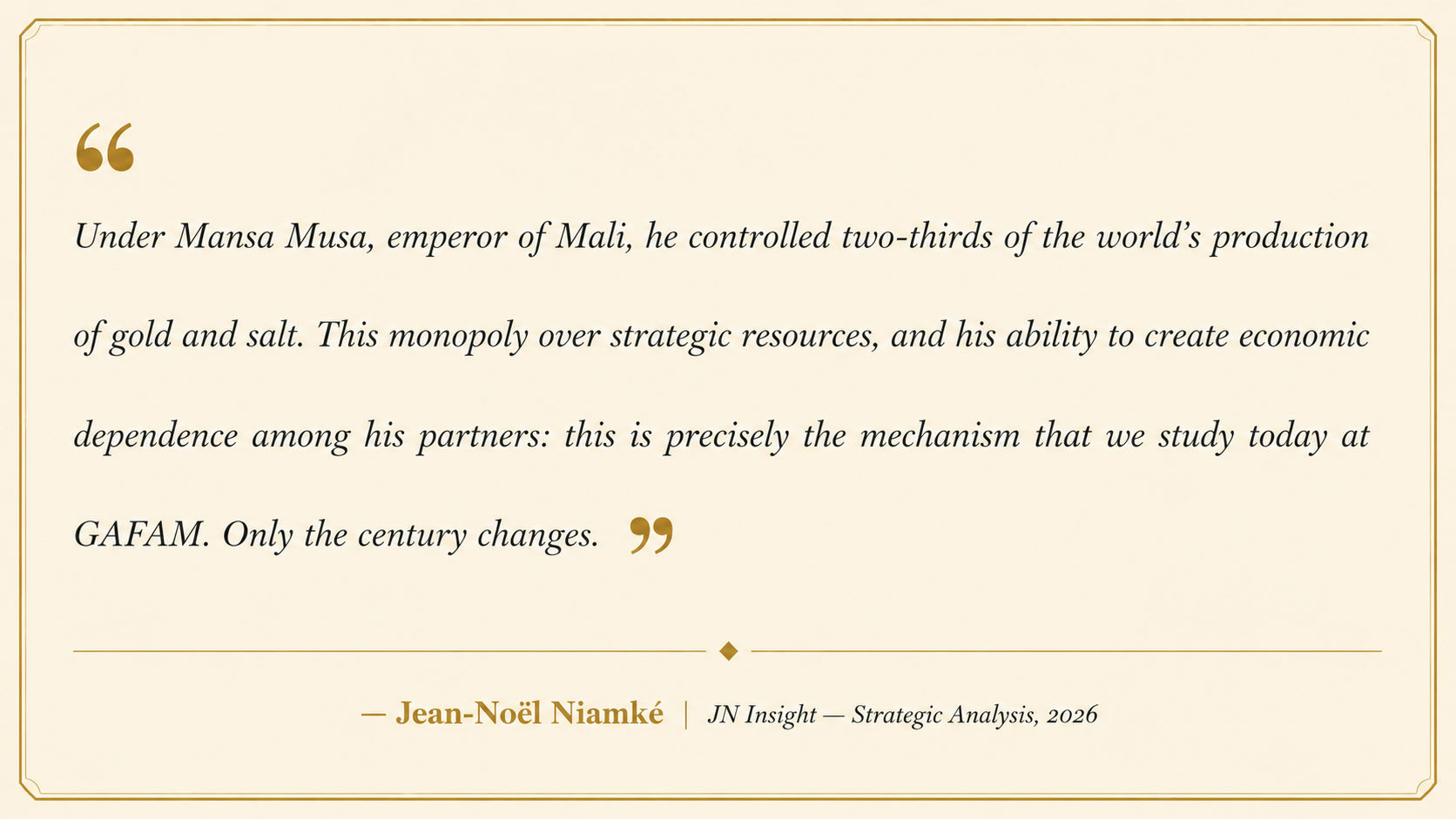
Mansa Musa. The man economists and historians consistently rank among the greatest fortunes ever accumulated in human history. His wealth is often estimated, through modern extrapolation, at over 400 billion dollars in today’s terms — a necessarily approximate figure, but one that reflects the exceptional scale of his economic power.
En 1324, son pilgrimage to Mecca was an unrivaled demonstration of power: 60,000 men, 12,000 carriers, dozens of camels loaded with gold. He distributed so much precious metal in Cairo that the price of gold suffered a catastrophic deflation for 12 years.
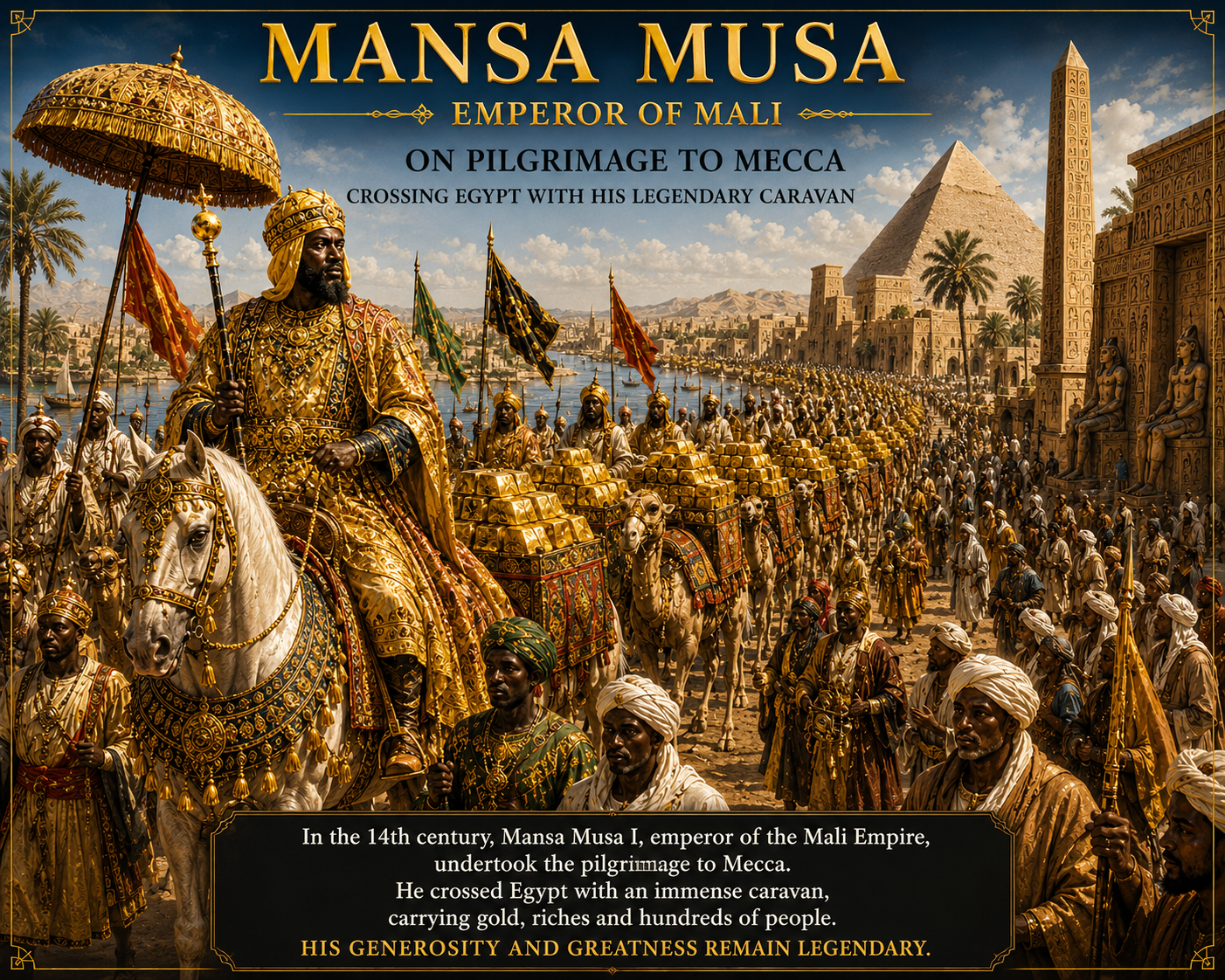
This was not generosity. This was monetary policy on a continental scale.
Then there is Timbuktu. UNESCO recognizes Timbuktu as a major intellectual and spiritual capital of the 15th and 16th centuries. Its universities — notably the Sankore Mosque-University — taught mathematics, astronomy, theology, jurisprudence, and medicine. Hundreds of thousands of manuscripts were preserved there, some dating back to the 13th century.
Timbuktu alone destroys the idea of an exclusively oral Africa. The problem is not that Africa did not write. The problem is that its libraries were never placed at the center of the global narrative.
Further east, slightly beyond the western bloc, the Hausa Empire developed a sophisticated city-state system from the 10th century. Further south in the austral region, the Zulu Empire inflicted one of the most stinging defeats on the British army at Isandlwana in 1879. The Great Zimbabwe, built without mortar or metal, remains an architectural masterpiece without definitive explanation.
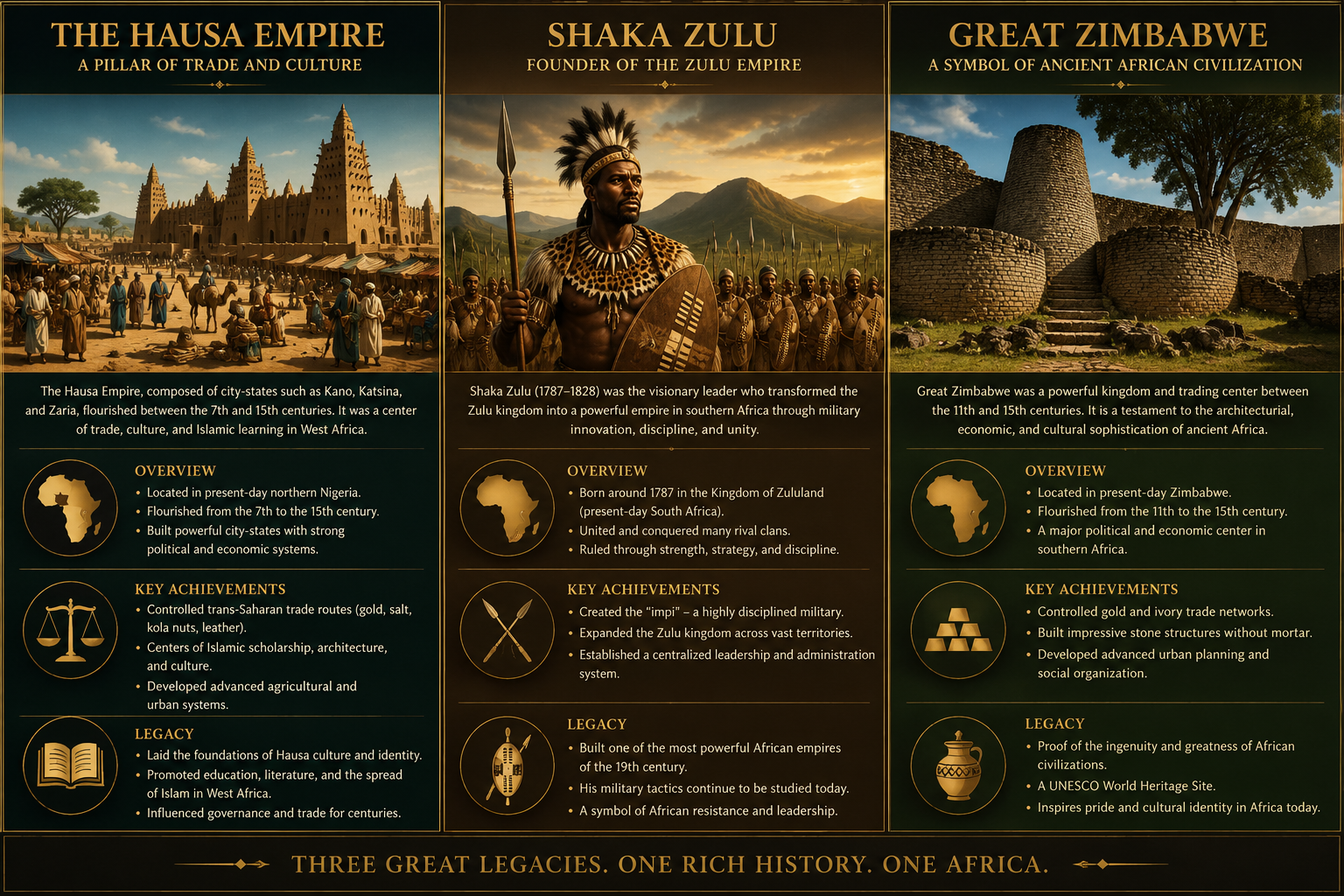
These empires do not need to be “discovered” by the West to have existed. They existed. That’s all.
PART III — Africa and America: The Maritime Hypothesis
Certain theories — notably those of Ivan Van Sertima — Leo Wiener, Cheikh Anta Diop, Runoko Rashidi and John Henrik Clarke have argued for pre-Columbian transatlantic African contact. Sculptural representations from the Olmec culture have been interpreted by several authors as evoking African features. These theories remain debated and do not constitute consensus in Mesoamerican archaeology.
This hypothesis remains open. But it deserves to be examined.
What it reveals, however, is that official history long refused to seriously examine the possibility of a maritime, mobile, and connected Africa. From reliable sources, en 1311, Aboubakar II, sultan du Mali, envoie 2 000 pirogues vers l’Atlantique. Cette expédition est documentée. Ce qui s’est passé après reste inconnu mais des echanges récurrents avec d'éminents historiens laissent transparaitre qu'il aurait réussi à installer la première communauté d'échange de l'autre côté de l'atlantique.
What is beyond debate: when Europeans arrived in the Americas, they found capable, strong, hardworking men. Coincidence? Perhaps not. But they built around this reality a system that deported between 12 and 15 million Africans to the Americas.
Africans were not enslaved because they were weak. They were deported because they were capable.
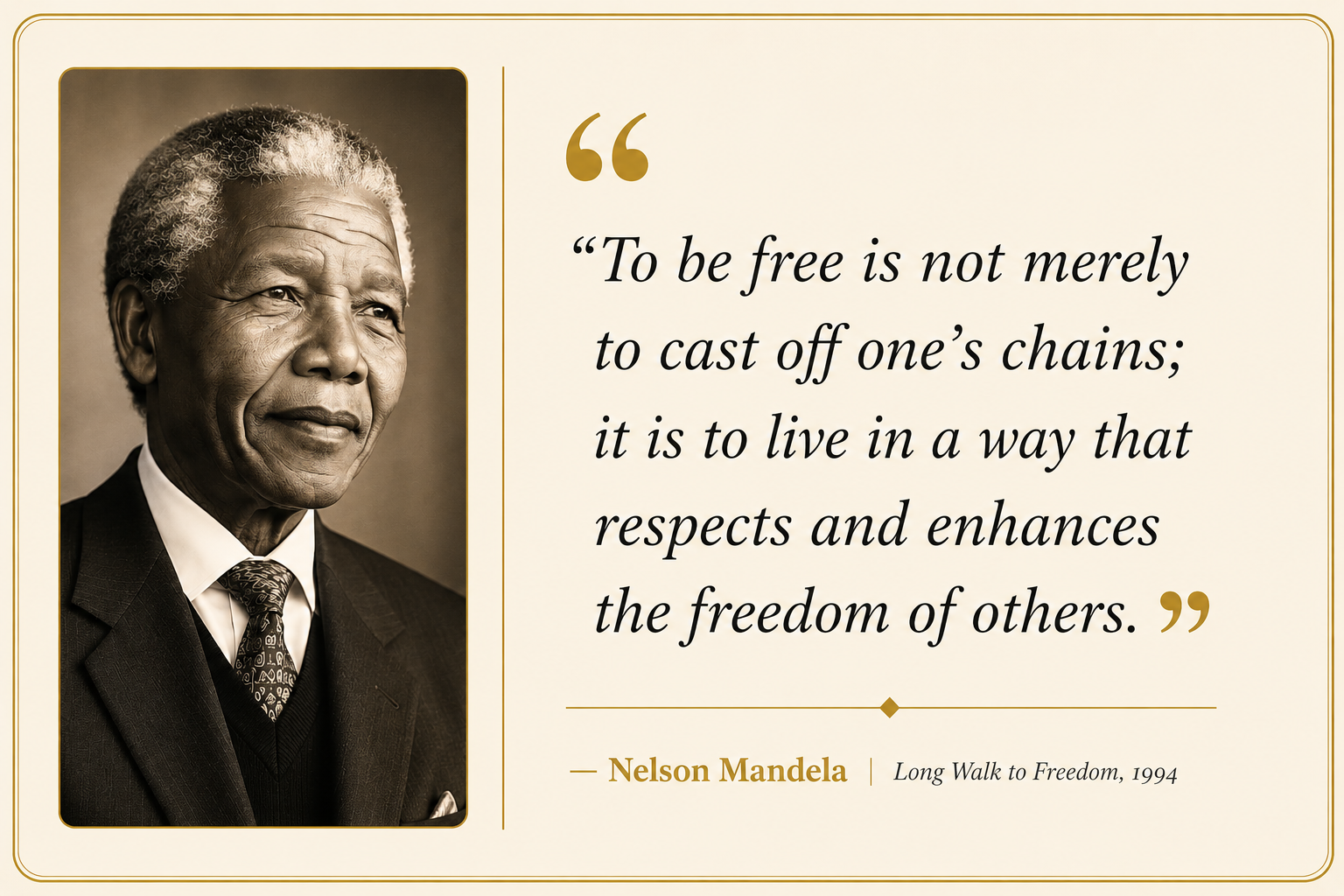
The erasure of Africa’s imperial structures — Mansa Musa’s wealth, the Mali trade routes, Timbuktu’s financial architecture — served to legitimize the establishment of a profoundly asymmetric economic system: imposed currency monopolies, structural debt, resource extraction without redistribution.
The erasure of African history was not a distraction. It was an economic prerequisite.
PART IV — Timbuktu, Paris, and the City Europe Pretended Not to Have Seen
In 1828, René Caillié entered Timbuktu disguised as a Muslim. He was the first European to return alive to bear witness. What he saw there astounded him.
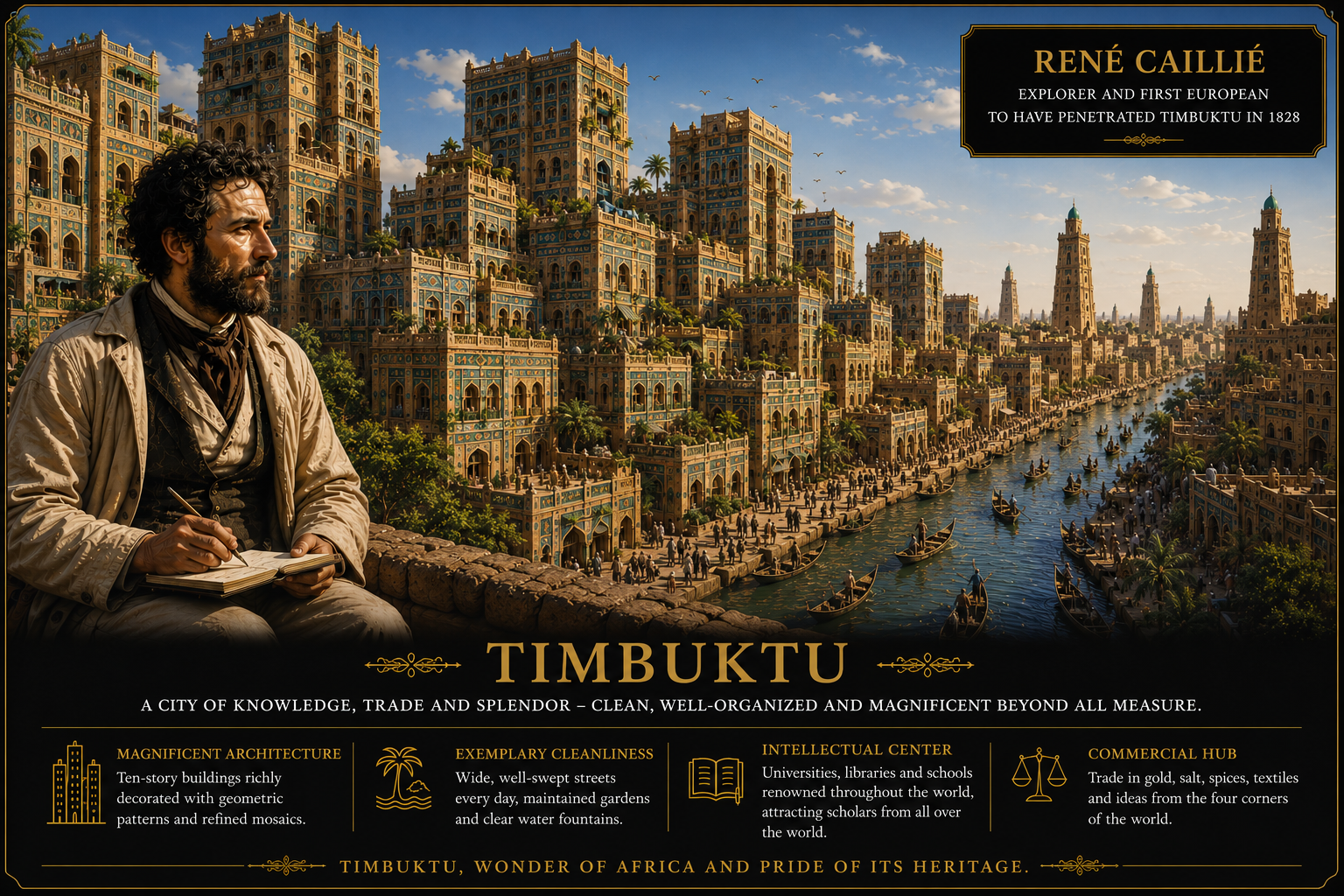
A clean city. Wide, ordered streets. Elegantly constructed mud-brick buildings. Urban design organized around squares, markets, majestic mosques. Flourishing international trade. A living library.
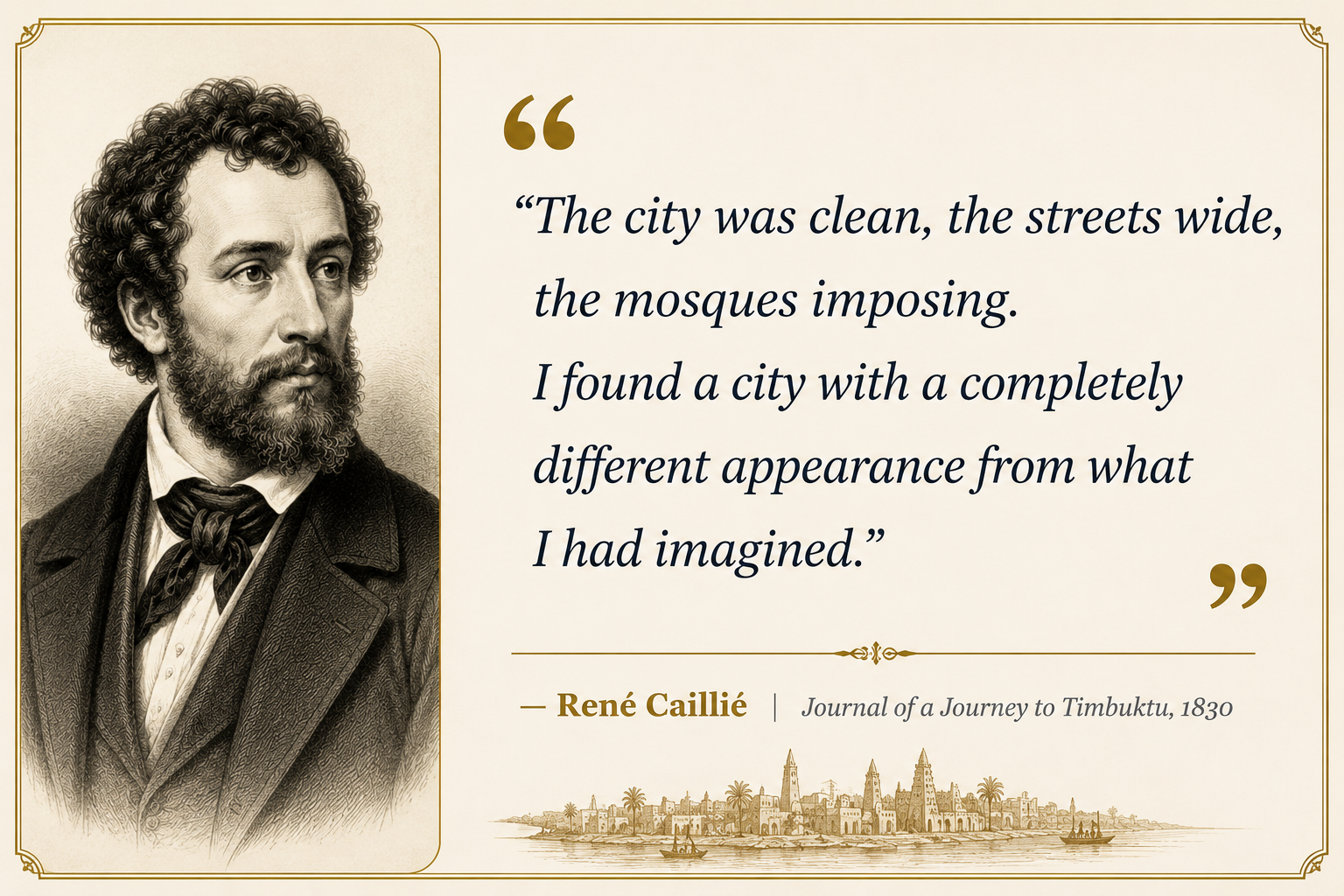
These accounts circulated in Parisian intellectual and political circles in the 1830s–1850s. This is precisely the era that preceded the transformation of Paris by Baron Haussmann from 1853 onward: wide boulevards, squares that organize space, a city conceived as a coherent organism.
The claim here is not that Haussmann copied Timbuktu. That would be excessive. The point is something more important:
Urban Africa existed. It was documented, known to European elites, long before colonial imagination rewrote it as a continent without cities and without history.
Africa did not need the city. It already had one.
PART V — The Burning of the Evidence
There is a question often posed, with varying degrees of good faith: if Africa was so advanced, why are so few written traces left?
La réponse est double.
First: a great deal of African knowledge was transmitted orally. Through griots, sages, masters of initiation.
The oral tradition is not the absence of history. It is another way of carrying it.
Second: there was writing. Abundant writing. And much of it burned.
Library of Alexandria — founded around 300 BC on African soil — held between 400,000 and 700,000 volumes. The intellectual heritage of the ancient world concentrated in a single place. Eratosthenes calculated the circumference of the Earth there with staggering precision, two centuries before Christ. Medical, astronomical, and mathematical texts from multiple civilizations were archived there.
And then it burned.
Plusieurs fois. Under Julius Caesar. Under Aurelian. Historians still debate the exact circumstances. What is beyond debate: an irretrievable portion of human knowledge vanished. And with it, a portion of the proof of what Africa knew, built, and thought.
This phenomenon did not end with Alexandria. The manuscrits de Timbuktu were partially destroyed during the Moroccan invasion of 1591. Egyptian temples looted by successive invaders. And colonization as the final blow: delegitimizing oral transmission, dismantling institutions of memory, imposing foreign scripts and narratives.
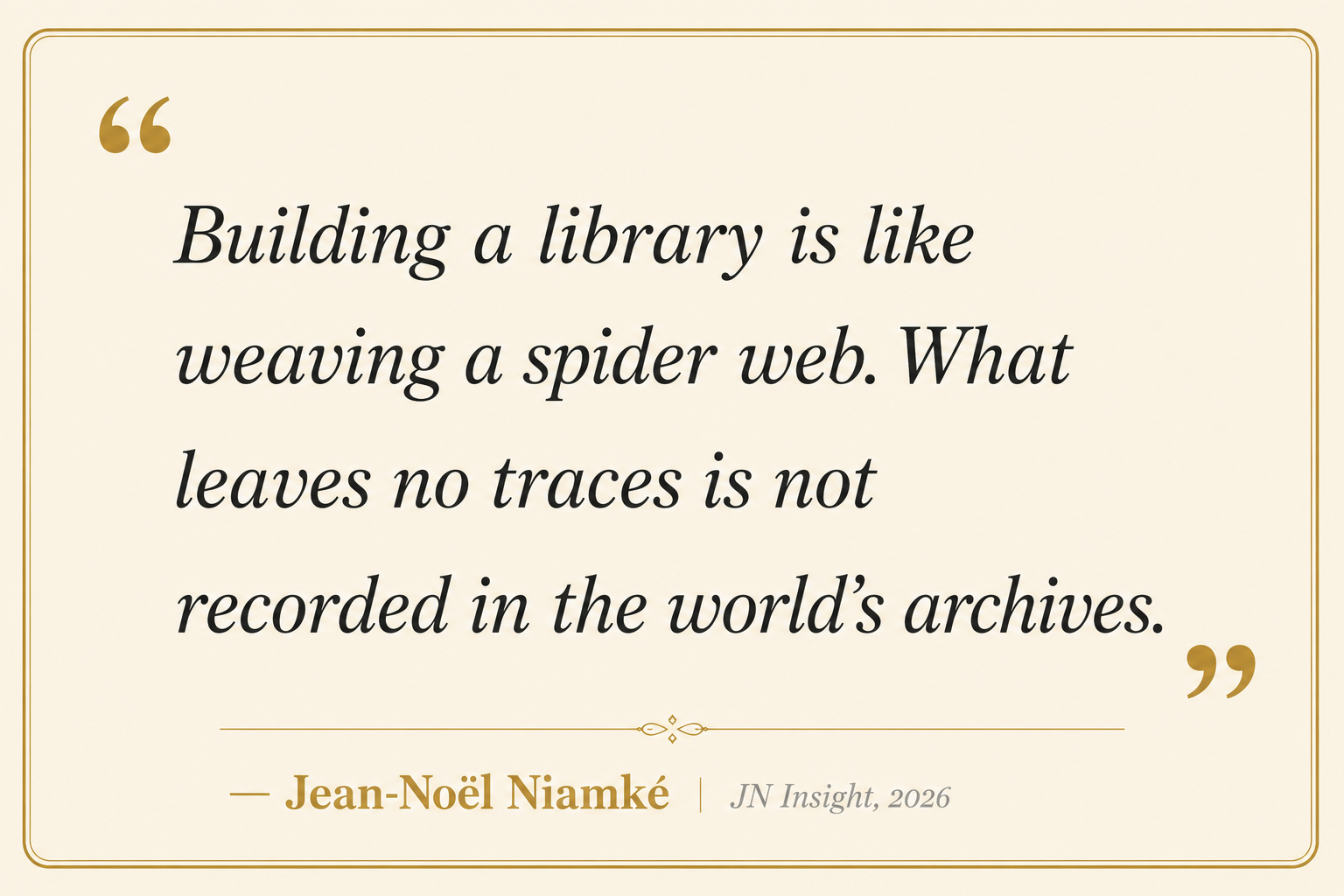
African power did not disappear because it never existed. It was systematically disconnected from its own evidence.
KEY FIGURES — Africa: Facts and Chronology
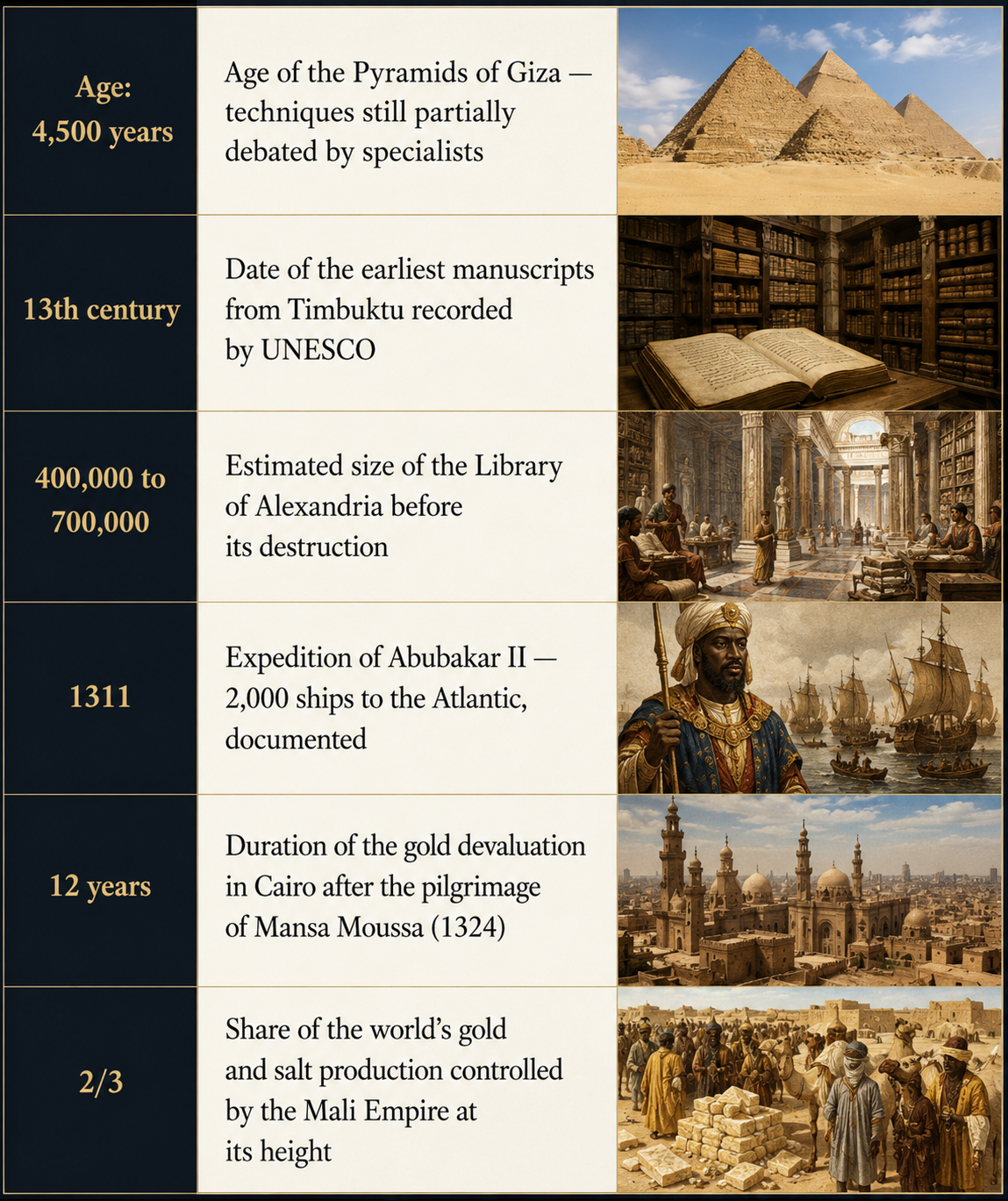
What to remember?
Has Africa not entered history?
No — Africa is history.
It is the cradle of the human species. The first civilization to have built enduring monuments, to have codified knowledge.
Elle a détenu les monopoles sur les ressources stratégiques mondiales — l’or, le sel, le savoir. Elle a inspiré les philosophes grecs, les architectes du dollar américain, les urbanistes qui ont pensé la ville moderne.
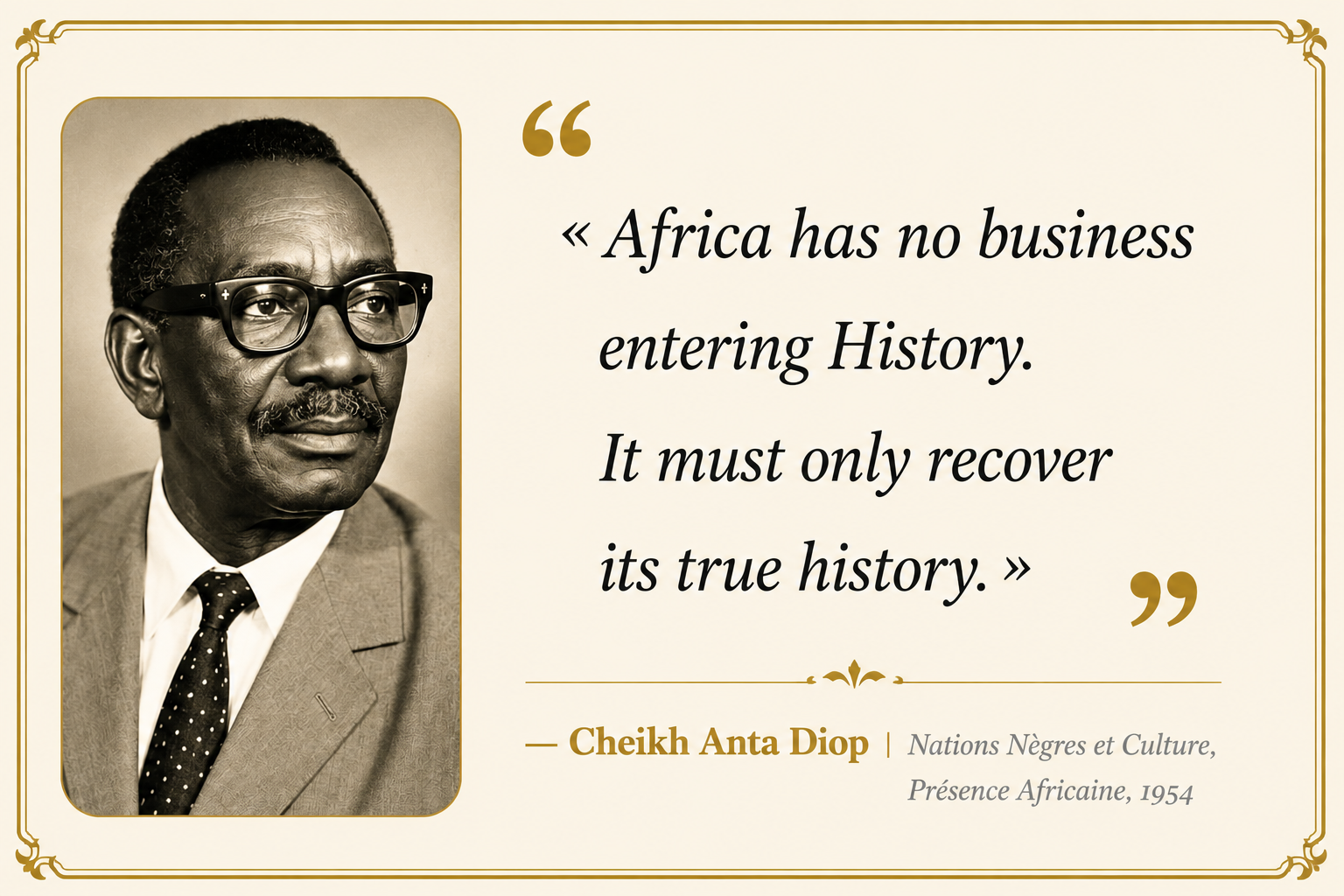
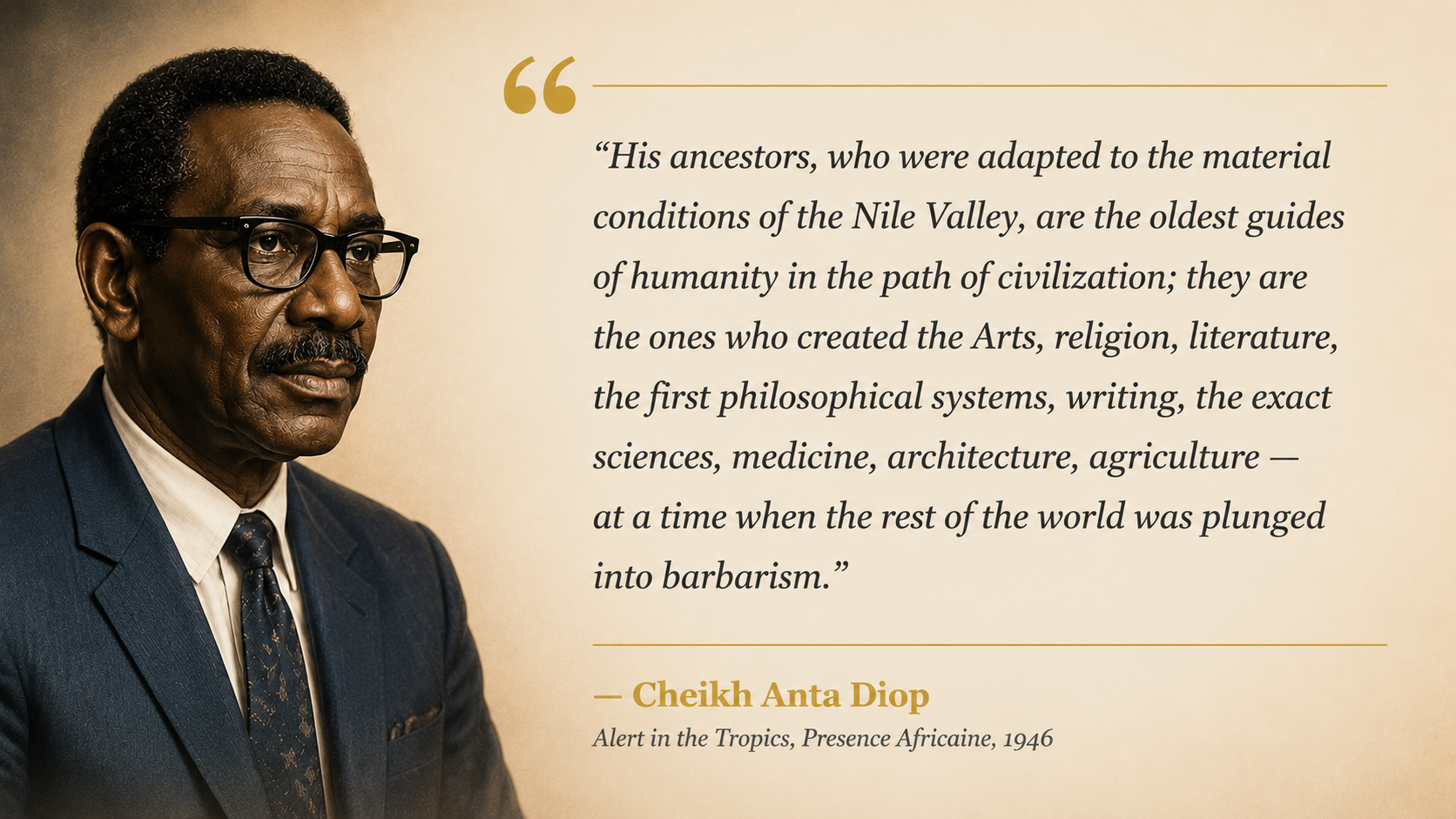
Cheikh Anta Diop said it before anyone else. His monumental work demonstrated that Egyptian civilization was African, Black, and foundational. Fifty years later, Western academia still debates what Diop had already established.
That delay is itself a piece of information.
The real problem is not that Africa has no history. The real problem is that history was written by those who had an interest in being its sole protagonists. And that this erasure was not a question of pride. It was an economic condition.
The dollar bears an African pyramid.
The Greek philosophers had an Egyptian teacher.
The wealthiest man in history, for 750 years, was African.
And yet, for centuries, schoolchildren across the world were taught that history began in Athens. So to the question of whether Africa had not sufficiently entered history, the answer is simple: No. It was erased from it.

Africa did not arrive late to the history of the world.
The history of the world departed from Africa.
→ And what if the real question was not “Did Africa enter history?” — but “Who had an interest in making it believe it hadn’t?”
Intellectually yours,
Jean-Noël Niamké. FINANCIAL EXPERT
The Mechanisms of Power — Series V | Strategic & Geopolitical Analysis
Sources:
JN Insight — USA, China, Russia: Who Is Really the World’s Leading Power? (2026)
JN Insight — Perfume: 5,000 Years of Invisible Domination (2026)
JN Insight — GAFAM : comment cinq entreprises ont conquis le monde
Britannica — Horus (Egyptian falcon deity)
L'Orient Le Jour — Mansa Musa, l'homme le plus riche de tous les temps
UNESCO — Timbuktu, patrimoine mondial
Britannica — Library of Alexandria
Britannica — Olmec (Pre-Columbian culture)
Cheikh Anta Diop — Black Nations and Culture, Présence Africaine (1954)
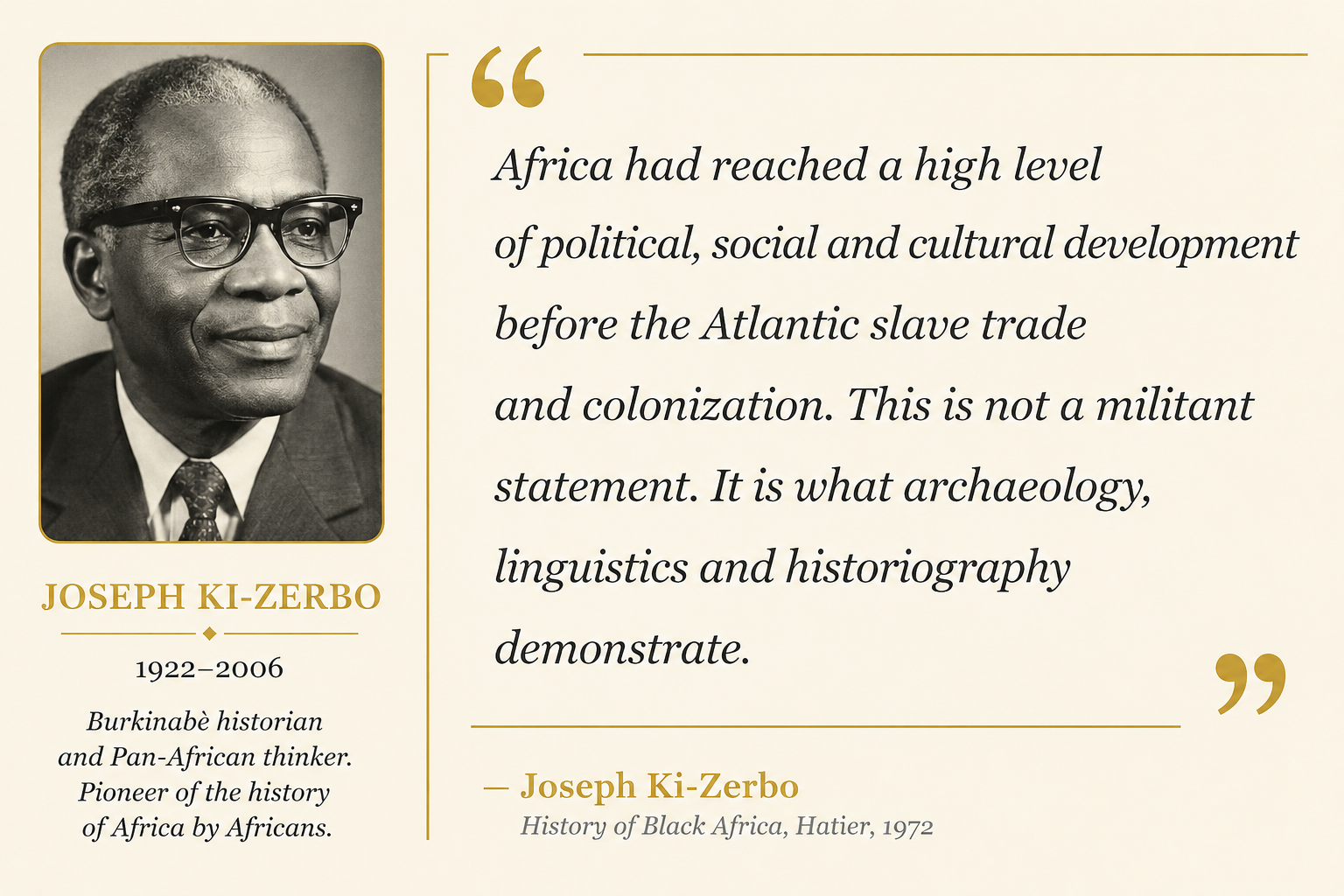
Joseph Ki-Zerbo — History of Black Africa, Hatier (1972)
Barack Obama — Address to the Ghanaian Parliament, Accra (2009)