IS AFRICA TRULY POOR ?
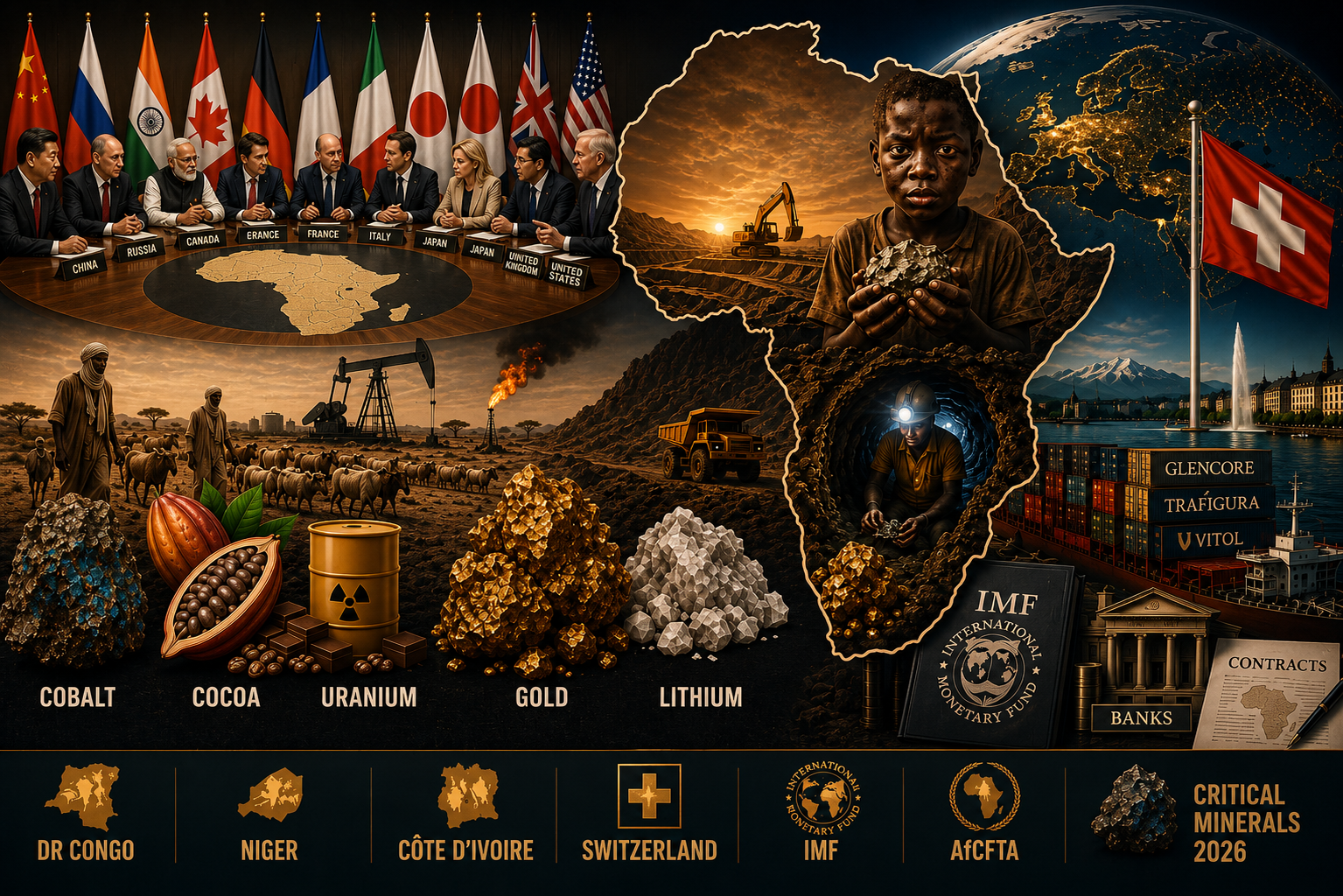
When did we simply learn to call « poor » the continent that enriches the rest of the world?
Somewhere in Katanga, in the Democratic Republic of Congo, a child descends into an artisanal mine to extract a few kilos of cobalt. Several thousand kilometres away, billions of dollars are being traded around the batteries that will power our phones, our computers and our electric vehicles.
Between the two lies an entire value chain. At the beginning of that chain: Africa. At the end: wealth. The question is simple.
Why do these two realities almost never meet?
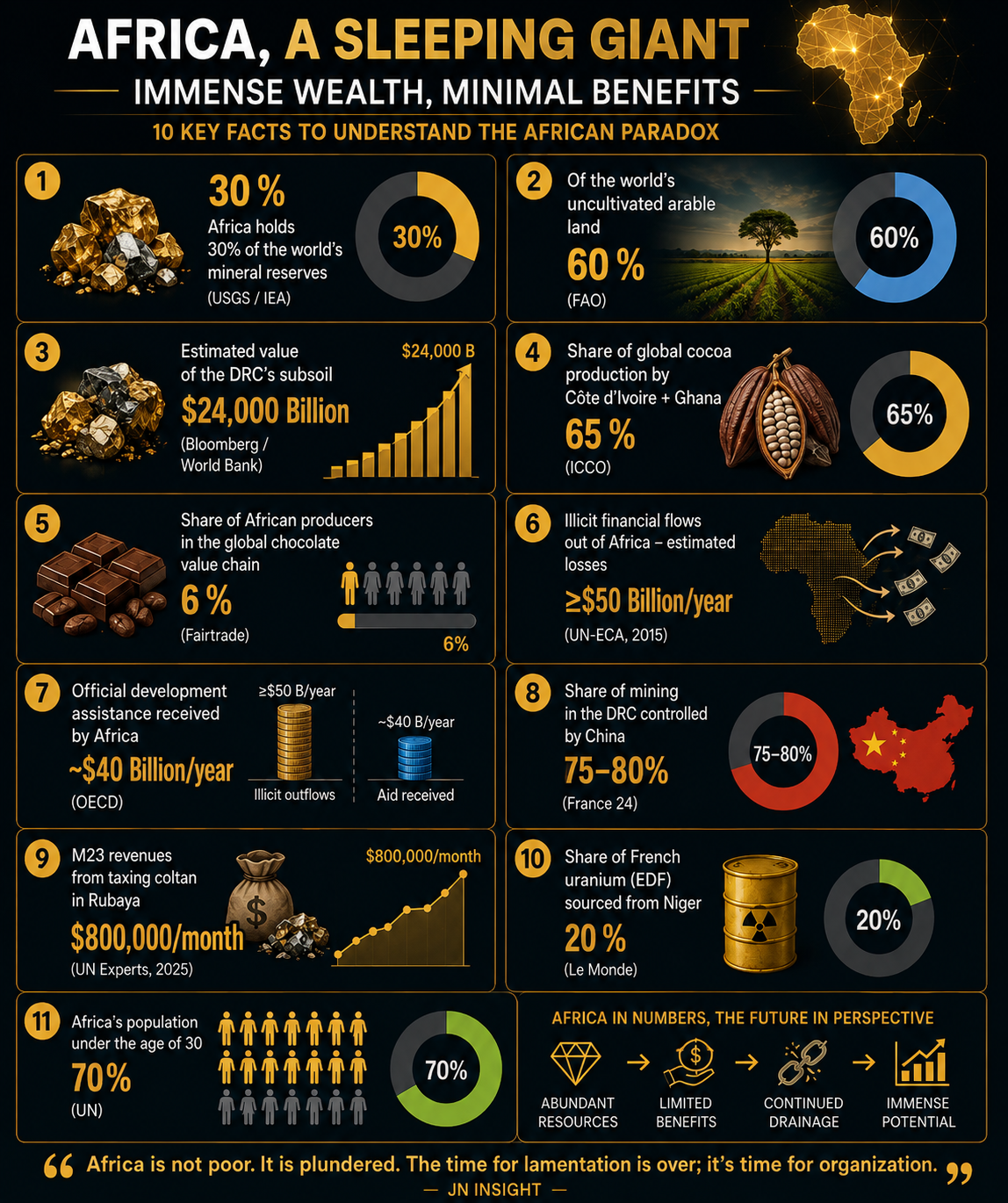
In 2026, Africa holds 30 % of the world’s mineral reserves, 60 % of the planet’s uncultivated arable land, and the youngest population on earth. And yet, it is presented as the poorest continent.
No one fights over what is worthless. No one deploys diplomatic, military and economic strategies around territories of no importance. The 21st-century economy is not built on useless resources.
So if Africa is truly poor, why does the entire world keep coming to seek its wealth?
It’s not a miscalculation. It’s an architecture.
In our previous article, we demonstrated through precise argument that Africa had been erased from the historical narrative. Today, we turn to an even more troubling reality: how a rich continent can be prevented from converting its wealth into power.
The mechanisms that sustain this situation are neither accidental nor invisible. They are simply seldom named. And the first paradox is plain: no one persistently covets what holds no value.
Before understanding why Africa is called poor, one must first understand who grows rich because of it.
PART I — The Poor Continent Everyone Covets
Consider a simple scene. A chest filled with gold, diamonds and cobalt. Every day, strangers come to take what they need. By year’s end, they have become billionaires. The owner of the chest is still poor.
This is not a parable. It is the economic description of Africa’s situation.
The Congolese subsoil is estimated at 24 000 billion dollars. More than the GDP of China. More than that of all of Europe combined. And yet, this country ranks among the ten poorest on earth. This figure, validated by Bloomberg and cited by the World Bank corresponds to the estimated mineral potential of the DRC alone. It eclipses even the petroleum reserves of Saudi Arabia, valued at 18,000 billion dollars. This is not mythology. This is certified geology.
Cobalt alone accounts for approximately 70 % of global cobalt production, according to the USGS (United States Geological Survey — a US government agency dedicated to Earth sciences). Not one Tesla battery, not one iPhone, not one electric vehicle exists without Congolese cobalt. The global battery market by 2030 is estimated at 400 billion dollars. As for the Congolese share in the final value, it is less than 1%.
As for uranium, the story is entirely different. Niger supplies approximately 20 % of the uranium used in French nuclear power plants. EDF lights Paris thanks to Niger. And yet this country ranks 189th out of 191 countries on the Human Development Index. It hardly lights itself.
As for cacao , Côte d’Ivoire and Ghana alone account for 65 % of global cocoa production. World Chocolate industry : 130 billion dollars. Share returning to African producers : 6 %.
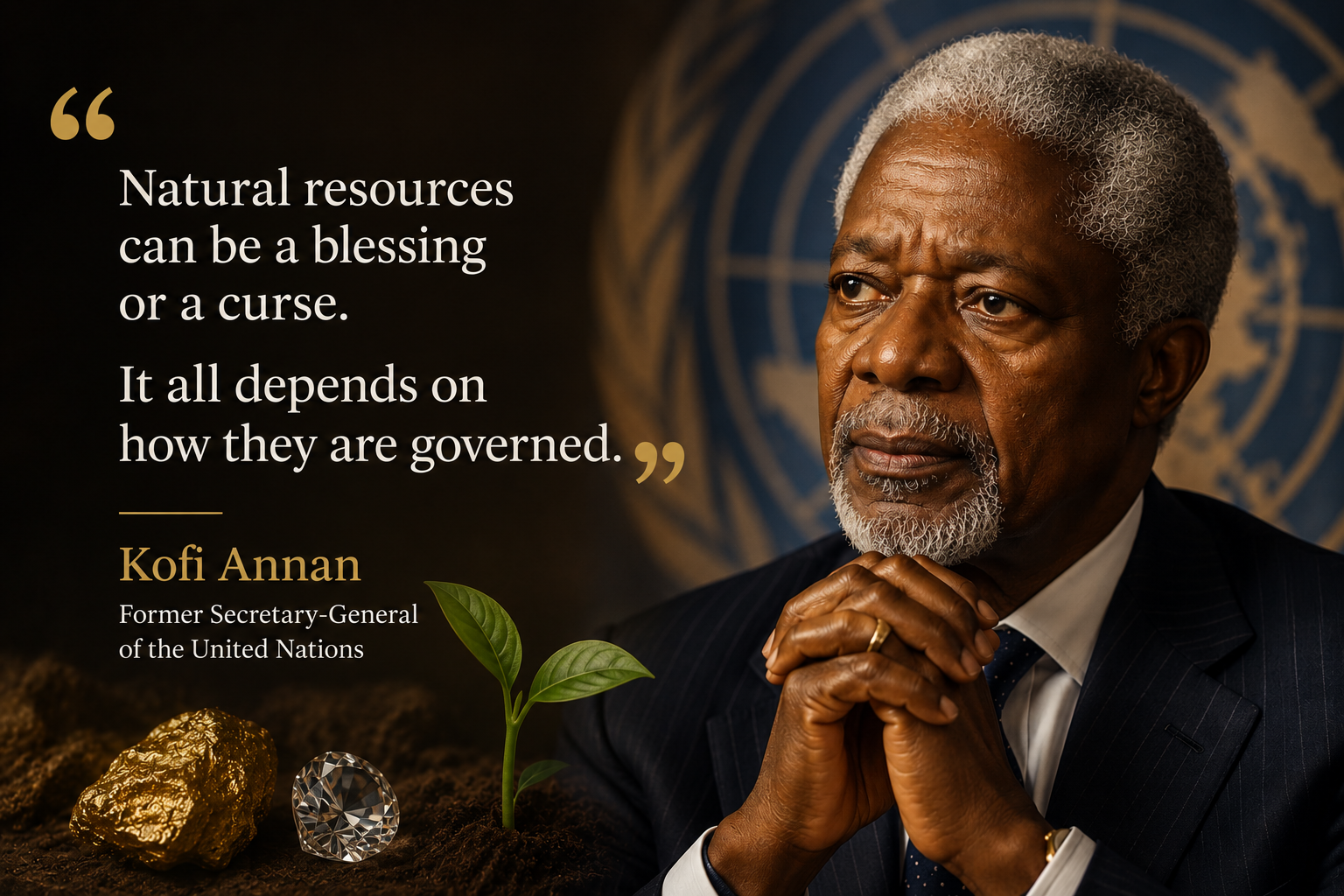
And this is but a grain of sand in the vast ocean of the continent’s untapped potential.
Africa is not poor. It is the pantry, the subsoil and the workforce of the modern world. Without proportional compensation.
These riches do not remain in Africa. Here is why. And here is how.
PART II — The Scandal of Rankings: Why Switzerland Appears Rich and the DRC Appears Poor
The problem often begins with how we count it. If you assessed the wealth of a landowner without accounting for his house, his land, his forest or his subsoil, no one would take that calculation seriously. Yet that is precisely what we do when we reduce African wealth to its GDP alone.
There is one example that encapsulates everything. Just one. And it is devastating.
Switzerland possesses few natural resources. The DRC is overflowing with them: cobalt, coltan, copper, diamonds, gold, uranium. Its subsoil is estimated at 24,000 billion dollars. And yet Switzerland ranks among the world’s wealthiest nations. The DRC among its poorest.
This is not a statistical anomaly. It is the starkest revelation of how the global economy truly works.
Switzerland owns almost nothing beneath the ground. But it controls almost everything above it: international finance, commodity trading, insurance, contracts, standards, transformation, distribution. Geneva is one of the world’s leading centres for commodity trading. The major trading houses domiciled there play a determining role in setting the prices of African cocoa, cobalt and cotton. The DRC holds the cobalt. Others hold the battery. Côte d’Ivoire holds the cocoa. Others hold the chocolate. Nigeria holds the oil. Others hold the refinery.
The DRC holds the mine. Switzerland holds the value chain.
In the modern economy, owning the raw material is the lowest rung of economic power.
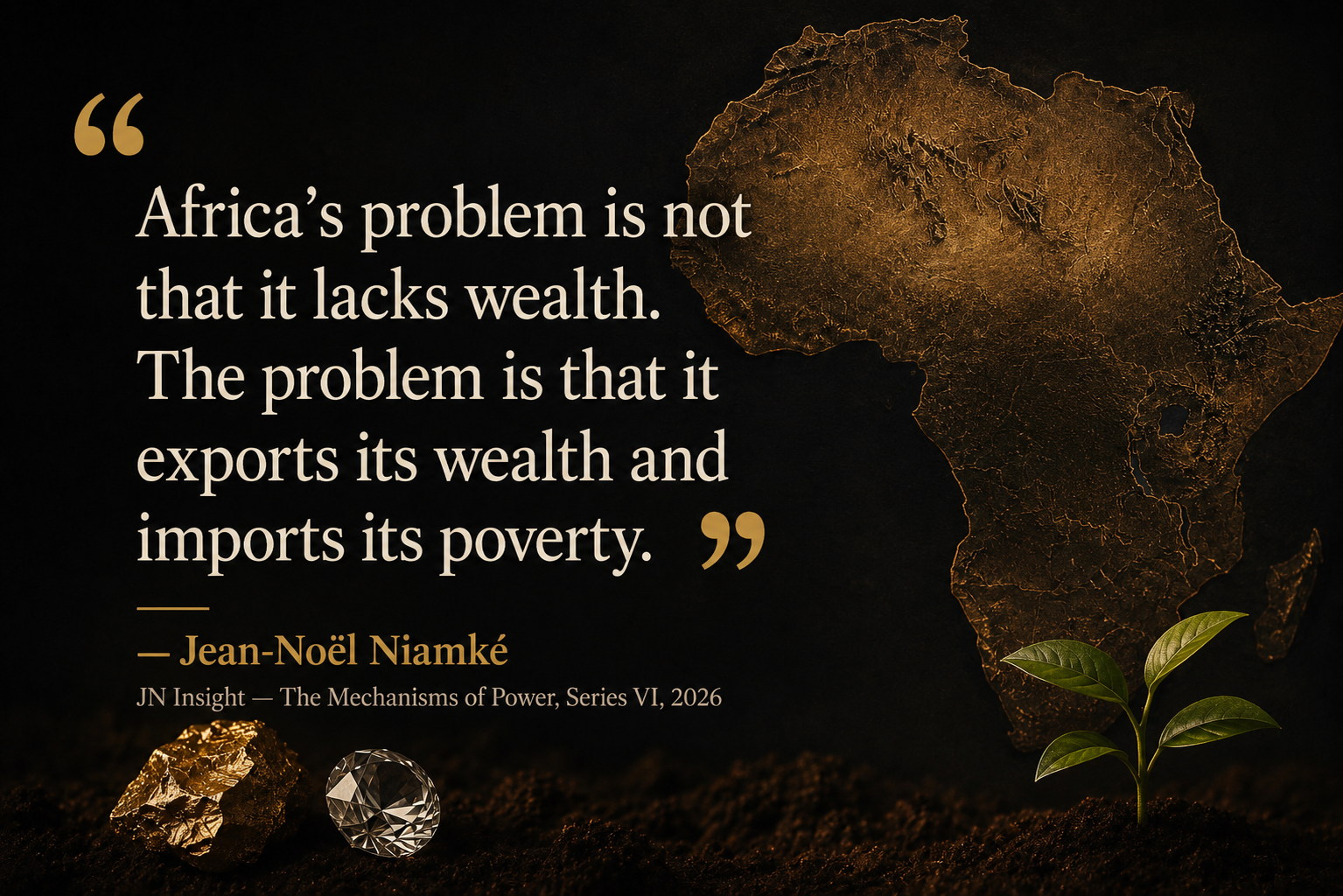
But if the wealth is there, where exactly does it go? The figures are more devastating than one might imagine.
PART III — The Real Heist: Invisible Financial Flows
Imagine a bathtub. You turn on the tap to fill it. But the drain is twice as large as the water inlet. No matter how much water you add, it will never fill up. That is exactly what happens when capital outflows exceed the aid received.
When African poverty is discussed, the debate invariably centres on international aid. This is a mistake. The real subject lies in the flows.
According to the United Nations Economic Commission for Africa (Mbeki Report, 2015), Africa loses at least 50 billion dollars each year to illicit financial flows — manipulated transfer prices, tax havens, over- and under-invoicing of commercial transactions. The UNCTAD (the principal United Nations body responsible for trade and development) puts this figure as high as 88.6 billion dollars in 2020.
Official development assistance to Africa: approximately 40 billion dollars per year.
Africa receives 40 billion in aid, yet loses between 50 and 88 billion to illicit flows — according to the Mbeki Report (UNECA), itself described as “conservative” by its authors.
We watch the water flowing in. We forget the hole in the hull.
And the repatriated profits of multinationals? Each year, tens of billions of dollars leave the continent in the form of dividends, earnings and tax optimisation. Africa is a net exporter of capital. It finances the rest of the world. Not the other way around.
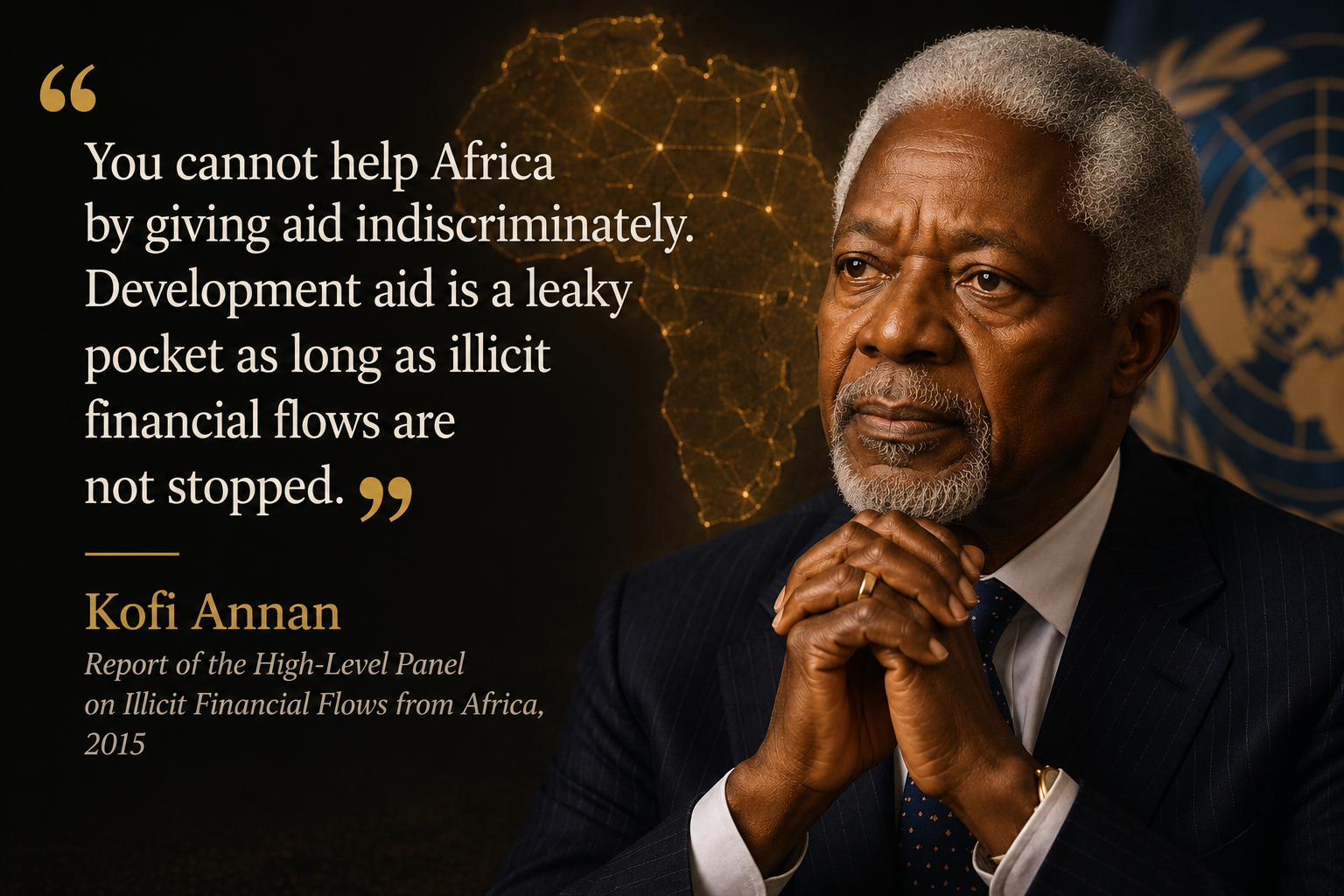
We say Africa receives aid. In reality, it pays dividends to the rest of the world. And these flows do not operate in a vacuum. They rest upon an institutional architecture designed to endure.
PART IV — The Continent Rated Poor by Those Who Live Off Its Wealth
Wealth is not merely a matter of resources. It is also a matter of rules. And the rules that govern the global economy were not written in Africa.
To put it plainly, consider signing a contract today that would prevent your children and grandchildren from renegotiating the value of their own heritage for thirty years. That is precisely the type of clause certain African states have accepted in numerous agreements
Money case: the CFA franc pegs 14 African countries to the euro. Reserves were historically deposited with the French Treasury: monetary policy decided in Paris, not Dakar. The countries that dominate the global economy control their own currency. Those that do not are left with severely limited room to manoeuvre.
Debt : Africa risk premium imposes structurally higher borrowing costs. Zambia defaulted in 2020, le Ghana in 2022, Ethiopia in 2023. Some resource-rich countries pay more to borrow than nations that possess almost none.
Contracts : stabilisation clauses in mining contracts prevent African states from modifying their tax legislation for 20 or 30 years. A country wishing to renegotiate finds itself before arbitration tribunals in London or Washington — before bodies whose rules were written without them.
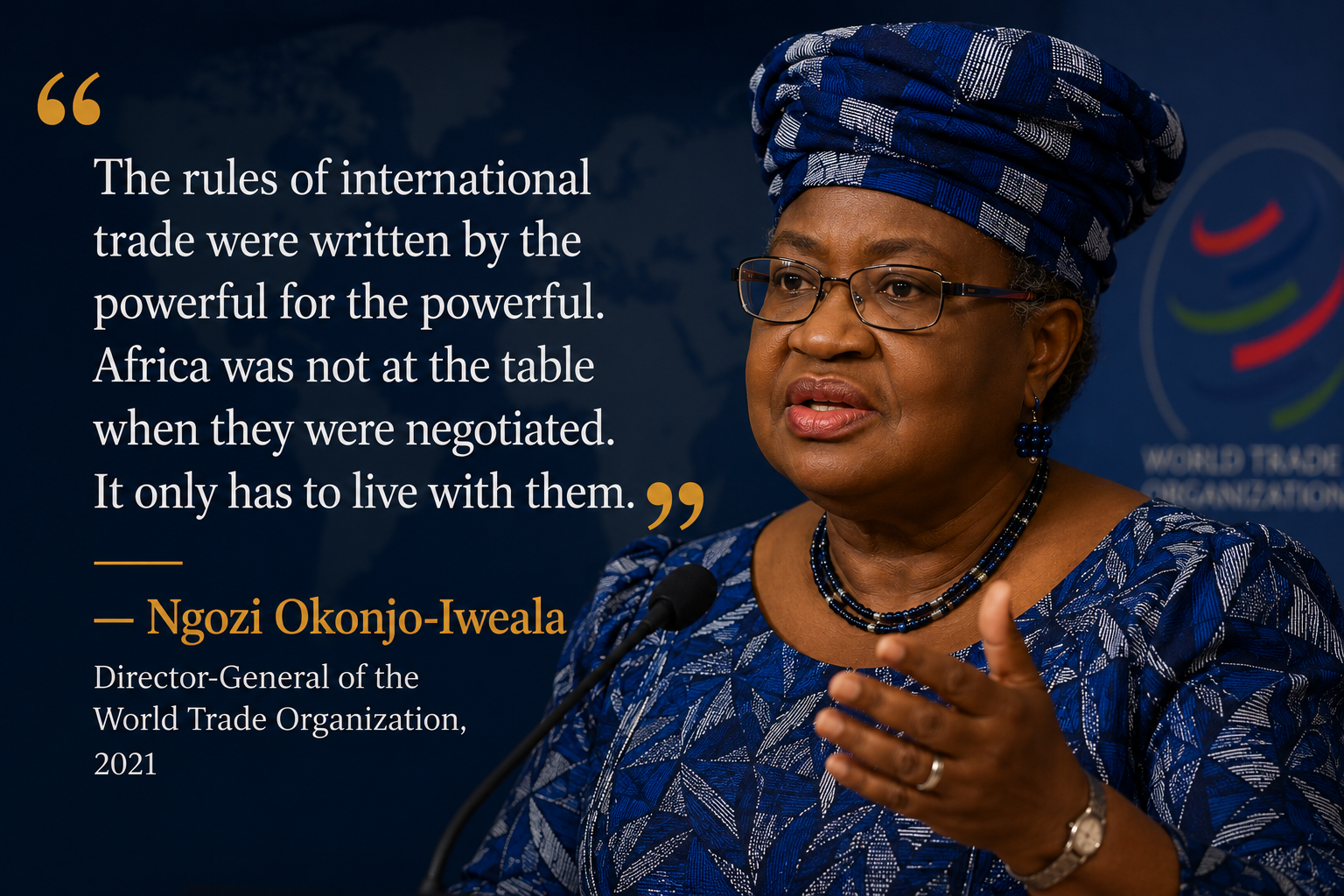
They are called “poor countries.” The markets see them chiefly as wealth sold below its true value. In finance, they are known as « mispriced underlying assets »
The difference lies in who benefits from the mispricing.
And if this system is beginning to crack, it may be because the next great geopolitical battle is already being fought on African soil.
PART V — The Silent War: What No One Tells You About African Minerals
Here is what the major media outlets never headline.
In February 2025, the DRC sent a letter to Marco Rubio, US Secretary of State, proposing an agreement: exclusive access to Congolese critical minerals in exchange for security support against the M23 rebels. In other words: Kinshasa was offering to undersell its subsoil to Washington in exchange for the right to survive.
A country offers its wealth for the right to survive. That is the precise definition of dispossession.
But here is an even more shocking fact: China already controls between 75 and 80 % of mining operations in the DRC. Meanwhile, le Rwanda est accusé par les Nations Unies d’exporter des minerais congolais retiquetés « made in Rwanda ». Le M23, soutenu par Kigali selon plusieurs rapports onusiens, prélève 800 000 dollars par mois rien qu’en taxant le coltan dans la zone de Rubaya.
Translation: African armed conflicts finance their own wars through African minerals — minerals that end up in your phone. Without your knowledge.
As for the Sahel conflicts, they cannot be explained by resources alone. But it is difficult to ignore the fact that several zones of tension correspond precisely to the regions richest in uranium, gold and lithium.
The gold coveted yesterday by the caravans of Mansa Musa is coveted today by guns and negotiators. Global energy transition — electric vehicles, batteries, wind turbines — depends entirely on African minerals. Cobalt, lithium, coltan, manganese, rare earth elements : it is Africa that finances the West’s ecological conscience.
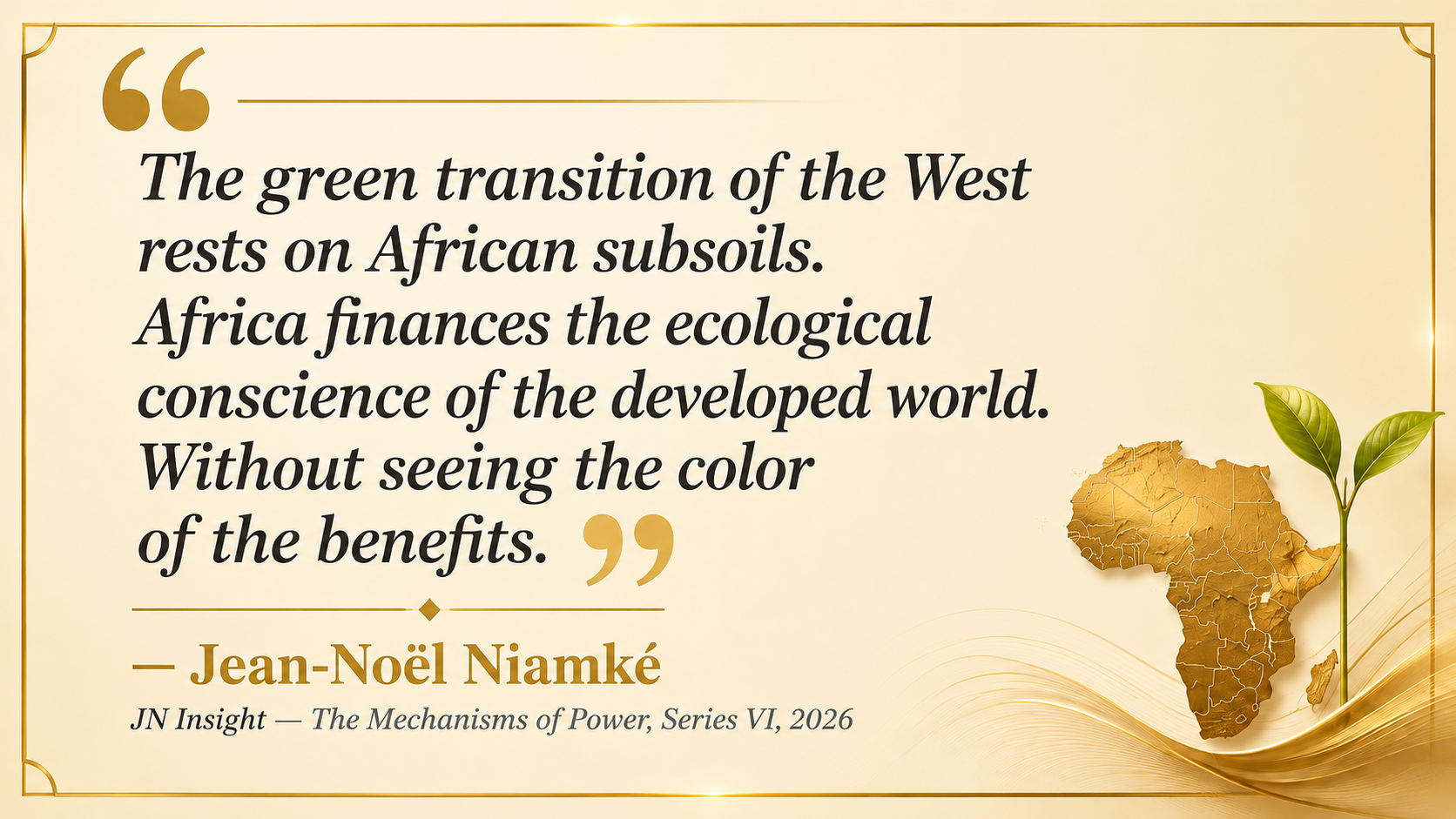
Critical resources will be to the 21st century what oil was to the 20th. Africa sits upon them.
Others decide their price.
And if the external plundering is real, an honest analysis demands we also name what comes from within.
PART VI — The Internal Trap and the Possible Breaks
An honest analysis cannot stop at external responsibilities. A door never opens without handles on both sides
Internal elites have at times had a vested interest in maintaining the system. Corruption, embezzlement, poorly negotiated contracts, absence of industrial vision. According to Global Financial Integrity, tens of billions of dollars in African fortunes lie dormant in Swiss and Emirati banks. But these elites could not place that money without the active complicity of Western banks. This is a shared responsibility.
Fragmentation into 54 countries with 54 distinct trade policies weakens the collective bargaining position. While Europe speaks with one voice in global negotiations, Africa arrives divided at every table. The AFCFTA — The African Continental Free Trade Area is the structural answer. It has yet to fully materialise."
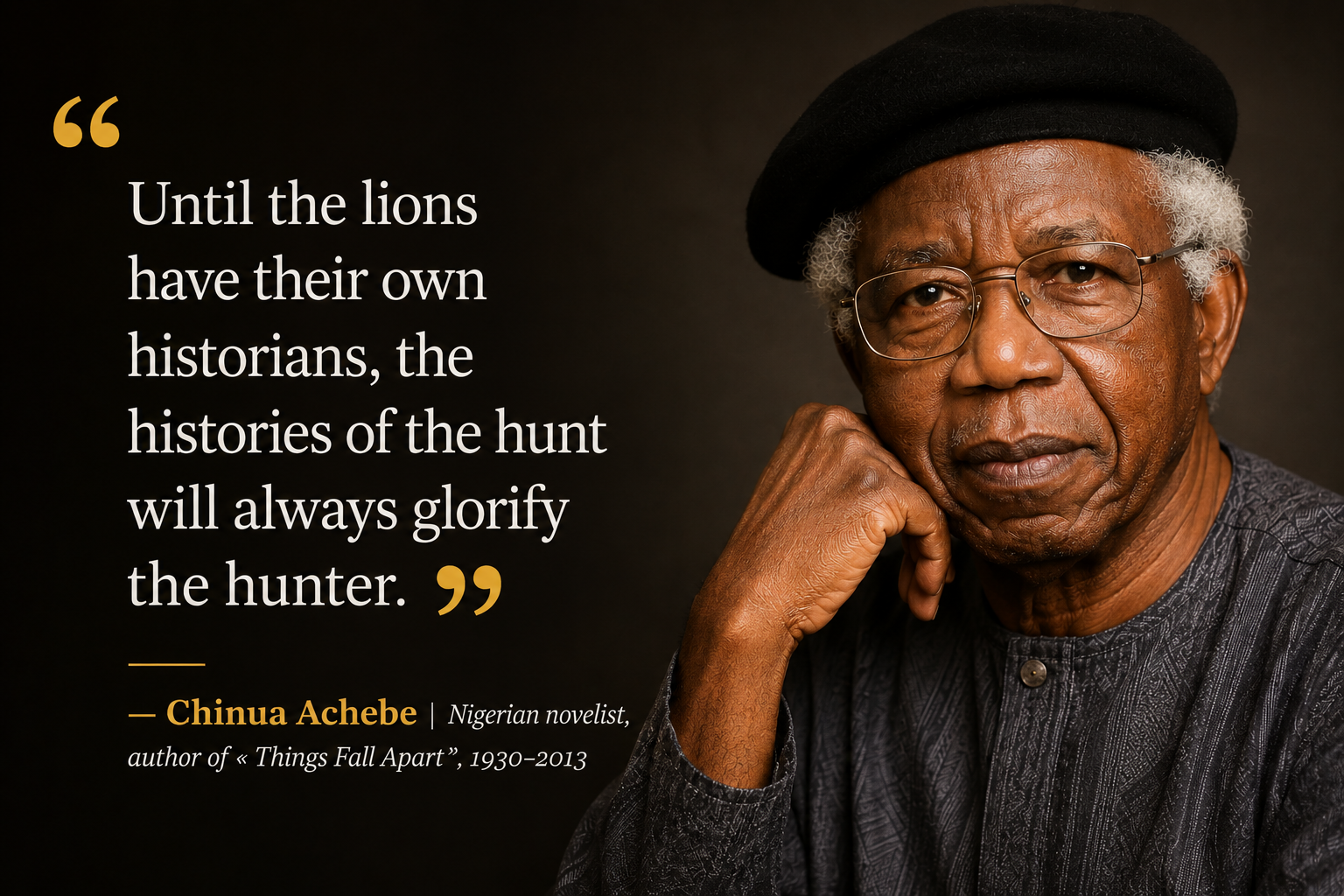
The external plundering is real. The internal complicity is equally so. To refuse to say it is to infantilise Africa. To say it is to respect it.
But breaks do exist. Botswana a co-negotiated ownership of its diamond mines with De Beers — result: the most prosperous country in sub-Saharan Africa per capita. Zimbabwe banned the export of raw lithium in 2022, mandating on-site processing. Rwanda, with no significant natural resources, made governance its wealth. The island of Mauritius built a diversified economy with no major resources.
The lesson is identical in every case: prosperity is not a question of resources. It is a question of mastery over the value chain
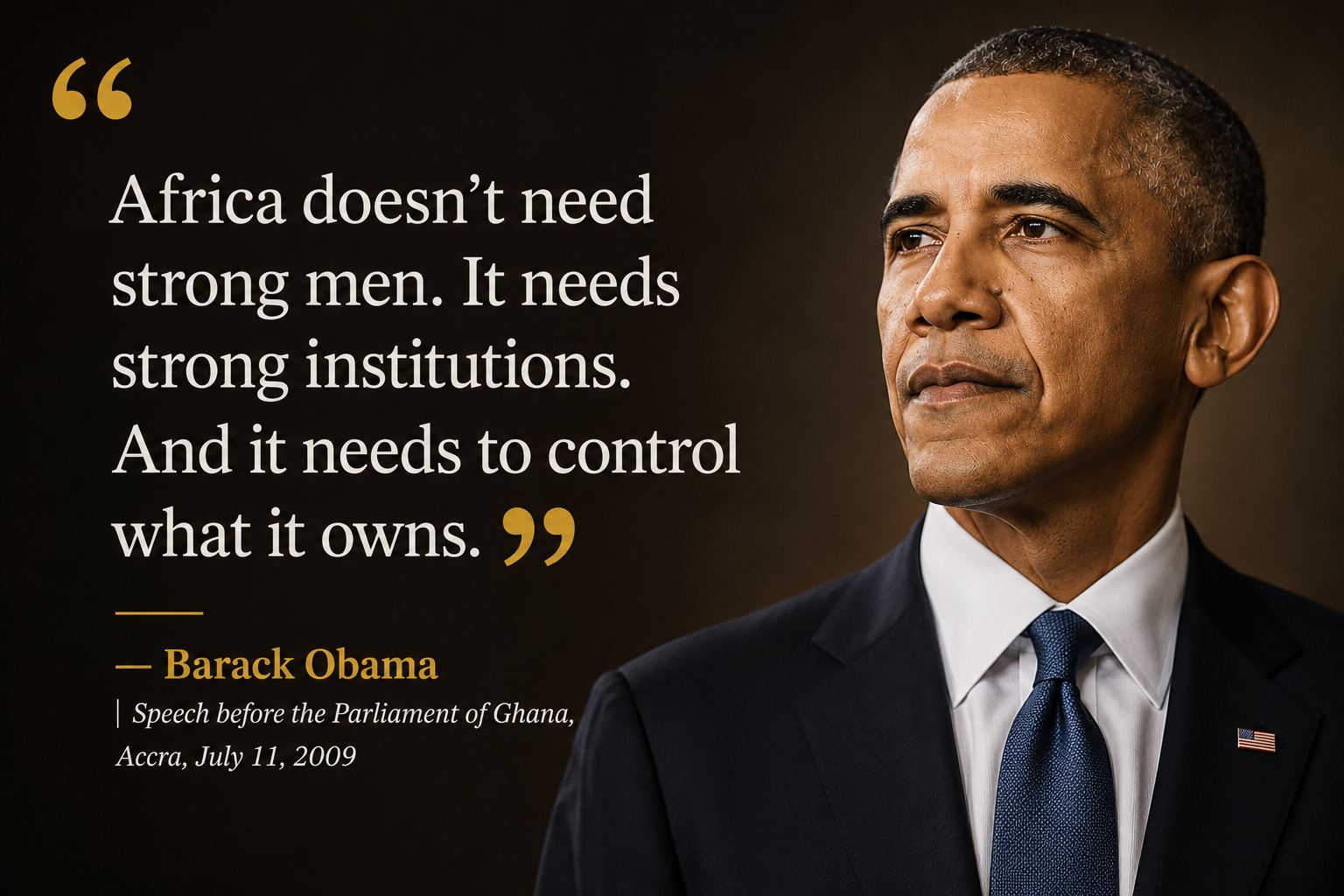
Sovereignty over the value chain is the single variable that separates a country that prospers from one that impoverishes itself.
Not the resources. The mastery.
KEY FIGURES — Africa: Wealth and Realities
WHAT TO REMEMBER?
Africa is not poor. It has been dispossessed.
Africa supplies the world’s cocoa without eating chocolate. It lights Europe with its uranium without having electricity.
It charges the planet’s phones with its cobalt without having a stable network. It finances the West’s green transition with its minerals without seeing a share of the profits.
This is not poverty. This is organisation.
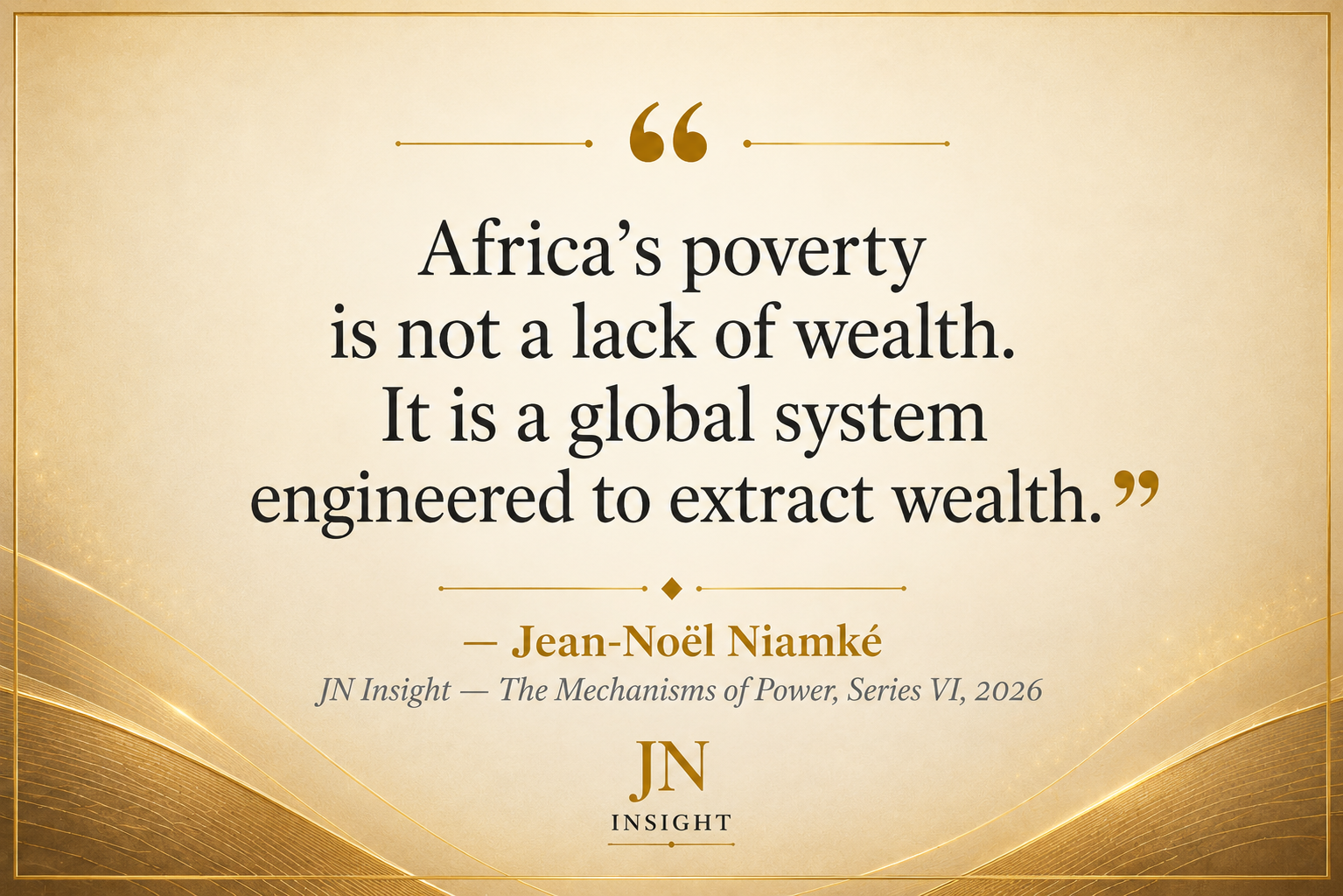
This paradox is not merely economic. It is political. Historical. Institutional. African poverty is not an absence of wealth. It is a globally organised extraction of wealth.
In 'Perfume', power was transmitted through the invisible. In 'Big Tech', through cognitive infrastructure. In 'Africa and History', by erasing origins. Here, it perpetuates itself by maintaining poverty as a tool of control.l.
The next time you plug in your phone, pause for a moment and look at that battery recharging. Behind that simple gesture lies a journey of several thousand kilometres — from African mines to laboratories, from ports to factories, from financial markets to the shelves of major brands.
Africa so often writes the opening chapter of this story. It rarely writes the last.
Africa’s true poverty is not material. It is sovereign.
A continent that does not set the price of its resources is a continent that does not control its destiny.
70 % of Africa’s population is under 30. No continent has ever been poor with such youth. It has simply been prevented from turning it into a force. The ZLECAF, the world’s largest free trade area by number of countries, finally opens the possibility of an African value chain. Of wealth that remains on the continent.
The dollar bears an African pyramid. The batteries in our electric cars are African. The cocoa in our chocolate bars is African. The uranium in our power stations is African.
→ Who truly grows rich when a continent this wealthy continues to be presented as poor?
Intellectually yours,
Jean-Noël Niamké Financial Expert — Geo-economic & Strategic Analysis
The Mechanisms of Power — Series VI | Strategic & Geopolitical Analysis
Sources: click here