From The Fcfa To The Eco: Is Changing Currency Enough To Change The Destiny Of A People?

The CFA franc could disappear. The ECO could be born. But West Africa will still face the same question: what economic power will its currency represent?
👇Prefer to listen to this analysis? Find the podcast version below.👇

👆Prefer to listen to this analysis? Find the podcast version above. 👆
Lungi, Sierra Leone. July 19, 2026.
ECOWAS Heads of State announce the time: the ECO will be launched in 2027. The press agencies are getting carried away. Some are crying out for the end of the CFA franc. The others celebrate the regained sovereignty.
But in the corridors of central banks, another question is circulating silently.
A question that the defenders of the CFA avoid, and that the supporters of the ECO avoid.
How can the same currency be a shield at the same time... And a prison fuelling the most passionate debates on the African continent?
Maybe that's where the debate gets really interesting.
The CFA franc could disappear. The ECO could be born. But West Africa will still face the same question: what economic power will its currency represent?
Lungi, Sierra Leone. July 19, 2026.
ECOWAS Heads of State announce the time: the ECO will be launched in 2027. The press agencies are getting carried away. Some are crying out for the end of the CFA franc. The others celebrate the regained sovereignty.
But in the corridors of central banks, another question is circulating silently.
A question that the defenders of the CFA avoid, and that the supporters of the ECO avoid.
How can the same currency be a shield at the same time... And a prison fuelling the most passionate debates on the African continent?
Maybe that's where the debate gets really interesting.
PART I — 1945: The currency of a colonial empire that refused to disappear
All currencies tell a story. The CFA franc tells the story of an empire that lost its colonies without immediately losing all its levers.
A currency is never born by chance. It always meets a need for control, confidence or power. The CFA franc was born from all three.
Paris. December 1945. The Second World War has just ended a few months ago; Bretton Woods has just defined the new global monetary rules.
And France discreetly created a currency for its African colonies.
On December 26, 1945, the Franc of the French Colonies of Africa was born. Its official objective: to give monetary stability to territories weakened by the war. Its real architecture: to maintain a lasting monetary and economic link between the metropolis and its colonial empire, at a time when African independence was on the horizon.
In other words: the colonies could soon become politically independent without immediately becoming monetary autonomous.
The CFA franc was not born in Africa. It was born out of a European war.
Sixteen years later, in 1960, independence arrived. But the CFA franc remains. The acronym changed — it became the African Financial Community Franc for West Africa, and the Financial Cooperation Franc for Central Africa. But the mechanics remain the same.
The flags had changed. The anthems had changed. The presidents had changed. But the currency continued to tell the story of the old balance of power.
Today, nearly eighty years later, 14 African countries — more than 200 million people, more than $300 billion in combined GDP — still use the currency. It is not a marginal survival.
The CFA franc is one of the largest monetary systems still inherited from the colonial period.
If he survived, it was not through inertia. That's because it's based on extremely solid mechanics.
A currency never survives eighty years by chance. If the CFA is still there, we have to understand why.
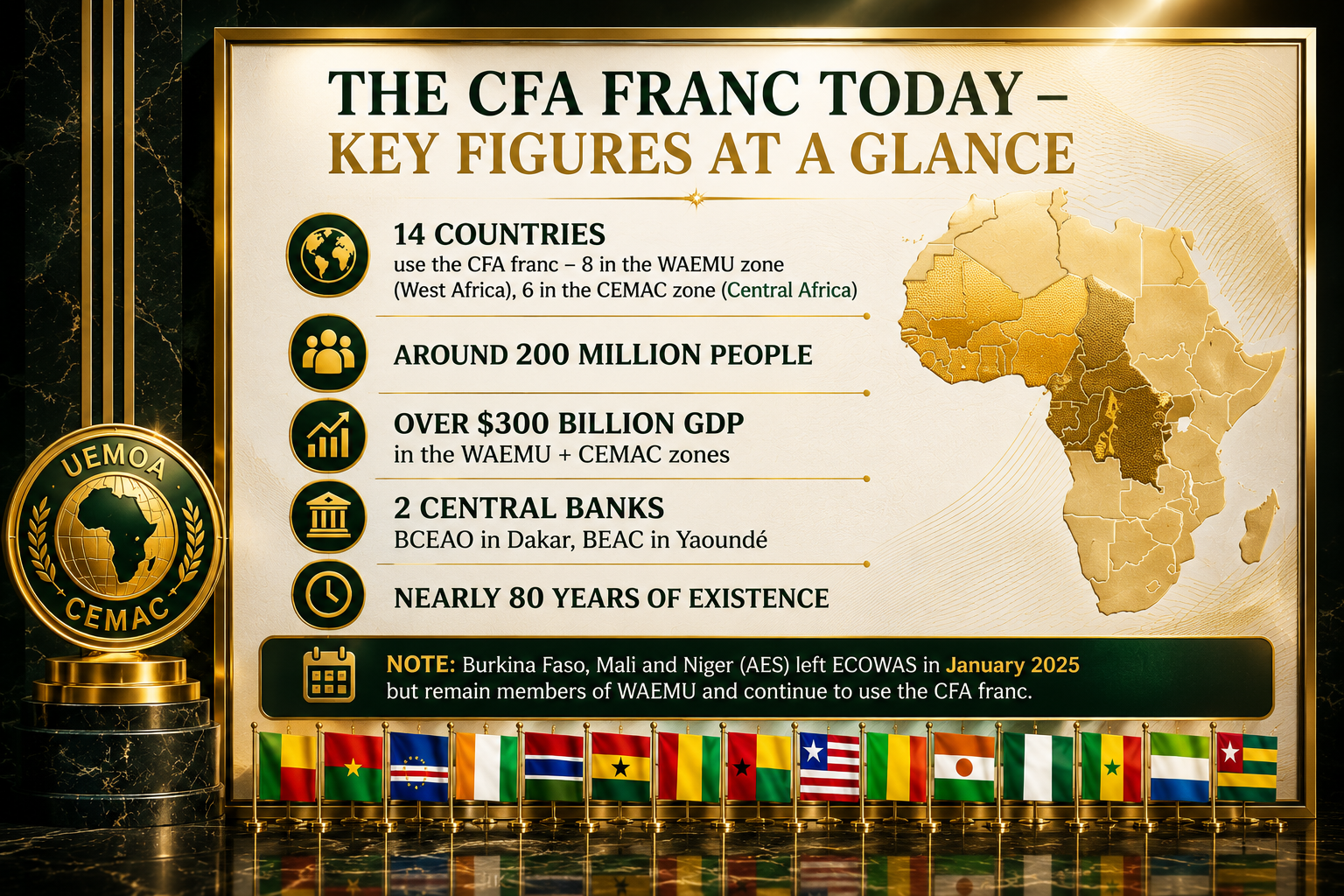
The problem with the CFA franc is that many people talk about it as a symbol.
Very few really know how it works. But you can't judge a system that you don't understand.
PART II — The CFA franc: monetary stability or sovereignty under tutelage?
The CFA franc is not a single currency. They are two separate currencies, managed by two separate central banks.
Eight countries: Côte d'Ivoire, Senegal, Mali, Burkina Faso, Niger, Togo, Benin and Guinea-Bissau.
Central bank: the BCEAO, headquartered in Dakar.
The CEMAC zone — Central Africa
Six countries: Cameroon, Central African Republic, Chad, Equatorial Guinea, Gabon and Congo.
Central bank: the BEAC, whose headquarters are in Yaoundé.
The two CFA francs have the same nominal value and are pegged to the euro at a fixed parity: 1 euro = 655.957 CFA francs. On the other hand, they are not directly convertible between them.
Before going any further, a clarification is necessary: the ECO is a single currency project specific to West Africa. The CEMAC (Central Africa) countries are not concerned and continue, at this stage, to use their own CFA franc, issued by the BEAC.
But behind this apparent simplicity lies a monetary architecture that is much more complex than it seems. To understand why the CFA franc is the subject of so much debate, we must first understand the mechanisms that make it work.
The mechanics of the four locks / pillars of the system
The question is therefore not only whether the armor protects.
It is to know whether it also prevents running.
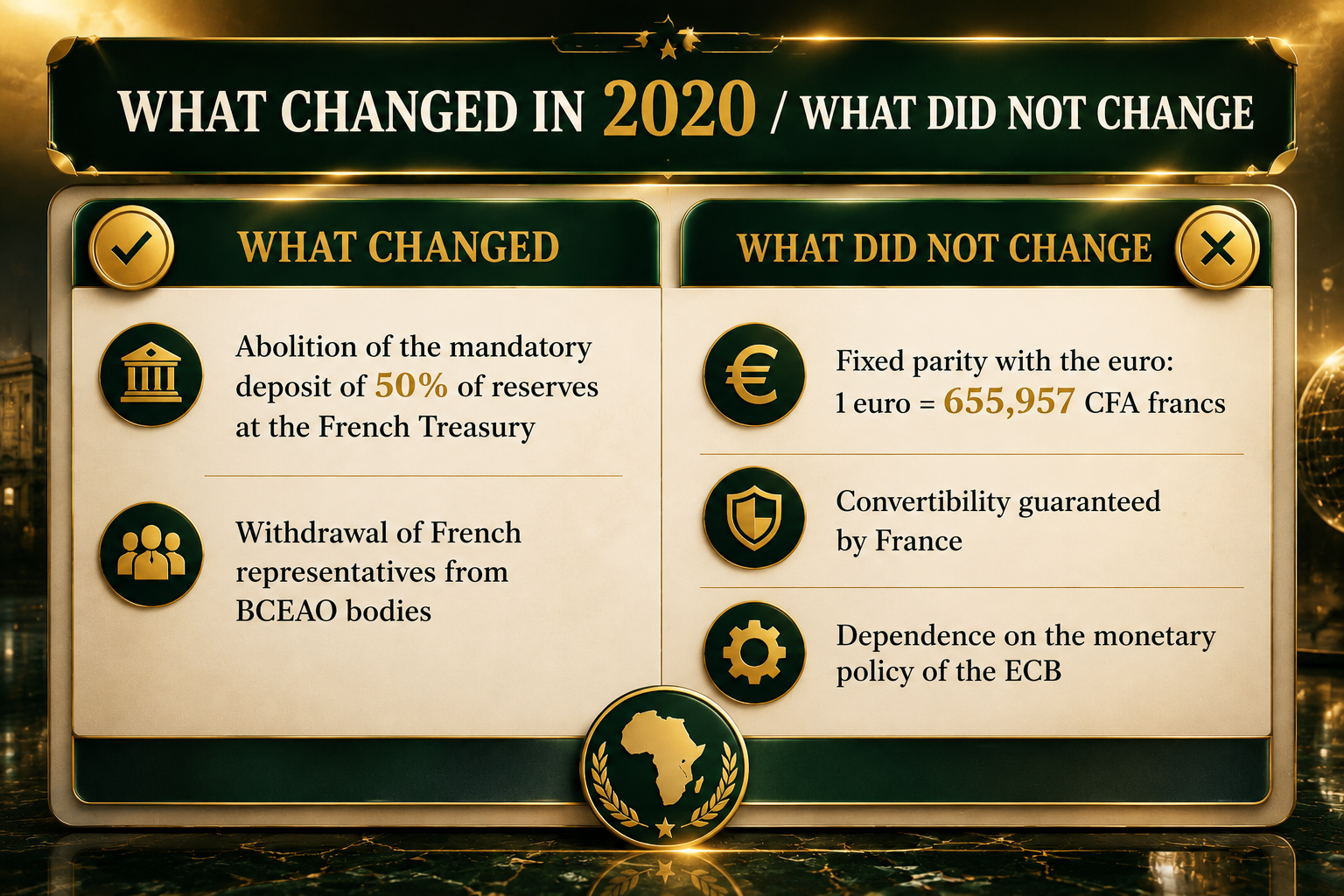
The 2020 reform has therefore changed the institutional façade. It has not changed the monetary engine.
The CFA system can be summed up in one formula: real stability, obtained at the cost of limited monetary autonomy. It is neither an absolute prison. Nor complete independence. It is stability under tutelage.
Stability always comes at a price. The question is which one. For sixty years, the debate on the CFA franc has often been badly posed. We ask whether we should love him or hate him.
But the real question lies elsewhere: what does it protect, what does it cost, and who does it really benefit?
PART III — The Great African Monetary Process
The debate on the CFA rarely opposes the facts. It opposes two visions of development.

The defenders' camp: stability above all.
Supporters of the CFA franc also put forward solid arguments. Thanks to its fixed parity with the euro, prices generally remain more stable than in many African countries. In Ghana, Nigeria and Zambia, prices have risen very quickly, greatly reducing the purchasing power of the inhabitants. In the CFA zone, this type of crisis is much rarer. This stability also reassures companies and investors, who know that their money is not likely to lose its value suddenly overnight.
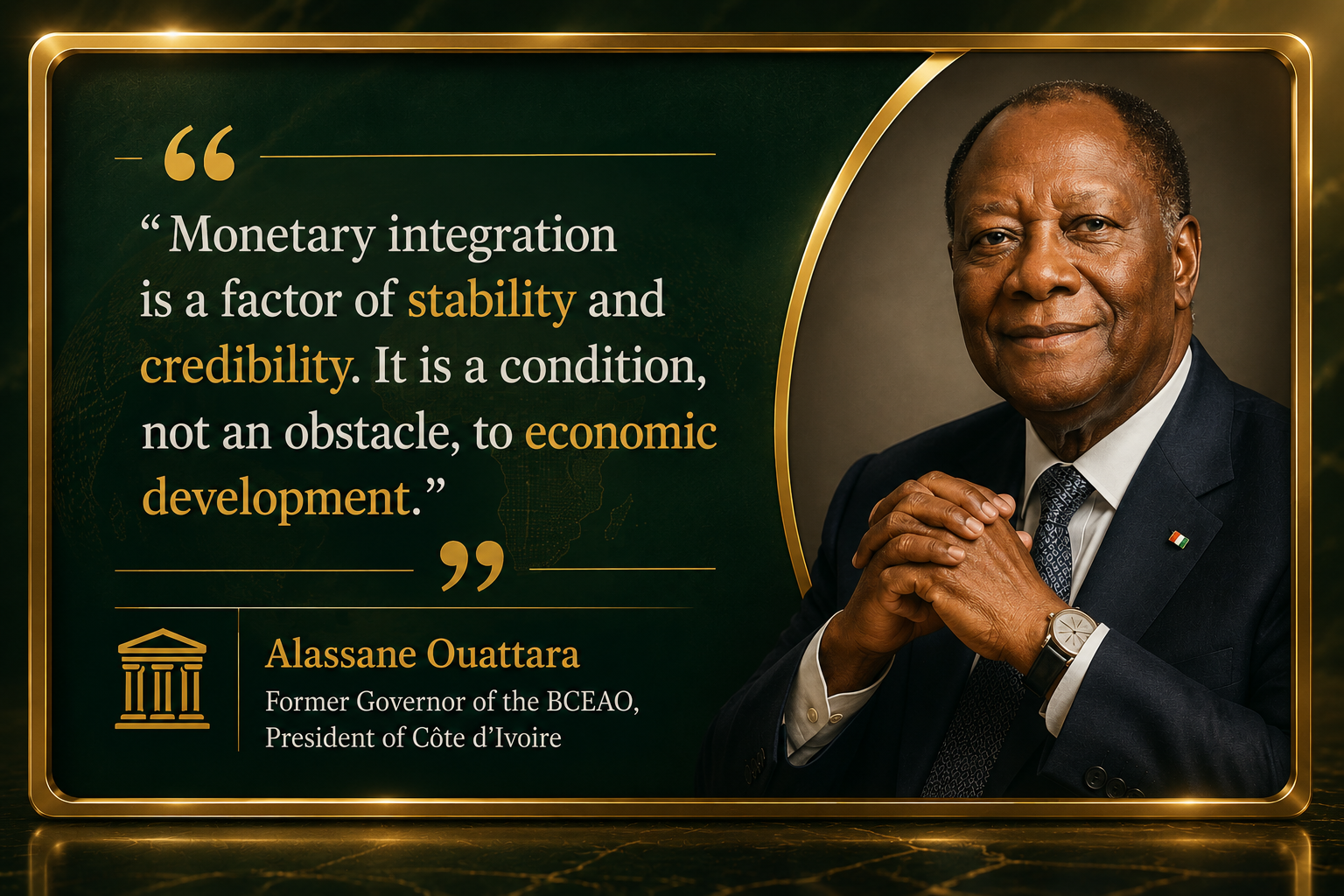
Monetary sovereignty is worthless if it leads to the collapse of the currency. A national currency is therefore not necessarily a credible currency.
The accusers' camp: sovereignty above all. The criticisms of the CFA franc are just as well-argued. The CFA franc is linked to the euro at a fixed rate. In concrete terms, this means that the countries of the CFA zone cannot decide on the value of their currency on their own. This decision depends largely on the policy pursued by the European Central Bank (ECB), whose priority is to meet the needs of European economies, such as Germany and France.
The West African countries are therefore subject to the ECB's monetary policy, designed for Berlin or Paris — not for Abidjan or Dakar. When the euro is strong, African exports automatically become more expensive for global buyers. Without anyone in Africa having a say.
This is precisely what critics denounce: the countries concerned do not have the monetary tools to adapt their economies to their own needs.
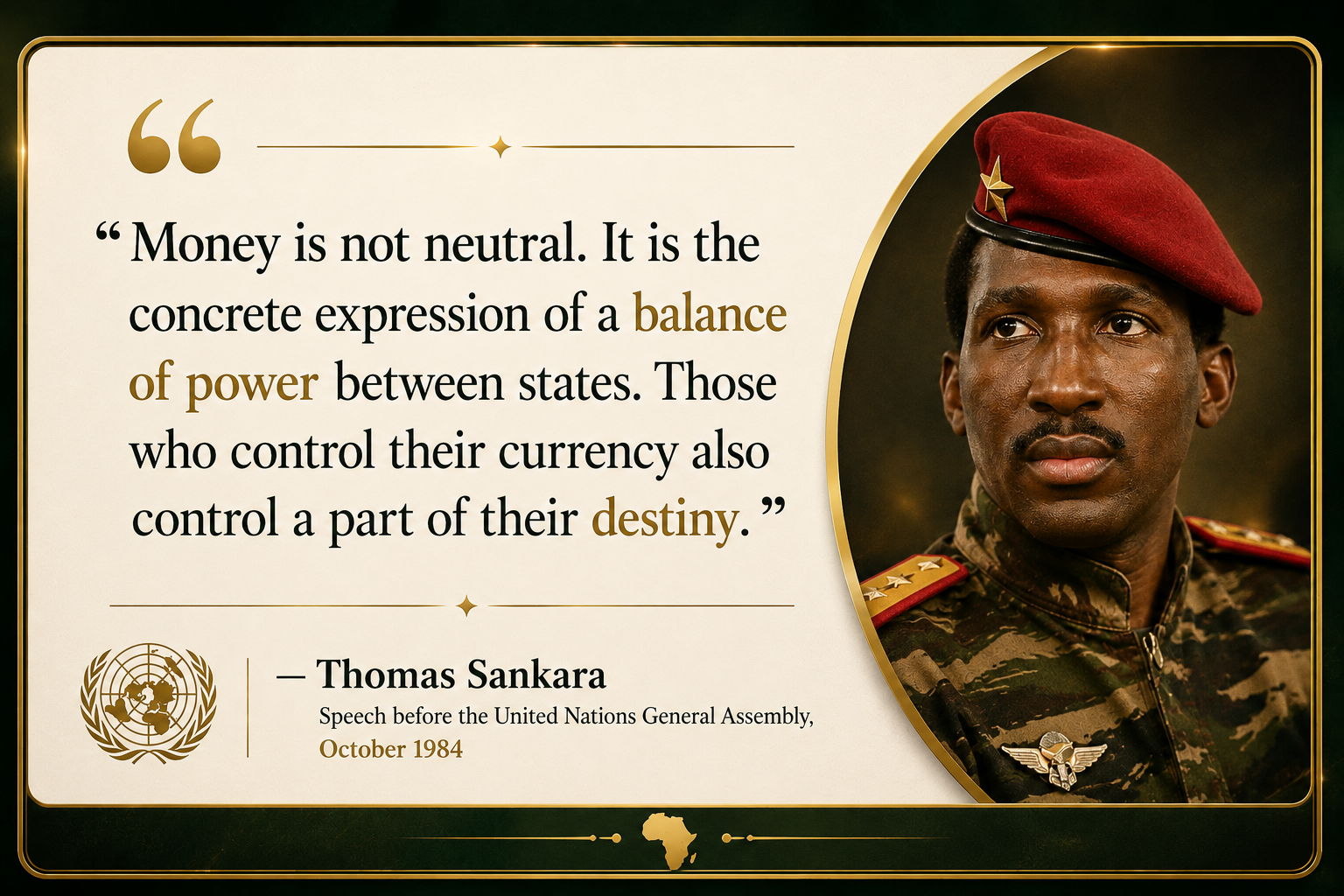
The issue of trade governance is also at the heart of the debate. Because Africa's greed does not only involve arms or aid: it also involves the rules of trade. Take cocoa: Côte d'Ivoire and Ghana produce most of it in the world, but it is mainly the countries that process it, market it and set the rules of the market that capture the largest share of the profits. Power therefore lies not only in what is produced, but also in the rules that determine who creates and who retains value.
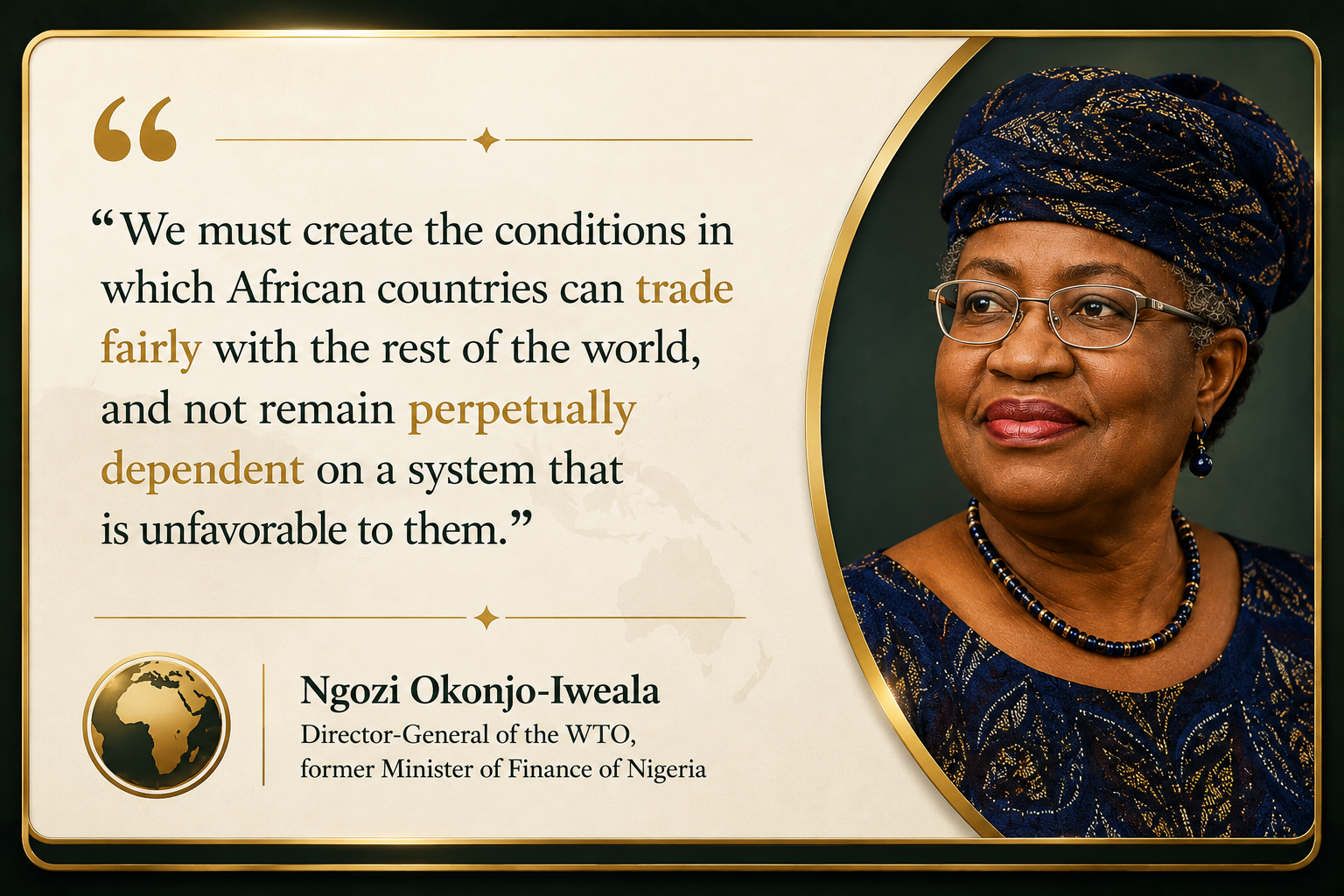
A stable currency can protect an economy. But it can also stabilize its addiction.
Some prefer to lose a little sovereignty to gain stability. The others are ready to accept more instability to regain their sovereignty. Who is right? Both; And none. It all depends on the question asked and the angle of analysis.
This debate therefore has no obvious winner. Because stability and sovereignty are not mutually exclusive — but they do not combine effortlessly.
Defenders of the CFA talk about the cost of disorder. Its opponents talk about the cost of dependency. Both are right about part of the problem. And wrong when they claim to have all the answer.
It was in this context that the ECO appeared. It is actually a political project.
And creating a common currency is probably one of the most complex economic decisions a region can make.
PART IV — THE ECO: Forty years of promise for a currency that still does not exist
The ECO is perhaps the most famous currency in the world that does not yet exist.
For forty years, West Africa has announced a currency that it has never managed to launch. Here's why.
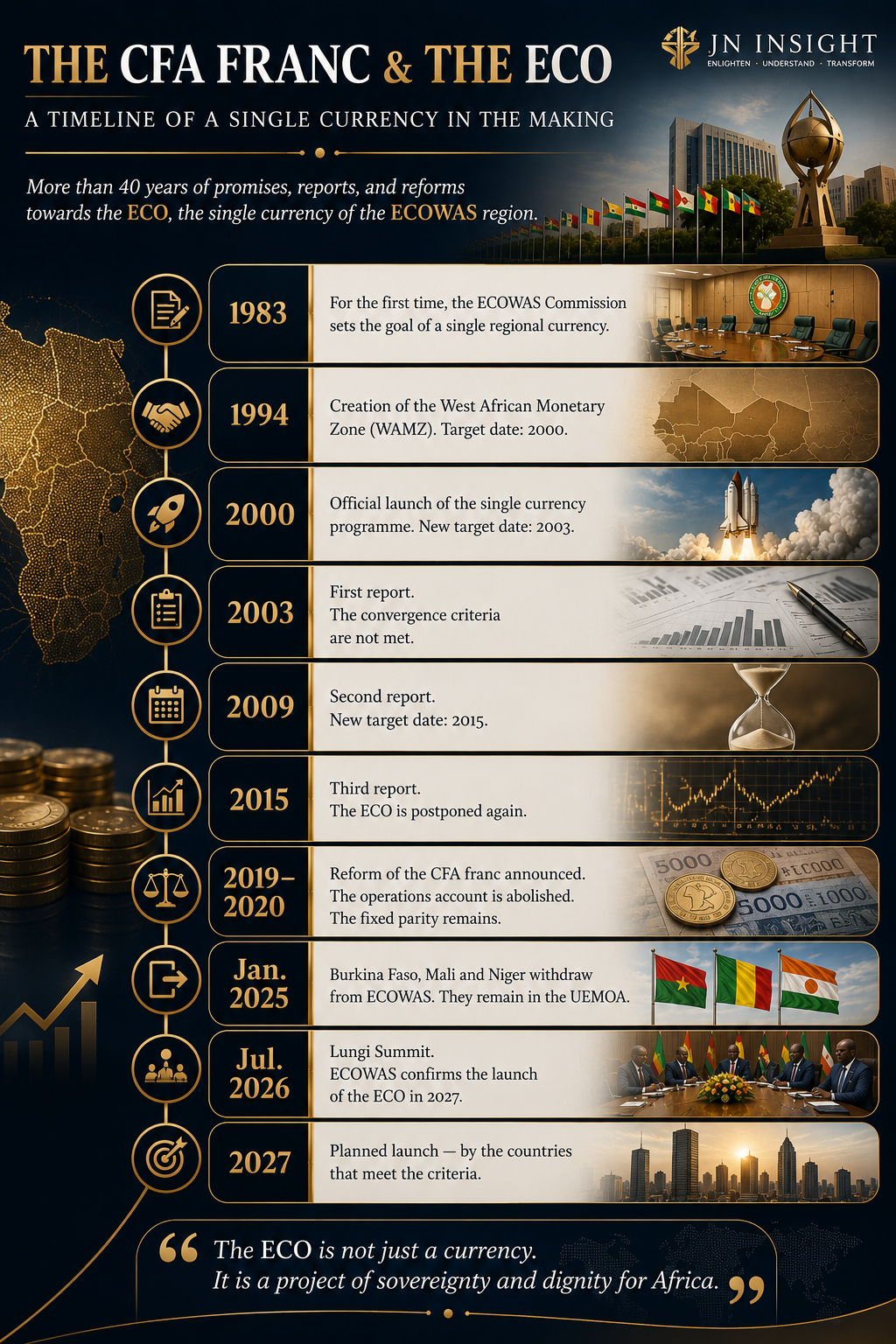
Forty years of summits; Forty years of press releases; Forty years of new deadlines.
The problem with the ECO has never been the absence of declared will. It has always been the absence of real convergence. The ECO is not delayed because the leaders lack the will. It is delayed because the figures refuse to play politics.
But what ECOWAS really decided in Lungi is more complex than what the media reports. Its official statement does not set a definitive list of countries for a first wave. The formula is: the ECO will be launched by the countries that meet the criteria and declare themselves ready. This is where the most striking paradox of this whole issue comes in.

The irony would be total. The currency presented as the heir to the CFA franc could first be launched by those who do not use it.
Special case: The AES – The unfinished break
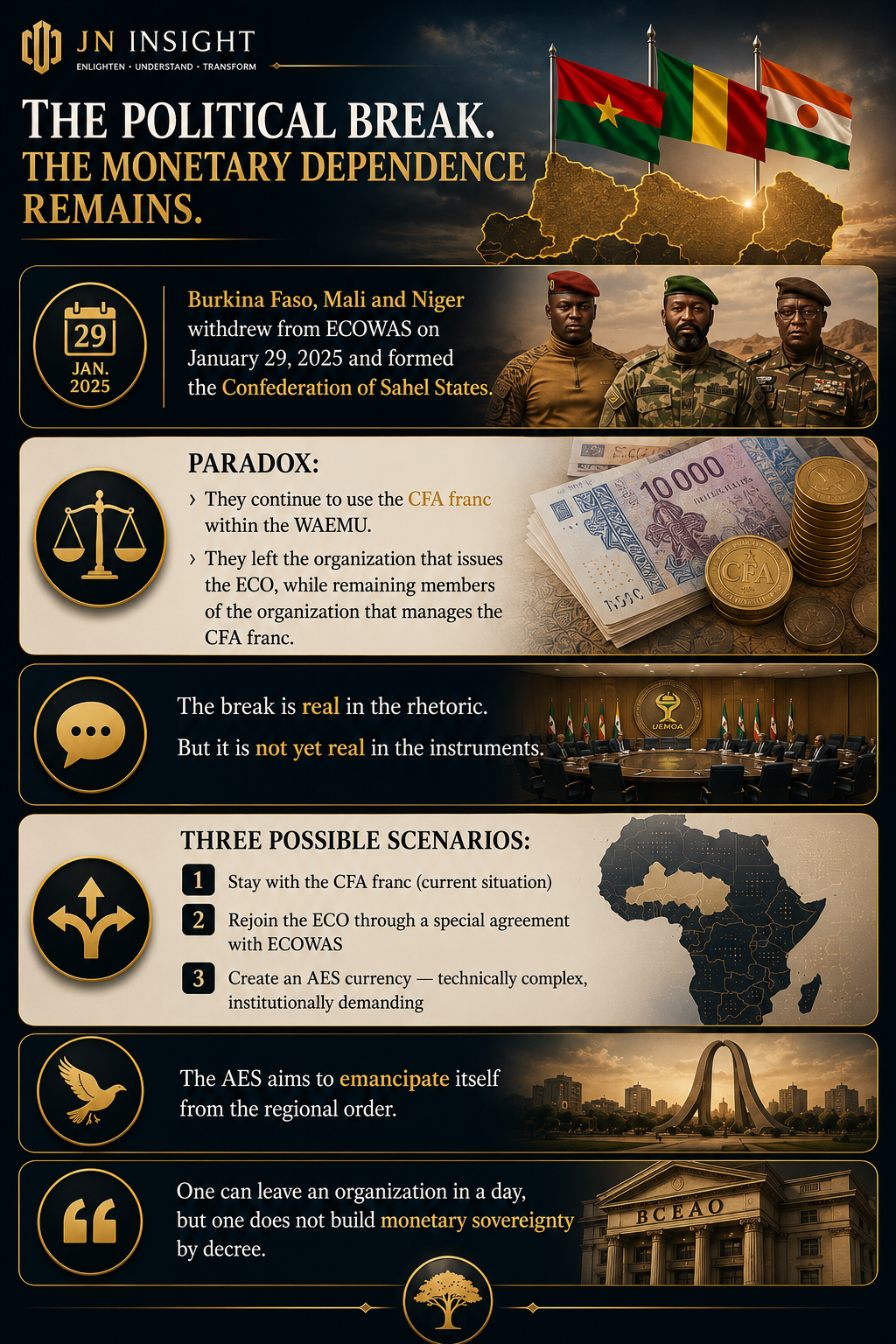
You can proclaim a currency, but you can't proclaim trust. Trust is earned by numbers.
So, what does the ECO really change? Not what the speeches promise. What mechanics can produce.
ECO can streamline regional trade —eliminate conversion costs between Abidjan and Lagos. Today, a truck crossing West Africa changes currency several times. Each conversion costs. Each conversion delays.
ECO can reduce financial fragmentation — give investors a legible framework, a unified market, an area of 400 million people that finally speaks with one monetary voice.
The ECO can strengthen West Africa's weight in international negotiations.
But none of these benefits are automatic. None can be decreed. None of them replaces what money cannot do alone.
A single currency requires common budgetary discipline. Without this, it does not become a tool for prosperity. It becomes a shared crisis in waiting.
And as a picture is worth more than words:
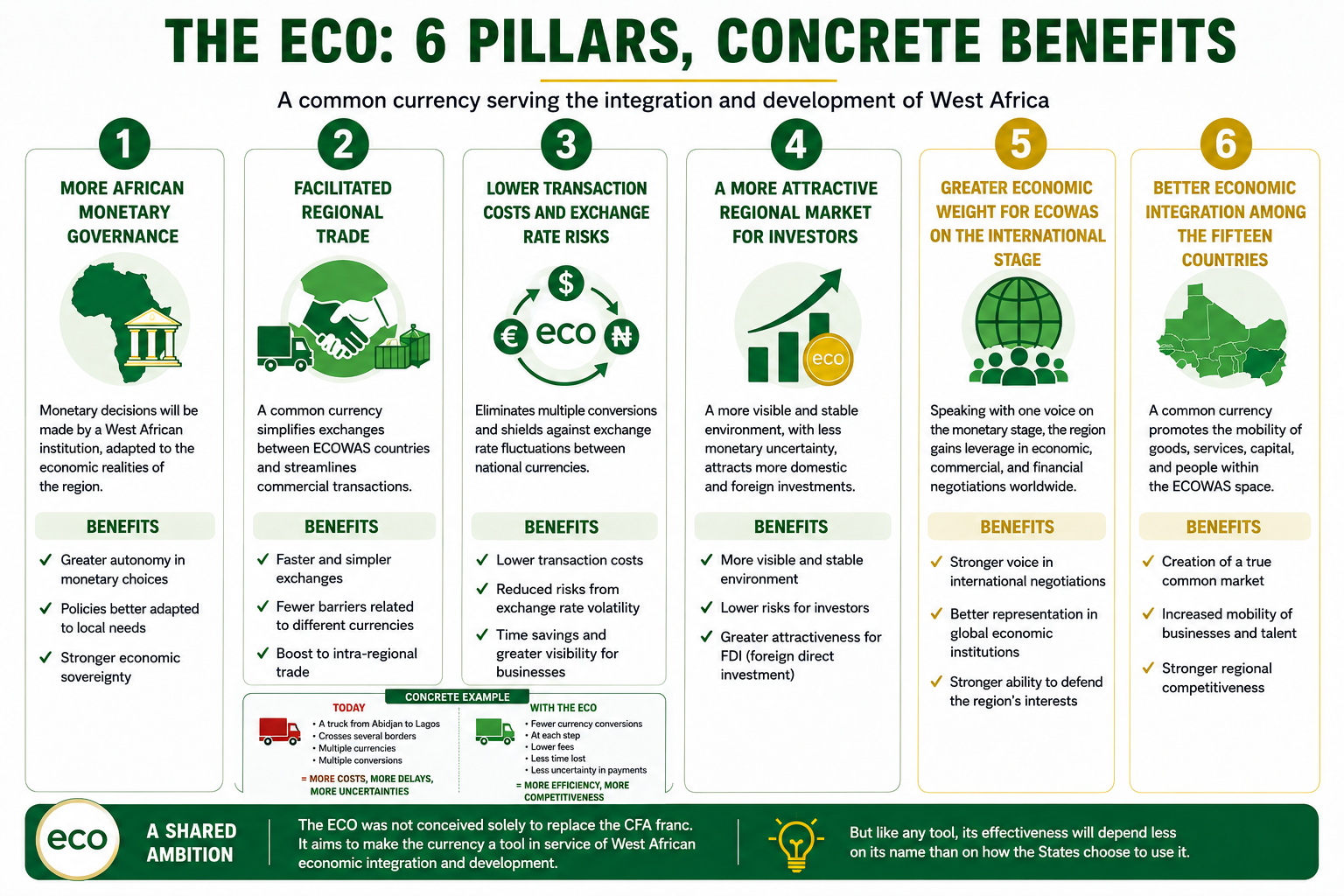
But these benefits will not be automatic. A common currency alone does not create wealth, industries or jobs. Its success will depend on the strength of institutions, compliance with fiscal rules, the competitiveness of economies, the quality of governance and the ability of Member States to deliver on commitments.
In other words, the ECO was not designed solely to replace the CFA franc. It aims to make the currency a tool for West African economic integration. But like any tool, its effectiveness will depend less on its name than on how states choose to use it.
In the end, the real change promised by the ECO does not lie in the banknotes that will circulate tomorrow, but in the ability of the fifteen States to transform a common currency into a real common economic project.
But in reality, who is really ready for this 360-degree turn?
PART V — The Verdict of the Numbers: Who Is Really Ready?
The ECO is not a political ceremony. It is an economic examination. To join, each country must meet four primary criteria defined by the West African Monetary Agency.
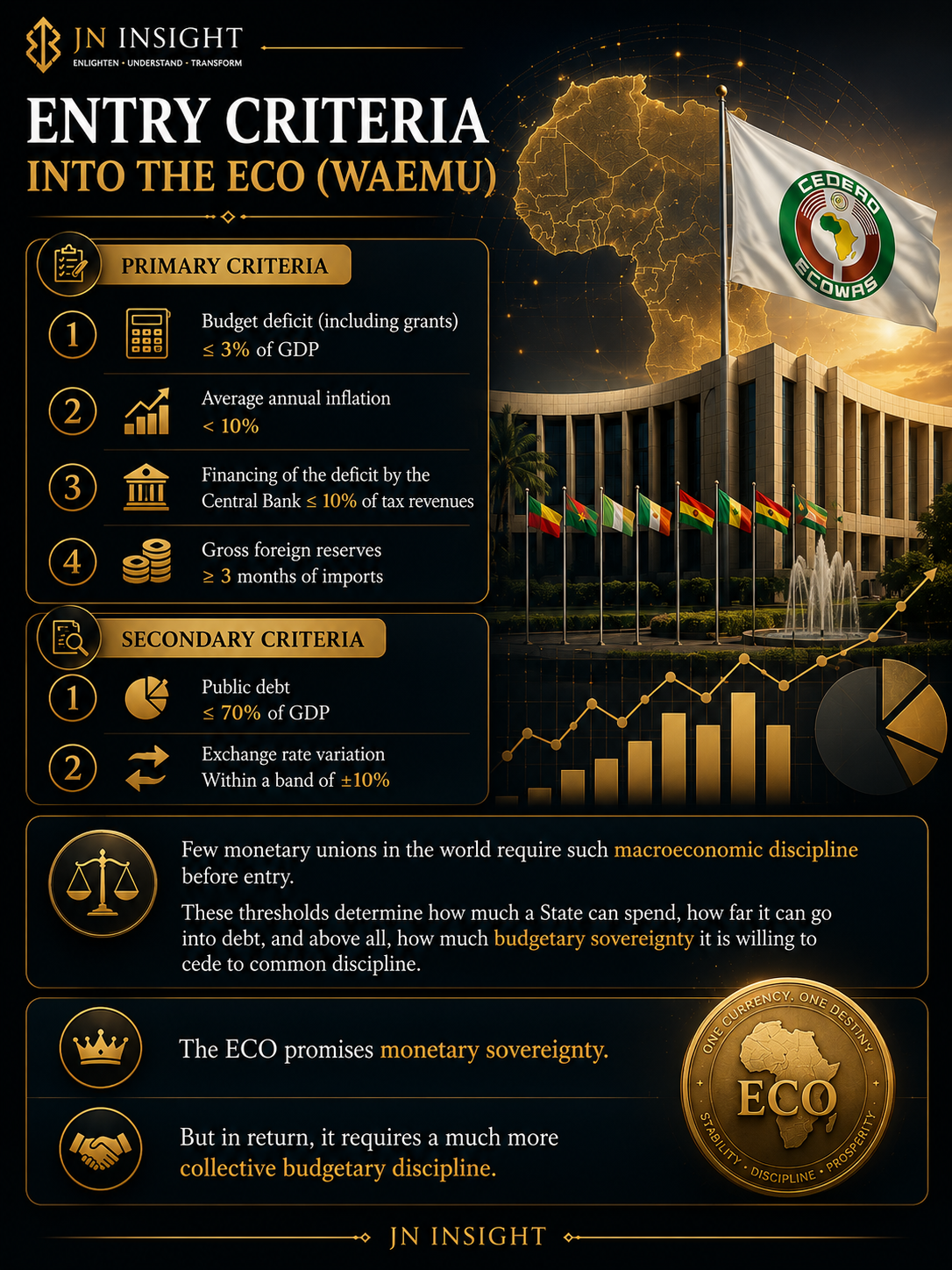
So let's look at the numbers.
Not speeches. Not slogans. Not the historical legacies.
The numbers.
📊 Convergence to ECO – Diagnosis as of June 30, 2026 (IMF/WEO April 2026)
The verdict is final. Economic criteria are reshuffling the cards. Nigeria, although politically indispensable, is among the least advanced candidates. Conversely, Côte d'Ivoire appears to be one of the strongest performers, while Senegal remains penalized by its fiscal imbalances.
History loves paradoxes.
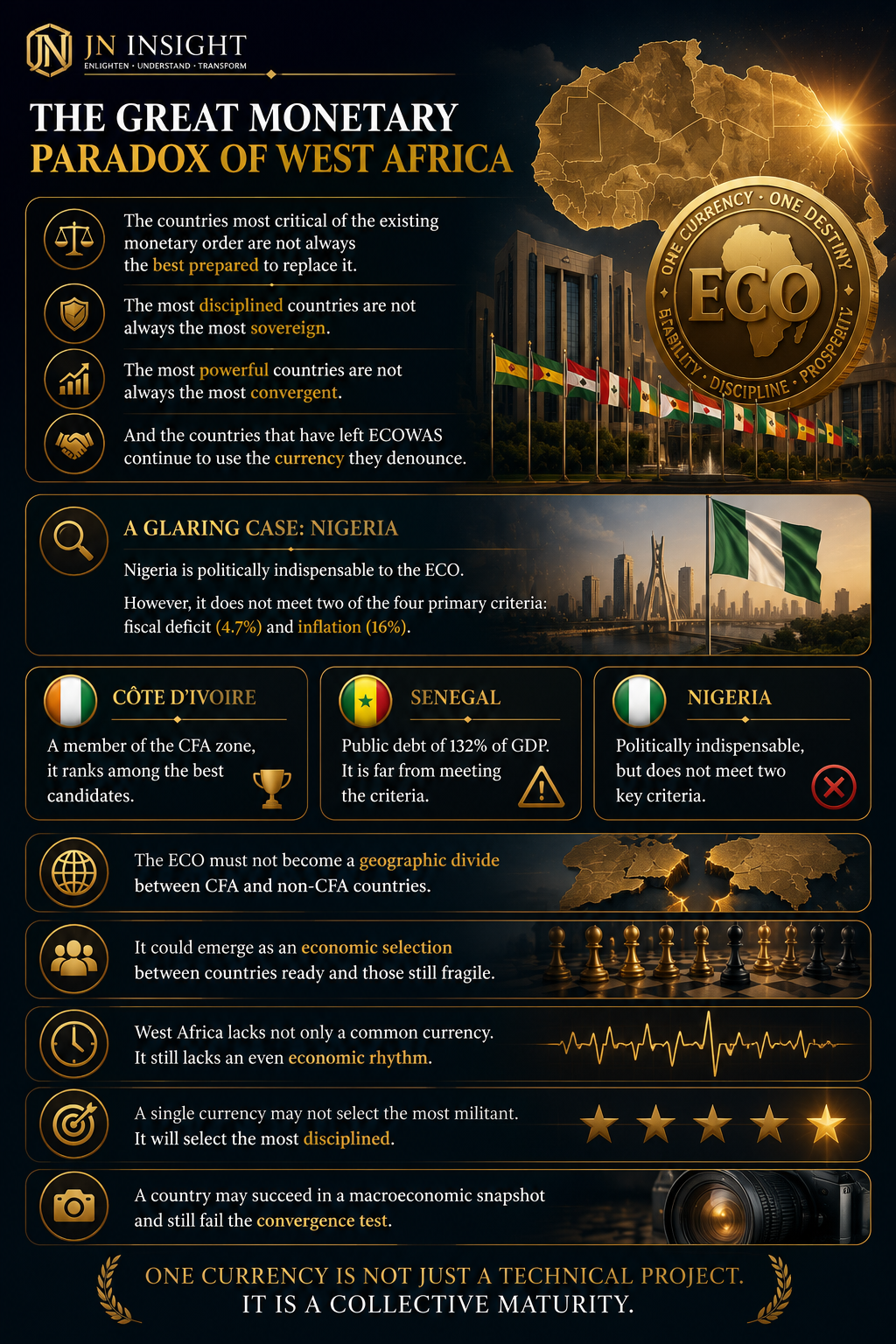
Here is the most frequent mistake in the African debate: confusing a strong currency with the cause of power. However, history generally tells the opposite. History has an immense advantage. She already knows the answer.
PART VI — Great currencies do not create great powers
All the major currencies tell the same story. Let's look at them, via the graph below:
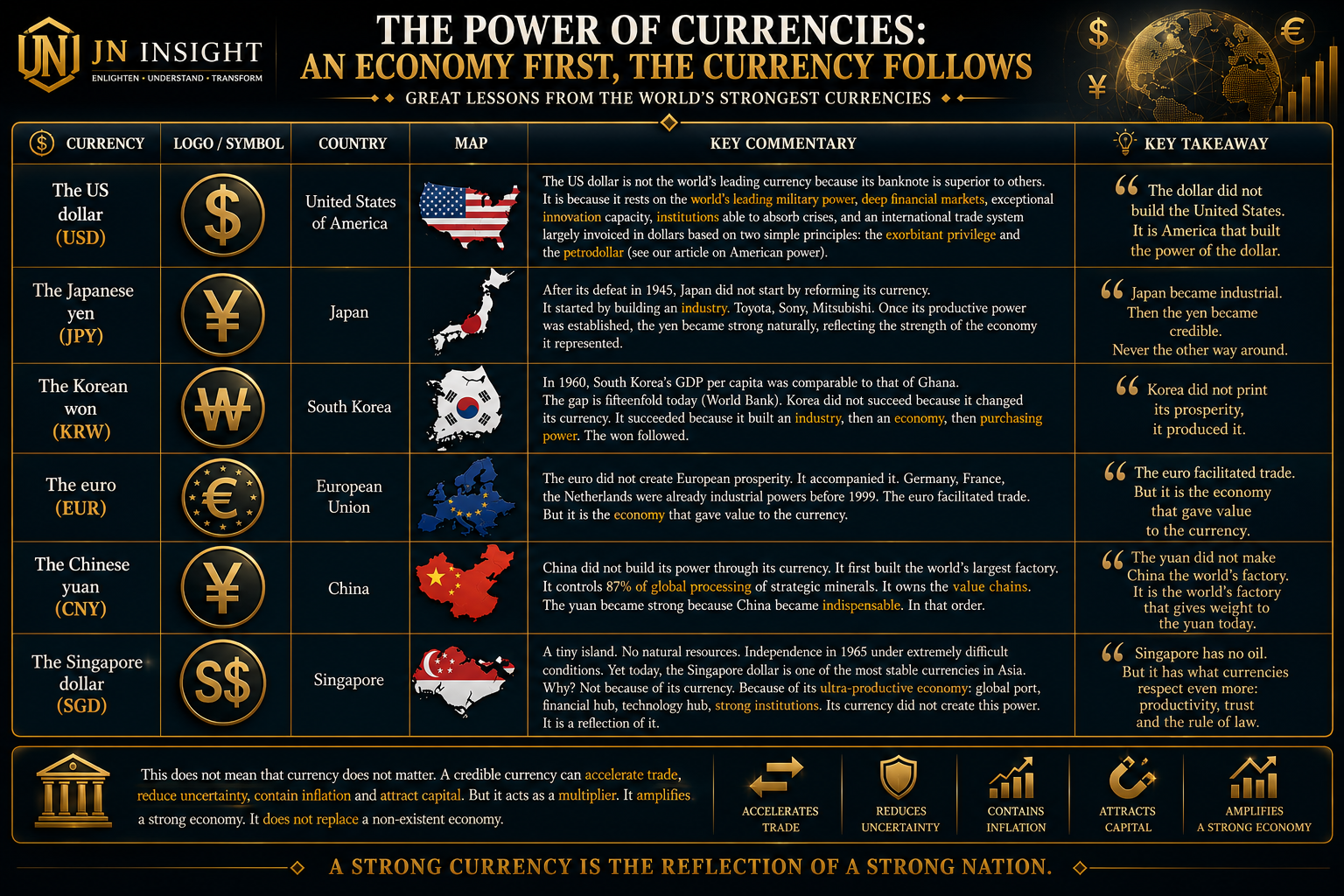
What to remember? History does not show any country that has become prosperous because it has changed its currency. It shows that all the great powers have mastered their currencies once they have built their productive power.
This does not mean that money does not count. A credible currency can speed up trade, reduce uncertainty, contain inflation, and attract capital. But it acts as a multiplier. It amplifies a strong economy. It does not replace a non-existent economy.
So, what if, from the beginning, we had looked at the problem backwards?
What if money was not the engine, but the dashboard? The question that no one really asks therefore surfaces...
PART VII — The Monetary Illusion: Changing the Dollar Without Changing the Economy
Is a currency the cause of a nation's wealth — or only a reflection of it? This is the question that he CFA vs ECO debate carefully avoids asking. Because if the answer is "reflection", then changing money without transforming the productive economy will not change much.
The African debate may have fought the wrong battle. We ask of money what we should ask of the economy.
The facts are clear. In the CFA zone, some countries have experienced significant growth: Côte d'Ivoire, Benin, Togo. Others have stagnated, despite the same currency. In the non-CFA zone, some countries have experienced severe currency crises. Others have progressed. The decisive variable is not always money. It is the quality of institutions, the ability to diversify the economy, governance. The monetary illusion consists in believing:
• that a new banknote creates a new economy;
• that a new name erases old weaknesses;
• that a sovereign central bank automatically guarantees a credible currency;
• that a symbolic break necessarily produces an economic break. However, a currency can change overnight. Productivity, industry, institutions and trust take decades.
A central bank is never a substitute for an industrial policy. A banknote never produces a factory. Money can accelerate development. It cannot invent it.
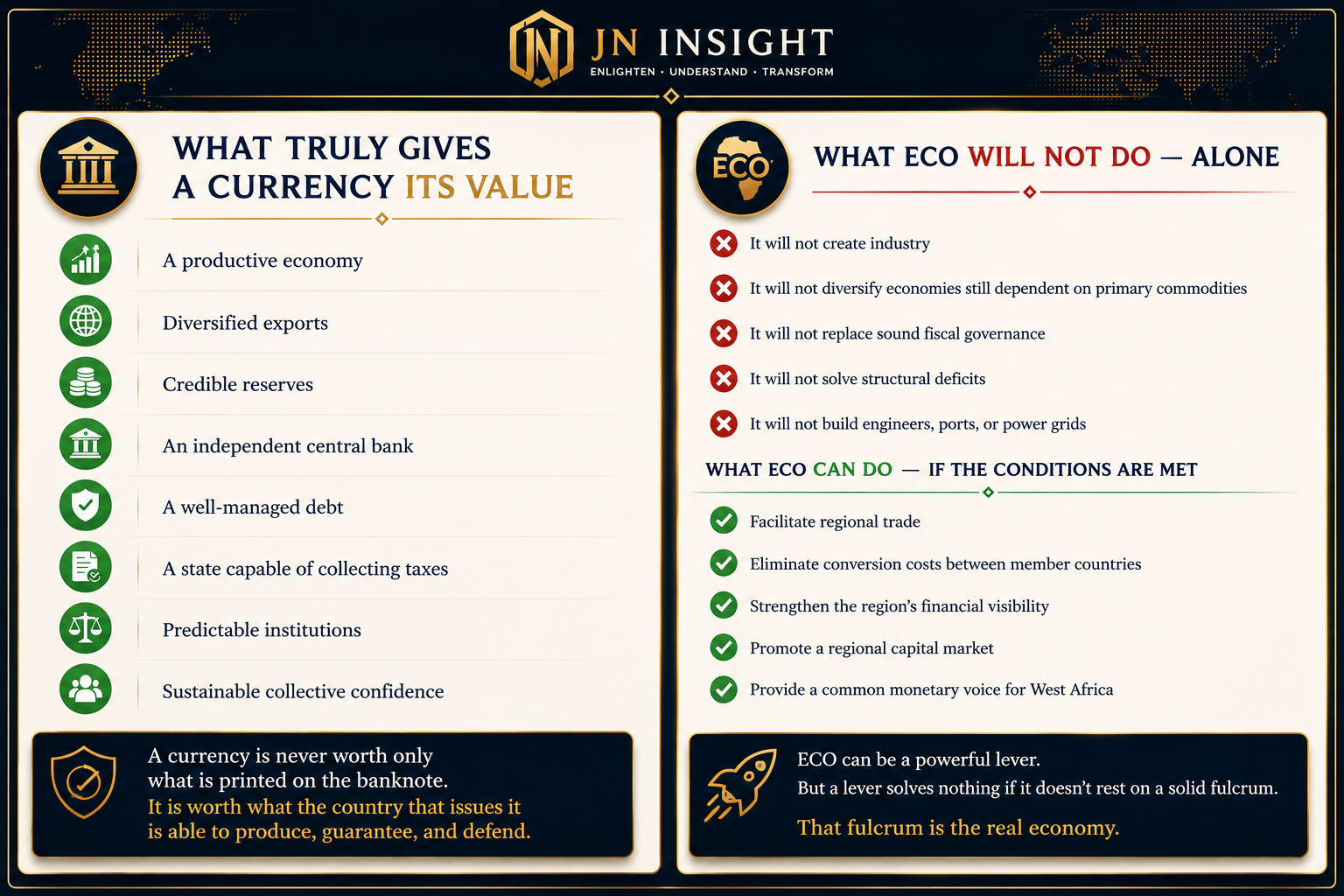
The main risk of the ECO is not that it fails immediately. It is that it succeeds symbolically while failing economically. That he offers a new ticket without new discipline. A new Central Bank without real independence. A new sovereignty without a new productive capacity. In this case, West Africa would have changed its currency without changing its trajectory.
A single currency also requires common budgetary discipline. Without this, it becomes a factor of crisis rather than stability.
To change money without changing the economy is to change the thermometer without curing a fever;
It is repainting the speedometer without repairing the engine;
It is to rename weakness without transforming it.
This may be the real debate. Not to know what currency West Africa will use tomorrow. But to know what economy this currency will have to serve.
Basically, all the mechanisms of power studied by JN Insight tell the same story...
WHAT TO REMEMBER — Power through money
In "Is Africa really poor?", we showed that the continent's wealth was real, but that its flows escaped it. In "Development Aid", we showed how aid can mask the mechanisms of dependence. Here, we see how a currency can be both a tool for stability and a mechanism for dependence.
The CFA franc is neither the absolute demon nor the perfect solution. The ECO will be neither an automatic release nor a simple change of façade. They are tools. And tools are only valuable in terms of how they are used.
A currency does not build factories. It does not train engineers. It does not produce electricity. It does not replace the State. It does not create trust by decree.
The great currencies have never created the great powers. It was the great powers that ended up creating great currencies.
Banknotes have never created wealth. They are only the mirror of it.
The real challenge for West Africa may not be to choose between the CFA franc and the ECO. It is to build an economy that will give value to both of them in the future.
Maybe one day West Africa will pay in ECO. But the real turning point will not come from the name written on the tickets. It will come when these banknotes will finally represent an economy capable of setting the rules of the game itself.
Currencies change. The mechanisms of power, on the other hand, know how to adapt remarkably.
👇Prefer to listen to this analysis? Find the podcast version below.👇
👆Prefer to listen to this analysis? Find the podcast version above. 👆
→ And what do you think? If tomorrow West Africa paid in ECO, what would really have changed?
Intellectually yours,
Jean-Noël Niamké
FINANCIAL EXPERT
The Mechanisms of Power — Series VIII | Strategic & geopolitical analyses
Sources: click here
Methodological note: 2026 data from the WEO IMF April 2026 (single source for consistency). Estimates and projections. The WAEMU reserves are pooled at the BCEAO level. No final official list of countries in the first ECO phase has been published as of July 23, 2026.